
About Giorgio Pisanò
Lived 1924 – 1997 (aged 73). Giorgio Pisanò was an Italian journalist and politician.
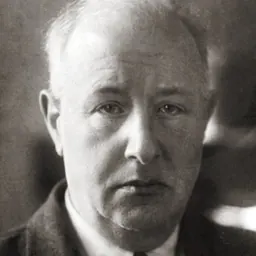
Giorgio Pisanò (30 January 1924 – 17 October 1997) was an Italian neo-fascist politician, journalist, and essayist who was a member of the Senate of the Republic from 1972 to 1992.
Early life Family and education Pisanò was born on 30 January 1924 in Ferrara, the first of five children to his father Luigi, an Apulian law graduate from San Vito dei Normanni who worked as a civil servant. There he met his future wife, Iolanda Cristanti, in the 1920s, asking to be part of the Marine Paratroopers (Nuotatori Paracadutisti, NP), and received training in Jesolo and Tradate.
In 1944, Pisanò was captured by British forces during his attempt to return from a special operation near Rome. Although not identified as fascist agent, and was promoted twice for distinguished service. through May 13, when the Carabinieri took control of the prison.
From 29 August to 26 October 1945, Pisanò remained imprisoned in the San Vittore Prison in Milan. He was then transferred to the Allied concentration camp R707 di Terni, He began smuggling between Italy and Switzerland before rediscovering politics and journalism, his lifetime profession. In 1951, he founded and held the first presidency in the Lombardy section of Young Italy (Giovane Italia, GI).
Journalism and non-fiction writing In 1954, by this time a professional journalist, Pisanò took a job at Oggi, a weekly periodical founded by Angelo Rizzoli, and at that time directed by Edilio Rusconi. along with the Italcasse scandal, which involved "black funds" to political parties and the granting of questionable loans uncovered in an investigation by the Bank of Italy. As part of a report in a weekly to be published in instalments, Rusconi, who in the meantime had founded Gente magazine, such as Sangue chiama sangue (1962), Foa later recalled that Pisanò was making "grand speeches of pacification" (quoting him as saying "Deep down, we were all patriots... Each of us had our homeland in our hearts..."), at which point he interrupted Pisanò to explain "a fundamental difference", elaborating: "Wait a moment. If we're talking about the dead, fine. The dead are dead: let's respect them all. But if we're talking about when they were alive, they were different. If you had won, I'd still be in prison. Since we won, you're a senator."
Reelected to five consecutive terms (1976, 1979, 1983, and 1987) until 1992, Pisanò was a member of the permanent Parliamentary Committee for Defense and Constitutional Affairs, the Parliamentary Committee of RAI Supervision, the Antimafia Parliamentary Committee and of the Parliamentary Committee of Propaganda Due (P2). The MFL was the only party to expressly refer to Italian fascism with the symbol itself (the fasces), which included and highlighted in the centre a beam of red, making explicit reference to the ideologies of the Italian Social Republic and the Social Right (destra sociale), such as corporatism, the socialization of the economy as highlighted at the Congress of Verona (1943), monetary taxation, and Italian nationalism.
Contemporary trials for violation of the 1952 Scelba law—which criminalized the defence of fascism—led to the acquittal of Pisanò and other members of the party since contrary to the offence identified by law, the party supported a bicameral presidential republic, with the President of the Republic enjoying full powers and elected by the people, instead of the re-establishment of the fascist dictatorship. The party elected some municipal councillors, especially in the province of Asti, on the occasion of the 1992 Italian general election. In the 1990s, Pisanò returned to publishing and writing several texts about the Italian Social Republic. In 1995, after the svolta di Fiuggi—when the MSI made a turning point away from fascist symbolism and neo-fascism towards post-fascism in order to become a bona fide and legal right-wing force in politics—and the definitive transformation of the party into National Alliance (Alleanza Nazionale, AN), the predecessor of Brothers of Italy (Fratelli d'Italia, FdI), Pisanò decided to associate with Pino Rauti in the conservation project of a historic Italian neo-fascist party, which subsequently gave rise to the Tricolour Flame (Fiamma Tricolore, FT). A few months later, he left political life due to his deteriorating health as he was suffering from kidney cancer. After a long illness, Pisanò died in Milan on 17 October 1997.
Published works Pisanò published various books regarding Italian history. Il vero volto della guerra civile. Documentario fotografico, Milan, Rusconi, 1961. Sangue chiama sangue, Milan, Pidola, 1962. La generazione che non-si è arresa, Milan, Pidola, 1964. Giovanni XXIII. Le sue parole, la sua vita, le sue opere e le fotografie più belle. La prima biografia del papa santo, Milan, FPE, 1965. Storia della guerra civile in Italia, 1943–1945, 3 vol., Milan, FPE, 1965–1966. Gli ultimi in grigioverde. Storia delle forze armate della Repubblica Sociale Italiana (1943–1945), 4 vol., Milan, FPE, 1967. Mussolini e gli ebrei, Milan, FPE, 1967. Penna nera. Storia e battaglie degli alpini d'Italia, with , 2 vol., Milan, FPE, 1968. L'altra faccia del pianeta "P2". Testo integrale della Relazione conclusiva di minoranza presentata al Parlamento dal rappresentante del MSI-DN, Milan, Edizioni del Nuovo Candido, 1984. L'omicidio Calvi nell'inchiesta del commissario P2 Giorgio Pisanò e nelle deposizioni della vedova. Con gli atti inediti del processo di Londra, Milan, GEI, 1985. Storia del Fascismo, 3 vol., Milan, Pizeta, 1988–1990. , with Paolo Pisanò, Milan, Mursia, 1992. . , Milan, Il Saggiatore, 1996. . Io, fascista, Milan, Il Saggiatore, 1997. .
Don’t just read it —
keep it.
Full-length biographies made to live with: read them, listen on the way to work, watch them tonight.
- E-book
- Audio
- Video
Instant download · yours to keep · every purchase keeps this site free
Important facts
People in Giorgio Pisanò's life
Named in this biography and alive at the same time

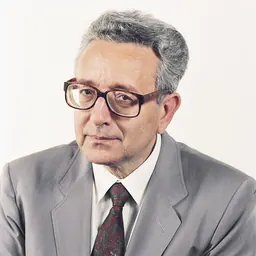
Related people
Same field, nearest in time

Contemporaries
People whose lives overlapped Giorgio Pisanò's



Frequently asked questions
Who was Giorgio Pisanò?
Italian journalist and politician (1924-1997)
When was Giorgio Pisanò born?
Giorgio Pisanò was born on 30 January 1924 in Ferrara.
When did Giorgio Pisanò die?
Giorgio Pisanò died on 17 October 1997 in Milan.
What was Giorgio Pisanò's occupation?
Giorgio Pisanò was a journalist and politician.
What nationality was Giorgio Pisanò?
Giorgio Pisanò was Italian.
Sources & further reading
Cite this page
APA: Biography.guide. (2026). Giorgio Pisanò. https://biography.guide/giorgio-pisano/
MLA: "Giorgio Pisanò." Biography.guide, https://biography.guide/giorgio-pisano/.
Chicago: "Giorgio Pisanò." Biography.guide. https://biography.guide/giorgio-pisano/.
Data last updated: 2026-09-20 · Spot an error? Report a correction.
Page generated 2026-09-27 05:31 UTC