
About Gilbert Luján
Lived 1940 – 2011 (aged 70). Gilbert Luján was an American painter.
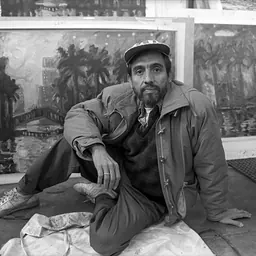
Gilbert "Magu" Luján (October 16, 1940 – July 24, 2011) was a Chicano American sculptor, muralist, painter, and educator. He was a founding member of the Chicano collective, Los Four that consisted of artists Carlos Almaraz, Beto de la Rocha, Frank Romero and himself. In 1974, Judithe Hernández became the "fifth member," and only female member of Los Four.
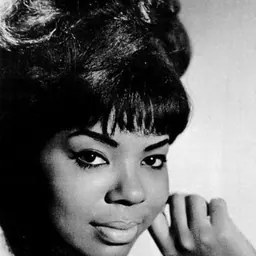
Early life and education Luján was born in French Camp, California, near Stockton, to parents of Mexican and indigenous ancestry from West Texas. Six months later, his family relocated to East Los Angeles, California, where he spent his childhood and adolescence, except for some time in Guadalajara in 1944 or 1945. As a young teenager, Luján was heavily influenced by the Afro-American music scene in Los Angeles, for instance listening to Johnny Ace and Mary Wells. He went to El Monte High School, graduating in the class of 1958.
After serving in the United States Air Force, Luján returned home from three years in England in 1962 and began to attend college, first at East Los Angeles College, then to California State University, Long Beach, where he earned his B.A. in ceramic sculpture in 1969
From 1976 until 1980, Luján taught at the La Raza Studies Department at Fresno City College becoming department chair 1980. Since then, Luján worked full-time on his artwork, devoted to developing his aesthetic. During the years of 1999 to 2007, Magu held his art studio operations at the Pomona Art Colony in downtown Pomona, California, helping to garner appreciation and support of the arts in the city and surrounding communities. During 2005, he took on a position as art professor at Pomona College, one of the seven prestigious Claremont Colleges.
In 1990 Magu was commissioned as a design principal for the Hollywood & Vine station on the Metro Rail Red Line (Hollywood/Vine (LACMTA station)) in Los Angeles, California. By 1999 Magu completed a series of wall tiles and platform sculptural benches in the form of lowrider automobiles. He chose the theme song, "Hooray for Hollywood," as the signature tune for the Hollywood & Vine Metro station. A design rudder established was "light," which Luján considered another central motif in Hollywood, from the light that passed through film projectors to the sunny streets of Southern California to the creation of celebrity "Stars." The Yellow Brick Road, which was built to run from the plaza (which is currently being demolished to build a high-rise with chain restaurants and businesses) to the train platform, is a prominent motif taken from the 1939 classic movieThe Wizard of Oz, a movie which was an inspiration to Luján's work.
Magu's artwork became famous in its own right throughout the 1980s and 1990s as it used colorful imagery, anthropomorphic animals, depictions of outrageously proportioned lowriders, festooned with Indigenous/urban motifs juxtaposed, graffiti, Dia De Los Muertos installation altars and all sorts of borrowings from pop-culture. Magu states: "My art intentions, over the years, have been to use Mesoamerican heritage as well as implementing current popular Art and cultural folk sources as the content substance to make Chicanarte."
Los Four While in graduate school, Lujan and a group of friends cam together to form a group which eventually became known as Los Four. and ultimately it is said that Romero suggested “Los Four” which then stuck.
As a group, they are also very diverse. Almaraz was born in Mexico City, de La Rocha was born in Wilmar, Romero in Los Angeles, and Luján from California. It is through his work that he tries to unite the different cultures and attempts to get people to understand that the “Chicano is American." His art is seen attempting to bridge the identities of being both a Mexican descendant but also being American., while putting emphasis of the Chicano experience. This reflects on his art as he depicts iconic vintage cars associated with Americana while also alluding to Mexican culture through iconography such as alluding to Aztec symbols and other traditional Mexican symbols.
In his monograph, "Aztlán to Magulandia", Luján reflects upon his works and describes the life long journey he underwent for his art while looking at themes such as history, mythology, and as his own Chicano heritage. Despite being professionally trained, Luján returned to "grass-roots" and engaged in art including cultural elements of not only traddional Americana and Mexican sysmbols, but also Chicano elements such as graffiti. Mapping Another L.A. displayed a variety of works from Chicanx artists in order to demonstrate the developments that occurred in the 1960s for the sake of carving a space for marginalized groups.
Some of Luján's most notable works include the lithograph, El Fireboy y El Mingo (1988). In this piece, Lujan depicts a yellow background, with a smiling man "with flaming hair with his arm around a big-eyed dog person".
Don’t just read it —
keep it.
Full-length biographies made to live with: read them, listen on the way to work, watch them tonight.
- E-book
- Audio
- Video
Instant download · yours to keep · every purchase keeps this site free
Important facts
more
Gilbert Sanchez Lujan, Gilberto Sanchez Lujan, Gilbert Magu LujanPeople in Gilbert Luján's life
Named in this biography and alive at the same time




Related people
Same field, nearest in time




Contemporaries
People whose lives overlapped Gilbert Luján's



Frequently asked questions
Who was Gilbert Luján?
American artist (1940-2011)
When was Gilbert Luján born?
Gilbert Luján was born on 16 October 1940 in Stockton.
When did Gilbert Luján die?
Gilbert Luján died on 24 July 2011.
What was Gilbert Luján's occupation?
Gilbert Luján was a painter.
What nationality was Gilbert Luján?
Gilbert Luján was American.
Sources & further reading
Cite this page
APA: Biography.guide. (2026). Gilbert Luján. https://biography.guide/gilbert-lujan/
MLA: "Gilbert Luján." Biography.guide, https://biography.guide/gilbert-lujan/.
Chicago: "Gilbert Luján." Biography.guide. https://biography.guide/gilbert-lujan/.
Data last updated: 2026-09-20 · Spot an error? Report a correction.
Page generated 2026-09-27 05:25 UTC