
About Gichin Funakoshi
Lived 1868 – 1957 (aged 88). Gichin Funakoshi was a Japanese karateka.
was the founder of Shotokan karate. He is known as a "father of modern karate". Following the teachings of Anko Itosu and Anko Asato, he was one of the Okinawan karate masters who introduced karate to the Japanese mainland in 1922, following its earlier introduction by his teacher Itosu. He taught karate at various Japanese universities and became honorary head of the Japan Karate Association upon its establishment in 1949. In addition to being a karate master, Funakoshi was an avid poet and philosopher. His son, Gigō Funakoshi, is widely credited with developing the foundation of the modern karate Shotokan style.
Early life Gichin Funakoshi was born on November 10, 1868, the year of the Meiji Restoration, in Shuri, Okinawa, to a Ryūkyūan Pechin. Funakoshi was born prematurely. His father's name was Gisu.
After entering primary school he became close friends with the son of Ankō Asato, a karate and Jigen-ryū master who would soon become his first karate teacher.
Gichin Funakoshi performing the first moves of kata Heian Nidan.
By the late 1910s, Funakoshi had many students, of which a few were deemed capable of passing on their master's teachings. Continuing his effort to garner widespread interest in Okinawan karate, Funakoshi ventured to mainland Japan in 1917, and again in 1922. The association is known today as Shotokai, and is the official keeper of Funakoshi's karate heritage.
In 1936, Funakoshi built the first Shōtōkan dojo (training hall) in Tokyo. While on the Japanese mainland, he changed the written characters of karate to mean "empty hand" (空手) instead of "China hand" (唐手) (literally Tang dynasty) to downplay its connection to Chinese boxing. Karate had borrowed many aspects from Chinese boxing. Funakoshi also argued in his autobiography that a philosophical evaluation of the use of "empty" seemed to fit as it implied a way which was not tethered to any other physical object.
Funakoshi's re-interpretation of the character kara in karate to mean "empty" (空) rather than "Chinese" (唐) caused some tension with traditionalists back in Okinawa, prompting Funakoshi to remain in Tokyo indefinitely. In 1949 Funakoshi's students created the Japan Karate Association (JKA), with Funakoshi as the honorary head of the organization. However, in practise this organization was led by Masatoshi Nakayama. The JKA began formalizing Funakoshi's teachings. The first katas he incorporated into its curriculum were: the 3 Tekki, the 5 Heian, Bassai Dai, Kanku Dai, Empi, Jion, Jitte, Hangetsu, and Gankaku.
Illness and death Funakoshi developed osteoarthritis in 1948, and died on April 26, 1957. Cause of death is colon cancer.
Legacy Funakoshi published several books on karate including his autobiography, Karate-Do: My Way of Life. His legacy, however, rests in a document containing his philosophies of karate training now referred to as the niju kun, or "twenty principles". These rules are the premise of training for all Shotokan practitioners and are published in a work titled The Twenty Guiding Principles of Karate. Within this book, Funakoshi lays out 20 rules by which students of karate are urged to abide in an effort to "become better human beings". adorns the hardback cover.
Although Funakoshi wrote that there are no contests in Karate, his students of the Japan Karate Association pushed towards standardization and competition, leading to the first All Japan Karate Championships to be held in 1957, the same year of Funakoshi's death. Today, the JKA World Championships are named after the late master, now known as the Funakoshi Gichin Cup.
Memorial
A memorial to Gichin Funakoshi was erected by the Shotokai at Engaku-ji, a temple in Kamakura, on December 1, 1968. Designed by Kenji Ogata the monument features calligraphy by Funakoshi and Sōgen Asahina (1891–1979), chief priest of the temple which reads Karate ni sente nashi (There is no first move in karate), the second of Funakoshi's Twenty Precepts. To the right of Funakoshi's precept is a copy of the poem he wrote on his way to Japan in 1922.
A second stone features an inscription by Nobuhide Ohama and reads:
Publications
Funakoshi, Gichin: Introduction to Karate, Translated by Henning Wittwer, 2023. .
Don’t just read it —
keep it.
Full-length biographies made to live with: read them, listen on the way to work, watch them tonight.
- E-book
- Audio
- Video
Instant download · yours to keep · every purchase keeps this site free
Important facts
People in Gichin Funakoshi's life
Named in this biography and alive at the same time
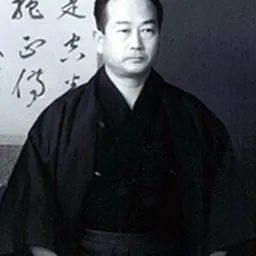


Related people
Same field, nearest in time


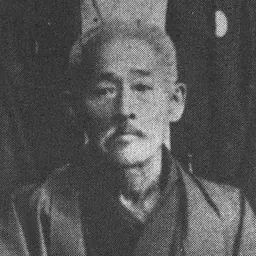
Contemporaries
People whose lives overlapped Gichin Funakoshi's



Frequently asked questions
Who was Gichin Funakoshi?
Japanese karateka (1868–1957)
When was Gichin Funakoshi born?
Gichin Funakoshi was born on 10 November 1868 in Shuri.
When did Gichin Funakoshi die?
Gichin Funakoshi died on 26 April 1957 in Tokyo.
What was Gichin Funakoshi's occupation?
Gichin Funakoshi was a karateka.
What nationality was Gichin Funakoshi?
Gichin Funakoshi was Japanese.
Sources & further reading
Cite this page
APA: Biography.guide. (2026). Gichin Funakoshi. https://biography.guide/gichin-funakoshi/
MLA: "Gichin Funakoshi." Biography.guide, https://biography.guide/gichin-funakoshi/.
Chicago: "Gichin Funakoshi." Biography.guide. https://biography.guide/gichin-funakoshi/.
Data last updated: 2026-09-20 · Spot an error? Report a correction.
Page generated 2026-09-27 05:34 UTC