
About Gianfranco Blasi
Born 1958. Gianfranco Blasi is an Italian politician.
Gianfranco Blasi (born 29 May 1958) is an Italian politician, essayist, and poet who was a member of the Chamber of Deputies from 2001 to 2006. A Salesian student, he was raised as a liberal Catholic and was a leader of Christian Democracy (DC), first in the party's youth wing and then at the city and provincial levels. In the 1990s, Blasi served as a regional councillor in Basilicata several times with Forza Italia (FI), the regional section of the party that he helped to co-found in 1994. He was a city councillor in Potenza and a member of Parliament with various roles as a deputy.
In 2003 and 2004, Blasi obtained national and international attention for his opposition to a nuclear waste site in Basilicata and for being wrongly charged in a local judicial investigation. In the late 2000s, he politically distanced himself from Silvio Berlusconi, citing judicial and cultural conflicts, feeling that one should defend oneself at the trial and not from being put on trial. After leaving Forza Italia, Blasi was the co-founder of several minor Southern Italian parties like Italy of the Centre (IdC) and Great South (GS) between 2008 and 2013, when he returned to the new Forza Italia.
In 2014, Blasi joined Brothers of Italy (FdI) and was instrumental in the election of the first centre-right coalition candidate as mayor of Potenza. He continued to be active in centre-right politics until 2018 and subsequently mainly focused on his literary and poetry career, some of which were published in English. In addition to his career as journalist and various roles in several companies, he became a member of the Tiberian Academy.
Early life and political career Blasi was born on 29 May 1958 in Potenza, the capital of Basilicata, a small region in Southern Italy. He obtained a from the city's commercial institute to become an accountant and programmer. During the mid-1970s, Blasi began his political career within Christian Democracy. He said that he got interested in politics since he was a teenager, first at school thanks to participatory models and then in the Catholic movement. Blasi joined the youth wing of Christian Democracy and became a party leader at the youth, city, and provincial levels.
Blasi was active within the student movement, the Salesian parish, and the party branch, an image that he likes to remember and is proud of. Around this time, he met Emilio Colombo, the only prime minister of Italy from Potenza. When Colombo (who was made senator for life in 2003) died in June 2013, he honoured him, stating that thanks individuals like Colombo, an "inestimable value will always live on in the civic consciousness of our country: a sense of state. The ability to serve institutions before oneself. This is and will remain the statesman Colombo." During his early political career, Blasi was an official of the Italian region of Basilicata and a member of the political secretariat of the presidency of the Regional Council of Basilicata's Budget Committee. From 1990 to 1994, he served as regional secretary of the trade union Italian Confederation of Trades Unions's (CISL) Public Function. As part of his formative training in politics, Blasi moved to Rome to study politics and attended the Training School in Taranto, and studied Business Organisation at the Higher School of Public Administration in Lucca.
Forza Italia In 1994, with the judicial revolution of and the resulting fall of the First Italian Republic, which he described as "a period also marked by the excessive presence of the judiciary, which became a sort of partisan arbiter of what later happened", Blasi was one of the founders, alongside other local Italian Socialist Party (PSI) members, of Berlusconi's Forza Italia. As a result, he is considered among the founders of the centre-right coalition in Basilicata. In discussing the impact of all this in Basilicata, Blasi recalled that the "acceleration toward the so-called change occurred too suddenly", arguing that "as always happens in times of transition, there was a repositioning of the ruling classes", citing as an example the fall of the fascist regime in Italy and how many "podestas then became mayors of their own towns the day after the fall of the ".
Blasi was part of Christian Democracy's thinkers who chose not to follow Mino Martinazzoli and Colombo's turn to the centre-left, recalling "the strong tensions both with my national and regional leaders of the CISL, and with my friends in the DC who chose the left-wing agreement". Blasi added that he and the co-founders of Forza Italia had "embraced the idea of a modern umbrella organisation like Forza Italia", which he described as a "secular home where liberals, Catholics, and reformist socialists could easily recognise each other". In 1995, Blasi was elected councillor of Basilicata, a position he held for two terms, also serving as vice president of the Regional Council of Basilicata and subsequently president of the Special Commission for the Reform of the Statute. In June 1999, Blasi was the centre-right coalition (Pole for Freedoms) candidate for mayor of Potenza. Although he was not elected as mayor as he finished third behind Gaetano Fierro of the Union of Democrats for Europe (UDEUR), which since February 1999 became part of The Olive Tree-led centre-left first D'Alema government, and the official centre-left coalition and Democrats of the Left (DS) candidate Prospero Bonito Oliva, he served as city councillor. Of Forza Italia as a party, he later said that it was disappointing, with some broken promises.
Member of the Chamber of Deputies In the 2001 Italian general election, Blasi was elected to the Chamber of Deputies in the 22nd multi-member district of the Basilicata constituency in the proportional representation quota as part of the House of Freedoms centre-right coalition's overall electoral win. He served in this position for a single-term until 2006. In this capacity, he served as co-rapporteur for the Budget and Finance Committees in 2002, along with Giorgio La Malfa, in the investigation into the introduction of the euro in Italy, and in 2003 was rapporteur for the 2004 state budget. Blasi was the first signer of several law proposals and was a co-signer of many others.
Blasi was among the founders of the Parliamentary Association on the Principle of Subsidiarity, which aims to introduce subsidiarity into the Constitution of Italy, national legislation, regional legislation, and central and territorial public statutes. In May 2003, he and other deputies across the political spectrum had a meeting to discuss and debate politics in order to reduce the polarisation of the early 2000s. From 2003 to 2006, Blasi served as Forza Italia's national representative for Southern Italy. In 2004, he took part to the annual edition of the Rimini Meeting. Blasi was also a member of several parliamentary bodies, including the Election Committee from 13 June 2001 to 27 April 2006, the 5th Commission (Budget, Treasury, and Planning) from 20 June 2001 to 27 April 2006, and the Parliamentary Consultative Commission for the Implementation of the Administrative Reform, Pursuant to Law No. 59 of 15 March 1997 from 9 October 2003 to 27 April 2006.
In late 2003, the second Berlusconi government wanted to activate the single nuclear waste site at Scanzano Jonico in the Metaponto area, citing support from the local mayor. Blasi launched what was described as a "dramatically heartfelt" appeal to Berlusconi for the immediate revocation of the decree. Among others, his opposition to the plan received national attention. On 13 November 2003, Italy's leading news agency ANSA quoted Blasi as saying: "Besides appearing inconsistent with the value of democratic participation, it seems like a cynical and arrogant prank played on a regional community, perhaps because it is small and considered easily attackable." In a speech to the Chamber of Deputies about the issue, Blasi expressed his "firm and clear no to the government's decision", stating that he was "firmly and adamantly opposed to Scanzano's choice". Blasi's views were shared by figures like Colombo and of the opposition, such as The Daisy (DL) deputy and Legambiente founder Ermete Realacci, the Federation of the Greens (FdV) secretary Alfonso Pecoraro Scanio, and Guido Tampieri, who was the Emilia-Romagna regional councillor for the environment. Ultimately, the protests were successful and the government's plans were scrapped.
Iena 2 judicial investigation In November 2004, Blasi and other local politicians across the political spectrum were involved in a judicial investigation (Iena 2), which saw the detention of some 50 individuals, as authorised by the Potenza judge of the preliminary investigation (GIP) Alberto Iannuzzi and as requested by the public prosecutors Vincenzo Montemurro and John Woodcock. Blasi denied any wrongdoing and the accusations after he was named among the suspects, and said: "The legal case in which my name is being linked to those under investigation, concerning relationships between members of the business, political, and criminal worlds of Basilicata, is paradoxical." He denounced the investigation as a "political persecution", and told ANSA: "It's unthinkable that the values of generosity and human helpfulness are turned into crimes." Similarly, Forza Italia's deputy coordinator Fabrizio Cicchitto said: "We have the impression that someone wants to reintroduce the justice system to political purposes. I know the Hon. Blasi and I am astonished by the crimes he is accused of. In the past, the Potenza Prosecutor's Office has accustomed us to fuss over the matter, which immediately received great media coverage and was subsequently foiled by the courts, given what happened in another region as well."
Prosecutors said they would ask the Italian Parliament to lift the parliamentary immunity of Blasi so that he could be arrested; however, the Chamber of Deputies unanimously rejected Blasi's arrest, citing "the irregularity of the wording of the charge against the MP Blasi" and the fact that "the Potenza Review Court has annulled most of the restrictive measures ordered by the GIP", including that of Blasi. The Basilicata regional coordination group of Forza Italia stated that this would allow Blasi to "resume, with due serenity, his commitment to the Lucanian community and the ideals and programmes of Forza Italia". According to Forza Italia, "misunderstandings and misinterpretations have led to the hypothesis of crimes to which MP Blasi, as evidenced by the report unanimously approved by both the Authorisations Committee and the Chamber of Deputies, is held completely innocent. Of this, we were fully convinced, knowing his personal history and his human, even more than political, qualities." Fellow party member Gaspare Giudice added that the unanimous vote of the Chamber of Deputies had demonstrated "the inconsistency of the accusations leveled against our friend Gianfranco Blasi" and expressed his hope that Blasi would "resume with renewed vigor his already strong political commitment to defending legality and transparency". Subsequently, first the Potenza Review Court and then Italy's Supreme Court of Cassation overturned the charges against him, and he was exonerated and his case was dismissed in 2006, as also requested by Woodcock. As a result, the website Errorigiudiziari.com considered the Blasi case a judicial error, which was placed within the context of a series of high-profile investigations by Woodcock that either resulted in the dismissal of all charges or in acquittals.
Later political career In 2008, along with Vincenzo Scotti and Antonio Milo, Blasi founded the political movement Italy of the Centre (IdC). In 2011, together with Gianfranco Miccichè, he co-founded the Great South (GS) party, of which he was national secretary for territorial organisation. In June 2011, he said there was a need of "fresh air, a political presence closer to the needs of the people and the local community" as the "stale atmosphere of old politics" remained in "the halls of power". He said that people were tired and were right to be so, stating that politics "must be able to listen and interpret change". He added that this was why "we've remained 'Forzisti' within; we won't give up our calling" and that Southern Italy was "our natural terrain for sharing and participating in a new era". He described this political proposal as "a pinch of positive madness and a revolutionary idea".
In April 2012, Blasi said that the "breakdown of the social pact and national cohesion" had caused "a serious and further setback in the economy of Southern Italy" as work, social, and productive structures, as well as planning and a vision for the future were "missing". He called for "awareness and an extraordinary effort from the people of Southern Italy" to "rediscover the reasons for hope and trust, which are now so rarefied in the fog of individualism and the retching of a modernity that is losing and confusing the old social structure and disintegrating the connective tissue of our relationships". In the 2012 Sicilian regional election, Miccichè placed fourth with 15 per cent of the vote and was not elected president of Sicily; however, the Great South party gained 5 seats at the Sicilian Regional Assembly. On 30 October 2012, two days after the election, he opened up to the centre-left coalition, which won the election, to help govern the region. He said that Great South was "by no means a centre-right party", adding that the political experience with the centre-right coalition had ended "almost two years ago". He described the Great South party as "a movement of ideas and values with precise historical and territorial references" and further said that the new Southern question also lied in "the capacity for democratic rebellion against mafias, clientelism, cultural legacies, strong powers, and old parties".
In the 2013 Italian general election, Blasi helped to organise the Great South party's electoral lists and unsuccessfully ran for the Senate of the Republic as the party leader in Basilicata. For the election, the Great South party had formed an electoral alliance with The People of Freedom (PdL), a political party that was the result of a merge in March 2009 (after being established as an electoral list in February 2008) between Forza Italia and National Alliance (AN), the new major centre-right alliance. Later in November 2013, he joined the new Forza Italia, the party into which Great South had merged. He also became the spokesperson for the Association of Former Regional Councillors and Parliamentarians of Basilicata.
For the 2014 Italian local elections, Blasi switched to Brothers of Italy, a political party founded in December 2012 as a split from The People of Freedom and as the legal successor of National Alliance; he was a member of the national leadership of Brothers of Italy from 2015 to 2018. In 2014, he was at the centre of a political turning point when Potenza held elections for the renewal of its municipal administration. A coalition that appeared to be a minority one was formed, as it did not have the support of Forza Italia and the New Centre-Right (NCD). Brothers of Italy, Populars for Italy (PpI), and several civic list movements supported Blasi and Gianni Rosa's (the regional leader of the right-wing Basilicata party) candidacy of Dario De Luca. Blasi and Rosa said that they presented an electoral list in every and that Brothers of Italy was "ready for the electoral challenge". In an upset, after reaching the runoff election against the centre-left coalition and Democratic Party (PD) candidate Luigi Petrone with a significant disadvantage (47.8% to 16.7%), meaning that he would lack a majority in the city council (a role known in local Italian politics as , or "lame duck"), De Luca overturned the significant first-round deficit to become Potenza's first centre-right coalition mayor.
Blasi later described De Luca's victory as "a clear affirmation of the centre-right in Potenza", saying this was not only due to "the electoral alliance between sections of the Catholic world and right-wing cultural circles, movements, and parties", but also because of "the generational divide it created between old politics and new rights, between clientelism and freedom, between dependence and autonomy. Between desire and resistance to change." Due the mayor's lack of majority, he had to mediate with the other parties, in particularly the PD. In January 2016, in response to the national PD's claims, which he summarised as saying that "De Luca has nothing to do with the right, and therefore a single-party Renzi–Speranza coalition can be formed" due to the mayor's lack of majority in the City Council of Potenza, he argued that this confirmed "the arid pragmatism of a party capable of cultivating the future only through power". In his speech referencing the then prime minister Matteo Renzi, the local PD deputy Roberto Speranza, and the deputy PD secretary Lorenzo Guerini, Blasi concluded by stating "with all due respect to Guerini and a Democratic Party that no longer even has the colour of left-wing flags".
Journalism, poetry, and other writings A journalist and professor of Journalism, Communication, and Creative Writing in a Master's programme, Blasi collaborates with several national and local publications, and was the editor of several newspapers and magazines. During his journalism career, he founded two magazines: the weekly and the monthly , of which he began working as editor-in-chief. He also wrote several essays and books on economic and political affairs, and the social column "Pillole di Società". In 2006, the book by Michele Strazza and Fabio Settembrino, which was published by Edizioni Sud'Altro with a preface by Blasi, received a special mention at the Basilicata Literary Prize. As a poet, Blasi draws inspiration from imagism, early 20th-century literary movement that originated in the United States and England and whose main exponents were Ezra Pound and James Joyce. His poetry is based more on the rhythm of words and their ability to evoke images than on rhyme. He was the winner of the 1999 Thalia Prize with , which was published by Erreci Edizioni in 1998, and is the author of a comparative study on the poetics of Pound (Per ogni visione: un canto, which was published by La Bottega della Stampa in 2001). As a writer, Blasi was described as a "creative, eclectic author, with a dry, fast-paced, at times spasmodic writing style in a continuous climax of emotions and perceptions".
Blasi was born on 29 May, the day Potenza celebrates the Parade of the Turks, and he was one of the creators and promoters, alongside among others Rocco Cantore, of the institution of Sarachella ( in the local dialect), Potenza's carnival mask. Since its first edition, it is held as an annual event, which is linked to the old town . This initiative was born from a service of the Lions Club Host Potenza, of which Blasi is member. For this project, he created the nursery rhyme , which opened the illustrated album of the character. In 2012, he contributed to Sarachella e la maschera potentina. In 2014, he was also the author of the comic book , which was distributed in the primary schools of Potenza, and was among the organisers of the festival of the same name, which reached its third edition in 2015. Sarachella, a "crooked figure of body and ridiculous stature, bearer of disturbing truths that common sense and respectability distrust and reason discriminates against", was also brought to theatre.
In 2017, Blasi published , an essay on Christianity starting from his own experience of faith. In 2018, and then reprinted in 2019, the historical novel about Gerard of Potenza was published, becoming a critical and editorial success as it reached a third edition and a fourth reprint. It was described as "the first real novel about the history of the protector of Potenza". In 2018, Blasi and Nicola Pascale released about pedagogy and the Italian school-educational system. In 2021, his short stories about love themed around a song were collected in My Generation. All three volumes were published by Universo Sud, of which Blasi was editorial director. In 2024, he released the crime fiction novel , which is set in Naples with Assunta Chiaromonte (the Lieutenant of the Municipal Police of Piazza Municipio) as protagonist, and the psychology essay . Both works were published by Il Segno.
Known for his qualities as a writer, poet, intellectual, cultural animator, and editor, Blasi edited numerous volumes by Lucanian poets, novelists, and essayists, served on local and national poetry juries, and is the organiser of , a circle of poets and writers. Two of his four poetic works were translated into English. He also became a member of the historic cultural and academic institution, with a specific focus on Roman culture, history, and the Latin language, known as the Tiberian Academy. In 2025, Blasi and Aldo Noviello (a sociologist and psychology expert) wrote , with a preface by Pascale (the local president of the Tiberian Academy) and curated by professor of literature Gabriella Quaglia, which was published by Il Segno. The book attempts to actualise Cicero's views, and also includes an interview with the Hungarian jurist Gábor Hamza and argues for the relevance of Cicero as "one of the greatest thinkers of all time". The book, which had a presentation and theatrical dramatisation in March 2026, was positively reviewed and was described as one of Blasi's "most mature and ambitious works".
Other roles Blasi is a teacher of journalism and creative writing in advanced training programmes. During his career, he served as director of several public companies. In the early 1990s, Blasi was one of the founders of the Logos Polis Consortium, a European consortium of businesses, universities, and research centres. With the director of the Astronomy Centre in Capodimonte, Naples, and the mayor of Castelgrande, Basilicata, and with the scientific support of the National Institute for Astrophysics (INAF), he co-founded the Castelgrande Astronomical Observatory (FOAC), of which he was president from 2003 to 2005. He was credited for having been able to raise significant national funds for the financial support for the FOAC.
In 2006, Blasi began serving as scientific director of the Centre for Studies and Research on Southern Italy, which focuses on publishing and the history of Southern Italy, territorial planning, and development and research projects particularly related to technological innovation. In September 2013, he remembered the figure of John Bosco and said that Bosco's faith had been "the leaven of many cultures" and that Bosco "enlightened the world with his insights", empashising that Bosco was able to "transform the dust of poverty into wheat". From 2008 to 2012, Blasi was a member of the board of directors of the Lucanian Energy Company (SEL), an in-house company of Basilicata. There, he worked in communications and training and developed integrated projects for schools on energy efficiency and the development of clean energy sources, particularly photovoltaics. He served as vice-president and communications manager.
Personal life and views In addition to politics and poetry among his main interests, Blasi enjoys stuffed peppers and sports, such as cycling, boxing, basketball, and association football, and is a supporter of Inter Milan. A political moderate, he is a regionalist in the liberal and Christian-democratic (or , from ) tradition, and he is a follower of Luigi Sturzo and Luigi Einaudi. He hosts a blog titled .
Blasi described the constitutional reform that halved the Italian Parliament as a result of the 2020 Italian referendum as having "reduced the Italian Parliament to a sort of enlarged condominium, taking away vital space from representative democracy". During the escalation of the Russo-Ukrainian war with the 2022 Russian invasion of Ukraine, he supported Ukraine against Vladimir Putin and Russian imperialism. He called for a just peace (as "Ukrainians are dying under Russian bombs and missiles. And they are waging a courageous war to avoid annihilation") rather than a peace at all costs ("I don't like living room, respectable, and insincere peace. The peace that cultivates our selfishness, our comforts, and our flash mobs isn't courageous at all. It's just a way of escaping the reality and drama of the situation"), stating that core values like freedom, national sovereignty, and democracy are not values that he intends to trade for "a few cubic meters of gas". In the 2026 Italian constitutional referendum, Blasi supported the judicial reform by the Meloni government and justice minister Carlo Nordio on the grounds that it would lead to a "truly impartial judge, fewer miscarriages of justice, a judiciary free from factionalism, more accountable judges, and a more efficient justice system". In March 2026, he took part to a debate on the issue, which was moderated by Maurizio Bolognetti, a journalist and the local secretary of the Italian Radicals (RI). Blasi delivered the closing remarks, outlining to the audience what he called "the unresolved question".
Blasi is married to Annamaria Molinari, a school teacher; together, they have three children, and he is a grandfather. His son, Gianmarco (born 1989), is a lawyer and journalist who also began a political career, unsuccessfully running in the 2019 Basilicata regional election as a member of the League (Lega), and ran again in the 2024 Basilicata regional election. He was city councillor from 2019 to 2022 and assessor with responsibility for Budget, Heritage, Sports, and Planning since 2022; he resigned from this position in February 2025, when he was appointed by Vito Bardi, the first centre-right coalition president of Basilicata who was elected in 2019 and re-elected in 2024, as the delegate person by the Government Commissioner for hydrogeological instability.
Works
Selected articles
Books
Don’t just read it —
keep it.
Full-length biographies made to live with: read them, listen on the way to work, watch them tonight.
- E-book
- Audio
- Video
Instant download · yours to keep · every purchase keeps this site free
Important facts
People in Gianfranco Blasi's life
Named in this biography and alive at the same time


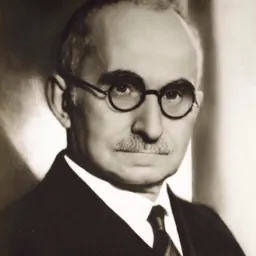



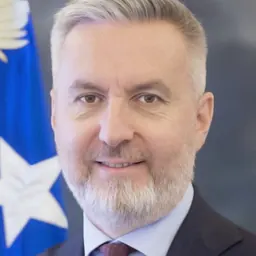
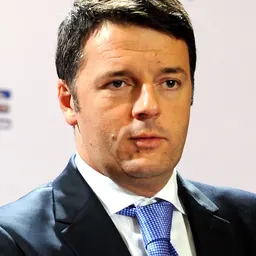
Related people
Same field, nearest in time


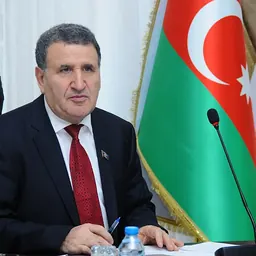

Contemporaries
People whose lives overlapped Gianfranco Blasi's


Frequently asked questions
Who is Gianfranco Blasi?
Italian politician
When was Gianfranco Blasi born?
Gianfranco Blasi was born on 29 May 1958 in Potenza.
What is Gianfranco Blasi's occupation?
Gianfranco Blasi is a politician.
What nationality is Gianfranco Blasi?
Gianfranco Blasi is Italian.
Sources & further reading
Cite this page
APA: Biography.guide. (2026). Gianfranco Blasi. https://biography.guide/gianfranco-blasi/
MLA: "Gianfranco Blasi." Biography.guide, https://biography.guide/gianfranco-blasi/.
Chicago: "Gianfranco Blasi." Biography.guide. https://biography.guide/gianfranco-blasi/.
Data last updated: 2026-09-20 · Spot an error? Report a correction.
Page generated 2026-09-27 05:32 UTC