Ghiyas ud din Balban
9th Sultan of the Delhi Sultanate
About Ghiyas ud din Balban
Lived 1201 – 1287 (aged 85–86).
Al-Sultan al-Azam Ghiyath al-Dunya Wal Din Abu'l Muzaffar Balban al-Sultan (; 1216 – 13 January 1287), more famously known as Ghiyath al-Din Balban or simply Balban, was the ninth Mamluk sultan of Delhi. He had been the regent of the last Shamsi sultan, Mahmud, until the latter's death in 1266. On death of Sultan Mahmud, Balban became sultan and ruled Delhi. Balban consolidated the ruling set up of the empire. following which he declared himself sultan of Delhi.
His original name was Baha-ud-Din. He was an Ilbari Turk. When he was young, he was captured by the Mongols, taken to Ghazni, and sold to Khawaja Jamal-ud-din of Basra, a Sufi. The latter then brought him to Delhi in 1232 along with other slaves, and all of them were purchased by Iltutmish. Balban belonged to the famous group of 40 Turkic slaves of Iltutmish.
Ghayas made several conquests, some of them as wazir. He routed the people of Mewat that harassed Delhi and reconquered Bengal, all while successfully facing the Mongol threat, during which his son died. After his death in 1287, his grandson Qaiqabad was nominated sultan, though his rule undermined the success made under his grandfather's reign.
In spite of having only a few military achievements, Balban reformed civil and military lines that earned him a stable and prosperous government, granting him the position, along with Shams ud-Din Iltutmish and the later Alauddin Khalji, one of the most powerful rulers of the Delhi Sultanate. himself a captured Ilbari Turk in origin, in 1232.
Balban was first appointed as a simple water carrier, but quickly rose to the position of Khasdar (king's personal attendant) by the Sultan. He became one of the most notable of the forty Turkic nobles of Delhi, or the Chalissa. During the reign of Razia Sultan, he was the amir-i-shikar, or lord of the hunt, a position of some importance at the time, having military and political responsibilities. After her overthrow, he made rapid strides in the subsequent reigns, earning the fief of Rewari under Bahram Shah, and later became the Jagirdar (lord) of Hansi, which was an important fief.
Balban was instrumental in the overthrow of Ala ud din Masud, installing Nasiruddin Mahmud as Sultan and himself as his Vizier from 1246 to 1265. Mahmud married one of Balban's daughters. Balban also installed Kishlu Khan, his younger brother, as lord chamberlain (Amir-i Hajib) and appointed his cousin, Sher Khan, to the Jagir of Lahore and Bhatinda.
Balban's position did not go unnoticed by the other nobles, and there was some resentment. His main antagonist was Imad ud-din Raihan, who in works written after Balban's time is characterized as a Hindu Murtad (who revoked Islam), although some claim him to be of Turkic origin as well. Imad ud-din managed to persuade the Sultan that Balban was a usurper. Balban and his kin were dismissed and even challenged in combat. However, negotiations between Balban and the Sultan led to the dismissal of Imad ud din in 1254, and Balban was reinstated.
Military campaigns Gold coinage of Ghiyath al-din Balban (AH 664-686 AD 1266–1287). Citing Abbasid caliph al-Mustasim. Delhi mint. Dated AH 677 (AD 1278–9). Balban's reign, according to Ziauddin Barani, was to install 'Fear of the governing power, which is the basis of all good government.' Furthermore, he "maintained that the Sultan was the 'shadow of God' and introduced rigorous court discipline." He depended upon Turkish nobility but formed an army of 2 lakh made up of all castes. A portion of this army was made up of commandos.
When the governor of Bengal, Tughral Tughan Khan, revoked the authority of Delhi in 1275, Balban first sent the governor of Awadh and then a second army, both of which met with failure. Balban then accompanied a third army, which reconquered the countryside, killing Tughral and his followers. His son, Nasiruddin Bughra Khan, assisted him in this mission. Balban then placed his second son, Bughra Khan, as governor. However, Bughra declared independence after Balban's death, which he maintained for 40 years.
Reign as Sultan
Since Sultan Nasiruddin did not have a male heir, after his death, Balban declared himself the Sultan of Delhi. Balban ascended the throne in 1266 at the age of fifty with the title of Sultan Ghiyas-ud-din-Balban.
During his reign, Balban ruled with an iron fist. He broke up the 'Chahalgani', a group of the forty most important nobles in the court. Balban wanted to make sure everyone was loyal to the crown by establishing an efficient espionage system in the style of the Umayyad Barid. Sultan Balban had a strong and well-organized intelligence system. Balban employed spies, barids, to inform on his officials. He placed secret reporters and news-writers in every department. The spies were independent authorities who were only answerable to the Sultan.
Furthermore, Balban had his nobles punished most harshly for any mishap, including severe treatment of their own slaves. One of his nobles, Malik Baqbaq, the governor of Budaun, was punished for ordering one of his slaves to be beaten to death, apparently when being drunk. Another governor, Haibat Khan, was handed over to the slave's widow for punishment.
Balban was a fervent patron of the Persian language and himself encouraged Persian poetry. He started Iranian method Sajda and Paibos to the sultan in India. He also introduced the Persian festival Nowruz (meaning new year). He was also referred to as the Niyabat-i-Khuda (Vice-regency of God). son of Muhammad, as heir apparent. However, after his death, his nobles nominated Qaiqubad as Sultan.
During Qaiqubad's reign (1287–1290), his father, Bughra Khan, asserted independence in Bengal. Qaiqubad was very weak and incompetent and eventually fell to stroke and had to pass the rule to his three-year-old son, Shamsuddin Kayumars, who was eventually dethroned by his guardian, Jalal ud din Firuz Khalji, in 1290, bringing an end to the Slave dynasty.
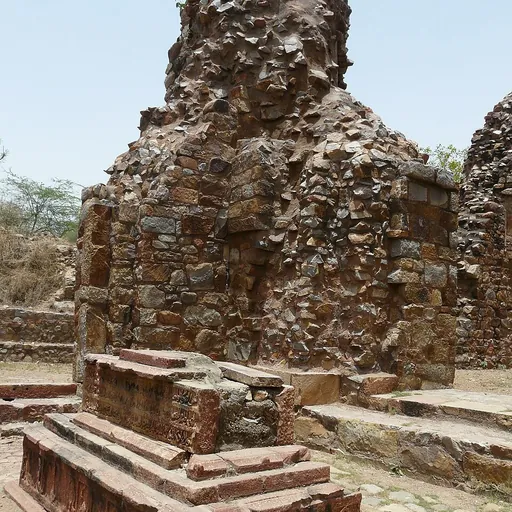
Today, Tomb of Balban lies within the Mehrauli Archaeological Park in Delhi, adjacent to which stands that of his son Khan Shahid and a walled mosque. The domes of both the tombs have collapsed, and the structures were mostly ruined until restored in recent years when the conservation work began in the park.
Don’t just read it —
keep it.
Full-length biographies made to live with: read them, listen on the way to work, watch them tonight.
- E-book
- Audio
- Video
Instant download · yours to keep · every purchase keeps this site free
Important facts
People in Ghiyas ud din Balban's life
Named in this biography and alive at the same time

Contemporaries
People whose lives overlapped Ghiyas ud din Balban's





Frequently asked questions
Who was Ghiyas ud din Balban?
9th Sultan of the Delhi Sultanate
When was Ghiyas ud din Balban born?
Ghiyas ud din Balban was born in 1201.
When did Ghiyas ud din Balban die?
Ghiyas ud din Balban died on 13 January 1287 in Delhi.
Sources & further reading
· Wikipedia: Ghiyas ud din Balban
Cite this page
APA: Biography.guide. (2026). Ghiyas ud din Balban. https://biography.guide/ghiyas-ud-din-balban/
MLA: "Ghiyas ud din Balban." Biography.guide, https://biography.guide/ghiyas-ud-din-balban/.
Chicago: "Ghiyas ud din Balban." Biography.guide. https://biography.guide/ghiyas-ud-din-balban/.
Data last updated: 2026-09-23 · Spot an error? Report a correction.
Portrait: Wikimedia Commons · author & licence
Page generated 2026-09-27 05:05 UTC