
About Ghāzī al-Quṣaybī
Lived 1940 – 2010 (aged 70). Ghāzī al-Quṣaybī was a Saudi poet, diplomat, poet lawyer, writer and politician.
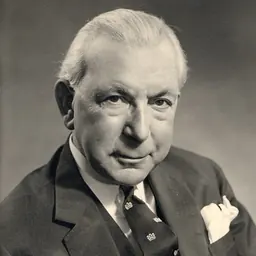
Ghazi Abdul Rahman Al Gosaibi (; 3 March 1940 – 15 August 2010) was a Saudi politician, diplomat, technocrat, poet, and novelist. He was an intellectual and a member of the Al Gosaibi family that is one of the oldest and richest trading families of Saudi Arabia and Bahrain. Al Gosaibi was considered among Saudi Arabia's topmost technocrats since the mid-1970s. The Majalla called him the "Godfather of Renovation" while Saudi journalist Othman Al Omeir argued that he was "the only great man in Saudi Arabia."
Early life and education Al Gossaibi was born on 3 March 1940 to one of the richest families of the Kingdom in Hofuf located in Al Ahsa province. His mother was from the Kateb family of Mecca who died when he was aged nine months, and he was raised by his grandmother. He attended the University of Cairo and received a degree in law in 1961. Later, he moved to the United States and graduated from the University of Southern California with a degree in international relations in 1964. He later completed his PhD in law at the University College London in 1970; his PhD thesis was about the Yemen crisis which took place from 1962 to 1967.
Career Al Gosaibi began his career working as a lecturer at King Saud University in 1965. chairman of Jubail Petrochemical Company (Sadaf) and Yanbu Petrochemical Company (Yanpet), In October 1975, King Khalid appointed him the minister of industry and electricity, which he held the position until 1983. He also served as the minister of health from 1983 to 1984. Then he served as the ambassador to Bahrain (1984-1992) and was subsequently appointed the Saudi ambassador to the United Kingdom and Ireland in 1992. In 1999, Al Gosaibi nominated himself to serve for the post of director general of UNESCO. However, he was not elected, and Japanese diplomat, Koichiro Matsuura, became the director general. Al Gosaibi's term as Saudi ambassador to the United Kingdom and Ireland ended in September 2002. His tenure lasted until April 2004. During this period, Al Gosaibi was also appointed board member of Saudi Aramco and served in the post until October 2004. King Fahd appointed him as the minister of labor on 13 April 2004 following the split of the labor and social affairs ministry into two. He contributed to the national strategy of Saudization into practice and motivated private firms to employ a greater proportion of Saudi nationals. He served in the post until his death in 2010
Al Gosaibi was a member of the honorary committee of Painting & Patronage from 2000 to 2010. He also actively participated in the organization of its first and second programmes held in London in 2000 and Riyadh in 2001, respectively. King Fahd fired him after reading the poem.
Views Al Gosaibi, as the minister of industry and electricity, stated in 1980 that American foreign policy was "self-doubt, isolative, and had a tendency to abdicate." During his tenure as Saudi ambassador to the United Kingdom and Ireland, he described Osama bin Laden as "a human monster" in the immediate aftermath of the 9/11 attacks in the BBC's HARDtalk interview. In 2002, he argued that the suicide bombers "died to honor God's word."
He was an apparent critic of the Saudi conservative society. and is known for his liberal religious views. He was against terrorism and extremism and called for democratic reform in the Kingdom, although he argued that it needed to be a very gradual process. He was labeled by radicals as "a Westerner, infidel, secular and a hypocrite", and experienced a systematic and intense ideological campaign against him. However, when a significant financial crisis affected all countries, in January 2009 he warned Saudi firms against exploiting the crisis as a reason for terminating Saudi nationals and suggested them to terminate foreign workers in the country.
Literary works and other writings Al Gosaibi was one of the best-selling writers in the Arab world and also, was a significant diplomat-poet. He published nearly 40 books, most of which were the collections of his poems, and The Gulf Crisis that offers an insider's account of the Arab reaction to Saddam Hussein's invasion of Kuwait. The reason for the ban was that his works were often critical of ruling regimes in the region and included a satirical representation of social and political mores. Al-'Uṣfūrīyah, 1996. (العصفورية) Humā, 2001. (هما) Danaskū, 2002. (دنسكو) Rajul Jā'a wa-Dhahab, 2002. (رجل جاء وذهب) Salmá, 2002. (سلمى) Sab'ah, 2003. (سبعة) Ḥikāyat Ḥub, 2004. (حكاية حب) Abū Shallākh al-Barmā'ī, 2006. (أبو شلاخ البرمائي) Al-Jinnīyah, 2006. (الجنية) Alzahāymar, 2010. (ألزهايمر) Sa'adat Alsafeer, 2003. (سعادة السفير)
Two of his novels were translated into English:
Seven, by Basil Hakim and Gavin Watterson, Saqi Books (1999) An Apartment Called Freedom (Shiqqat al-Ḥurrīyah, 1994, (شقة الحرية)), by Leslie McLoughlin, Kegan-Paul (1996)
In 1989, one of Al Gosaibi's poetry books was also translated into English by Anne Fairbairn in Australia, titled as Feathers and the Horizon.
In 2010, Al Gosaibi translated the non-fiction book "The True Believer: Thoughts on the Nature of Mass Movements," authored by the American social philosopher Eric Hoffer.
Personal life Al Gosaibi married to a German woman who was raised in Bahrain. He was buried in Al Oud cemetery in Riyadh on the same day, 15 August 2010. His family held another funeral service for him in Bahrain.
Legacy Asharqia Chamber began to offer the Ghazi Al Gosaibi Award for the promising small and medium size companies, particularly in the Eastern Province of Saudi Arabia. The award is given biannually. In April 2013, Al Waleed bin Talal Foundation-Global, headed by Prince Al Waleed, bought the house of Ghazi Al Gosaibi in Manama, Bahrain, to renovate it.
Awards In 2017 the Gulf Petrochemicals and Chemicals Association posthumously recognized Al Gosaibi as a pioneer in petrochemicals and chemicals and awarded him with the GPCA Legacy Award.
Don’t just read it —
keep it.
Full-length biographies made to live with: read them, listen on the way to work, watch them tonight.
- E-book
- Audio
- Video
Instant download · yours to keep · every purchase keeps this site free
Important facts
People in Ghāzī al-Quṣaybī's life
Named in this biography and alive at the same time





Related people
Same field, nearest in time
Contemporaries
People whose lives overlapped Ghāzī al-Quṣaybī's



Frequently asked questions
Who was Ghāzī al-Quṣaybī?
Saudi Arabian politician and writer (1940–2010)
When was Ghāzī al-Quṣaybī born?
Ghāzī al-Quṣaybī was born on 3 March 1940 in Hofuf.
When did Ghāzī al-Quṣaybī die?
Ghāzī al-Quṣaybī died on 15 August 2010 in Riyadh.
What was Ghāzī al-Quṣaybī's occupation?
Ghāzī al-Quṣaybī was a poet, diplomat, poet lawyer, writer and politician.
What nationality was Ghāzī al-Quṣaybī?
Ghāzī al-Quṣaybī was Saudi.
Sources & further reading
· DBpedia: Ghazi Abdul Rahman Al Gosaibi
Cite this page
APA: Biography.guide. (2026). Ghāzī al-Quṣaybī. https://biography.guide/ghazi-al-qusaybi/
MLA: "Ghāzī al-Quṣaybī." Biography.guide, https://biography.guide/ghazi-al-qusaybi/.
Chicago: "Ghāzī al-Quṣaybī." Biography.guide. https://biography.guide/ghazi-al-qusaybi/.
Data last updated: 2026-09-20 · Spot an error? Report a correction.
Page generated 2026-09-27 04:57 UTC