
About Gerson Trier
Lived 1851 – 1918 (aged 67). Gerson Trier was a Danish translator.
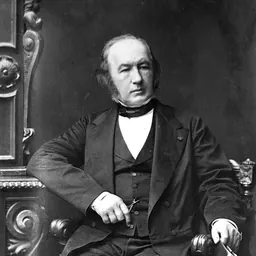
Gerson Georg Trier (23 April 1851 - 22 December 1918) was a Danish social democrat, journalist, language teacher and translator.
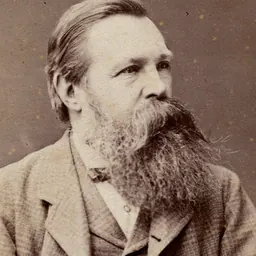
Biography Gerson Trier was the son of the manufactured goods wholesaler Ludvig Meyer Trier (1815–1884) and of Celilie Trier née Melchior (1819–1890). In 1869 he graduated from the "Det von Westenske Institute" and then studied Romance languages at the University of Copenhagen. In 1876, he went to France, where he continued his studies and graduated. For the next three years he taught languages in Denmark, trained in a wallpaper factory and began studying chemistry. In 1879, he moved to Paris and continued his chemical studies, finding a job in a sugar factory. Later he became an authorized notary in Paris and in 1883 he headed a department of the Paris trading house in London. He lived in London until 1888, where he made contact with Friedrich Engels, with whom he entered into correspondence.
At the end of January 1885, Gerson Trier asked Engels for permission to translate The Origin of the Family, Private Property and the State. Engels also wrote a foreword for the Danish translation: “Note til danske læser.” In 1888 the translation was published as Volume 7 of the “Socialistisk Bibliotek”, which was edited by Emil Wiinblad.
In 1888 he returned to Copenhagen and joined a Marxist discussion club, which consisted of members of the Social Democratic Party, together with the Danish wood turner Nikolaj Lorents Petersen, whom Trier had already met in Paris and London. In 1889, the pair tried to send revolutionary representatives of the Danish labor movement to the founding congress of the Second International (14-20 July 1889 in Paris). For this they wrote various articles in their newspaper Arbejderen, Socialistisk Ugeblad. The weekly Arbejderen, Socialistisk Ugeblad, founded in April 1889, then became the organ of the Revolutionary Socialist Workers' Party, which also published several works by Friedrich Engels for the first time in Danish.
On 20 November 1891 Trier married Christiane Hansine Theodora Hansen, who was born on 23 March 1870 in Tårnby on the island of Amager. During World War I, the Danish Social Democrats entered the bourgeois government under Thorvald Stauning. Gerson Trier took a position against this in 1916, by declaring that he no longer wanted to be a member of a "bourgeois party". He died on 22 December 1918 as a result of a serious illness.
Don’t just read it —
keep it.
Full-length biographies made to live with: read them, listen on the way to work, watch them tonight.
- E-book
- Audio
- Video
Instant download · yours to keep · every purchase keeps this site free
Important facts
People in Gerson Trier's life
Named in this biography and alive at the same time
Related people
Same field, nearest in time


Contemporaries
People whose lives overlapped Gerson Trier's


Frequently asked questions
Who was Gerson Trier?
Danish translator
When was Gerson Trier born?
Gerson Trier was born on 23 April 1851 in Copenhagen.
When did Gerson Trier die?
Gerson Trier died on 22 December 1918 in Copenhagen.
What was Gerson Trier's occupation?
Gerson Trier was a translator.
What nationality was Gerson Trier?
Gerson Trier was Danish.
Sources & further reading
Cite this page
APA: Biography.guide. (2026). Gerson Trier. https://biography.guide/gerson-trier/
MLA: "Gerson Trier." Biography.guide, https://biography.guide/gerson-trier/.
Chicago: "Gerson Trier." Biography.guide. https://biography.guide/gerson-trier/.
Data last updated: 2026-09-20 · Spot an error? Report a correction.
Page generated 2026-09-27 05:04 UTC