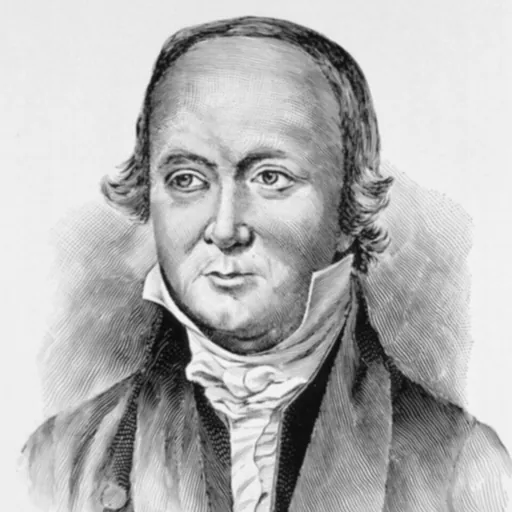
About Gerard Troost
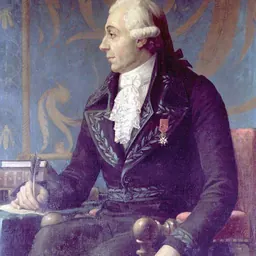
Lived 1776 – 1850 (aged 74). Gerard Troost was a Dutch and American physician, naturalist, geologist, herpetologist, mineralogist and scientific collector.
Gerardus Troost (March 5, 1776 – August 14, 1850) was a Dutch-American medical doctor, naturalist, mineralogist, and founding member and first president of the Philadelphia Academy of Natural Sciences.
Biography Troost was born in Den Bosch, Netherlands, to Anna Cornelia (Van Heeck) and Everardus Josephus Troost. He was the older brother of Benoist Troost. He received the degree of Doctor of Medicine from the University of Leyden, and of Master in Pharmacy, in 1801, from the University of Amsterdam. After a brief practice at Amsterdam and the Hague, he was enlisted in the army as a private soldier, and then as an officer of the first class in the medical department. During these periods of service, he was wounded in the thigh and in the head. In 1816, Troost was elected as a member of the American Philosophical Society.
In 1825, he joined the New Harmony experiment, in New Harmony, Indiana, with Thomas Say. In 1827, he moved to Nashville, Tennessee, where he became a professor of mineralogy and chemistry at the University of Nashville. From 1831 until 1850, he served as the State Geologist of Tennessee. While there he sent animal specimens to John Edwards Holbrook. His most enduring contribution to science was his method of doing geological surveys, which was carried on by David Dale Owen, son of Robert Owen, who went on to do several surveys of the American northwest.
Work and legacy Troost is credited with describing, as new species, two North American reptiles: the alligator snapping turtle (Macrochelys temminckii) and the western cottonmouth (Agkistrodon piscivorus leucostoma). He is honored by having a subspecies of turtle named after him, the Cumberland turtle (Trachemys scripta troostii). The reddish-colored crystals of a variety of willemite found in New Jersey are known as troostite.
In 1866, Dr. Benjamin F. Shumard named a genus of fossil blastoids Troosticrinus in his honor.
In 1909, Elvira Wood edited and published Troost's unpublished monograph on the crinoids of Tennessee (1850). This brought Troost's previously unknown work back into geological and paleontological discourse.
Don’t just read it —
keep it.
Full-length biographies made to live with: read them, listen on the way to work, watch them tonight.
- E-book
- Audio
- Video
Instant download · yours to keep · every purchase keeps this site free
Important facts
People in Gerard Troost's life
Named in this biography and alive at the same time

Related people
Same field, nearest in time





Contemporaries
People whose lives overlapped Gerard Troost's



Frequently asked questions
Who was Gerard Troost?
American mineralogist
When was Gerard Troost born?
Gerard Troost was born on 5 March 1776 in 's-Hertogenbosch, Netherlands.
When did Gerard Troost die?
Gerard Troost died on 14 August 1850 in Nashville.
What was Gerard Troost's occupation?
Gerard Troost was a physician, naturalist, geologist, herpetologist, mineralogist and scientific collector.
What nationality was Gerard Troost?
Gerard Troost was Dutch and American.
Sources & further reading
Cite this page
APA: Biography.guide. (2026). Gerard Troost. https://biography.guide/gerard-troost/
MLA: "Gerard Troost." Biography.guide, https://biography.guide/gerard-troost/.
Chicago: "Gerard Troost." Biography.guide. https://biography.guide/gerard-troost/.
Data last updated: 2026-09-22 · Spot an error? Report a correction.
Portrait: Wikimedia Commons · author & licence
Page generated 2026-09-27 05:03 UTC