
About Georgy Grechko
Lived 1931 – 2017 (aged 85). Georgy Grechko was a Russian engineer, astronaut, writer, television presenter and flight engineer.
Biography Grechko graduated from the Leningrad Institute of Mechanics with a doctorate in mathematics. He was a member of Communist Party of the Soviet Union. He went on to work at Sergei Korolev's design bureau and from there was selected for cosmonaut training for the Soviet Moon programme. When that program was cancelled, he went on to work on the Salyut space stations.
Grechko made the first spacewalk in an Orlan space suit on 20 December 1977 during the Salyut 6 EO-1 mission.
He was twice awarded the medal of Hero of the Soviet Union.
He resigned from the space programme in 1992 to lecture on atmospheric physics at the Russian Academy of Sciences. Grechko has written his memoirs as "Космонавт No. 34: От лучины до пришельцев," (Cosmonaut No. 34 From Splinter to Aliens) Olma Media Grupp, Moscow, 2013.
A minor planet 3148 Grechko discovered by Soviet astronomer Nikolai Stepanovich Chernykh in 1979 is named after him.
Grechko had a brief cameo role in Richard Viktorov's 1981 film Per Aspera Ad Astra, and as a result attained pop culture status in his home city of Leningrad. He also appeared in the 1979 film Under the Constellation Gemini.
Grechko, along with Alexei Leonov, Vitaly Sevastyanov, and Rusty Schweickart established the Association of Space Explorers in 1984. Membership is open to all people who have flown in outer space.
Grechko died aged 85 as a result of several chronic illnesses. He was survived by wife Lyudmila and daughter Olga. The Soyuz 17 rocket launched on 26 December 1974 and successfully docked with the Salyut 4 Space Station on 12 January 1975. This successful docking marked only the second complete success in five Soyuz-Salyut undertakings. The cosmonauts spent the remainder of their mission aboard the three room, 20 ton station. During their time aboard the Salyut 4 Space Station, Grechko and Gubarev conducted a wide range of studies that included infrared temperature scans of earth's upper atmosphere, stellar observations and X-ray studies of the sun. In order to maintain fitness in weightlessness, Grechko spent up to two hours a day exercising on a bicycle and treadmill, as well as experimenting with wearing negative pressure suits. Grechko and Gubarev spent a total of 30 days in orbit, which set the Soviet record at the time, before returning safely on 9 February 1975.
In December 1977, Georgy Grechko returned to space with Yuri Romanenko during the Soyuz 26-Salyut 6 mission. The crew boarded the Soviet Salyut 6 Space Station, where they would stay long enough to eclipse the 84-day record set in 1974 by US Skylab astronauts Gerald Carr, William Pogue, and Edward Gibson. In January 1978, Grechko and Romanenko were joined by fellow cosmonauts Vladimir Dzhanibekov and Oleg Makarov, who linked their Soyuz 27 craft with the Salyut 6 Space Station and spent five days aboard the station along with Grechko and Romanenko, before returning to earth in Soyuz 26 craft. This event marked the first double docking and first double crew occupancy of a space station. On March 4, Grechko and Romanenko were joined by a different Soviet crew, consisting of Aleksei Gubarev (Grechko's partner from his previous mission) and Czechoslavakian Vladimir Raemk, the first non-Russian cosmonaut.
The crew members of the Salyut 6 Space Station became the first men to carry out a systematic visual-instrumental observation of the earth. Their extended stay is what allowed the crew to pull off such an observation, as it takes two to three weeks for human eyesight to adapt to conditions in orbit. After several weeks in orbit, the members of the Salyut 6 crew were able to examine the finer details of the landscape, which included the traces left on the water surface by typhoons, enormous solitary waves that were over 100 kilometers long, and some of the characteristic features of the ocean floor. On March 15, after spending a record-setting total of 96 days in orbit, Grechko and Romanenko finally left the Salyut 6 Space Station and returned to earth aboard the Soyuz 27 spacecraft. After spending such an extended period of time in orbit, the crew began an expanded exercise routine a week prior to departure that was intended to minimize the effects of the return to normal gravity. Despite this training, both Grechko and Romanenko struggled to complete easy tasks shortly following their return, such as turning a radio dial or lifting a cup of tea. Fortunately, neither cosmonaut reported any serious readjustment issues.
Honours and awards Twice Hero of the Soviet Union Pilot-Cosmonaut of the USSR Three Orders of Lenin Medal "For Merit in Space Exploration" Medal "For Distinguished Labour" Jubilee Medal "In Commemoration of the 100th Anniversary since the Birth of Vladimir Il'ich Lenin" Medal "For the Development of Virgin Lands" Honorary membership in the Danish Astronautical Society Distinguished Member, Association of Space Explorers
Don’t just read it —
keep it.
Full-length biographies made to live with: read them, listen on the way to work, watch them tonight.
- E-book
- Audio
- Video
Instant download · yours to keep · every purchase keeps this site free
Important facts
People in Georgy Grechko's life
Named in this biography and alive at the same time




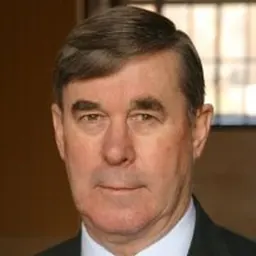
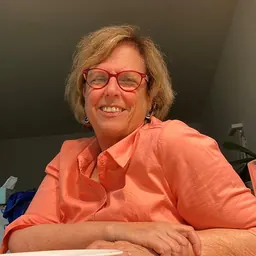
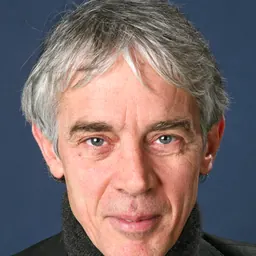
Related people
Same field, nearest in time


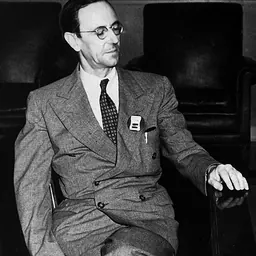
Contemporaries
People whose lives overlapped Georgy Grechko's

Frequently asked questions
Who was Georgy Grechko?
Soviet cosmonaut (1931–2017)
When was Georgy Grechko born?
Georgy Grechko was born on 25 May 1931 in Saint Petersburg.
When did Georgy Grechko die?
Georgy Grechko died on 8 April 2017 in Moscow.
What was Georgy Grechko's occupation?
Georgy Grechko was an engineer, astronaut, writer, television presenter and flight engineer.
What nationality was Georgy Grechko?
Georgy Grechko was Russian.
Sources & further reading
Cite this page
APA: Biography.guide. (2026). Georgy Grechko. https://biography.guide/georgy-grechko/
MLA: "Georgy Grechko." Biography.guide, https://biography.guide/georgy-grechko/.
Chicago: "Georgy Grechko." Biography.guide. https://biography.guide/georgy-grechko/.
Data last updated: 2026-09-20 · Spot an error? Report a correction.
Page generated 2026-09-27 05:30 UTC