
About Georgine Gerhard
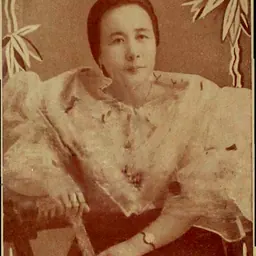
Lived 1886 – 1971 (aged 85). Georgine Gerhard was a Swiss teacher, pedagogue and feminist movement.
Georgine Gerhard (18 August 1886 - 21 December 1971) was a Swiss school teacher and administrator who was forced by hearing loss to take early retirement. Her wider legacy comes from her campaigning. She was a women's rights activist and also backed various humanitarian causes. During the 1930s she turned her attention to the growing refugee crisis which re-emerged in Europe during the middle part of the twentieth century. In 1934 she established the Basel section of the "Schweizer Hilfswerk für Emigrantenkinder" ("Swiss Support for Émigré Children" organisation / BHEK), following that organisation's foundation in Zürich by her fellow activist, Nettie Sutro-Katzenstein, the previous year.
Life Provenance and early years Georgine Gerhard was born in Basel, the third of her parents' five children. She grew up in a spacious house with a large garden in the Gellert Quarter, a prosperous part of the city on the left bank (south side) of the river. Emil Gerhard, her father, was a top manager ("Prokurist") with the long-established "Sarasin Brothers" industrial weaving business. but for women of Gerhard's generation university degrees were still highly unusual, and there seems to have been no suggestion that she should enrol as a university student.
Hearing loss After teaching for ten years she was forced by progressively encroaching hearing loss to abandon her teaching role in 1919, but she remained at the school for more than two further decades, employed both as "school secretary" and in a complementary advisory role until taking early retirement in 1942. Her experiences inspired her to co-found, in 1916, the "Vereinigung für Frauenstimmrecht Basel und Umgebung", committed to the advocacy of votes for women in and around Basel. She served as president of the campaigning organisation between 1917 and 1922, and again between 1935 and 1941. She became closely networked with other likeminded campaigners, such as Emma Graf in Bern and her colleague at the school, the teacher Rosa Göttisheim. It was as a representative of the SVF that she became a regular delegate to conferences of what was then the "International Woman Suffrage Alliance" (IWSA), which over the years involved trips to Paris, Berlin and Prague. In 1934 she set up a parallel organisation in her home city, the "Basler Hilfe für Emigrantenkinder" (BHEK), rebadged in 1935 as the "Schweizer Hilfswerk für Emigrantenkinder" (SHEK). She served as president of the BHEK / SHEK, working closely with Nettie Sutro-Katzenstein, an exiled Jewish scholar originally from Munich, who sat alongside her as a fellow member of the executive committee. Between 1934 and 1939 they created an infrastructure of temporary welfare support and care/accommodation for slightly below 5,000 Jewish children, including 2,574 from Germany and 2.318 from Russia, whose parents were believed to have escaped to France, while the children waited to be reunited with their families in the relative safety of Switzerland. The first train arrived in April 1934. The year there were 122 children. The next year there were 543. By the time war broke out in 1939 an increasingly structured pattern had been established whereby the children were looked after in Switzerland for between 6 and 12 weeks before moving on to another safe country. Sources stress the resolutely non-political; nature of the work. The women of SHEK worked with all willing volunteers and families, their only focus being on providing suitable recreational and vacational accommodation with Swiss host families for the children who fell into their protective care. Organising the children's accommodation often included gruelling negotiations with cantonal authorities. Not all cantons were supportive: some refused to admit the refugee children while others demanded large cash deposits before they would co-operate. Negotiations with the national government in Bern were also tough. At one stage the upper age limit for children permitted to enter the country was reduced from 17 to 14. Gerhard protested in vain that in Hitler's Germany the Jewish teenagers aged between 15 and 17 - especially the boys - were at particular risk. A particular case in point came in the aftermath of the "November pogrom" in 1938, when Gerhard and Sutro-Katzenstein succeeded in obtaining a special permit in respect of 300 Jewish children from Frankfurt, Konstanz and one or two other towns in southern Germany near the Swiss border at Basel, the so-called "300-Kinder-Aktion". The children arrived in January 1939, their number increased beyond the 300 quota by children from the border region in fear for their lives. Some of the official bodies that had agreed to the admission of the 300 now refused admission to any of the children, and a number had to be smuggled illegally across the border. Georgine Gerhard's initial reaction was to run to the press and have the responsible officials and politicians shamed, but in the end the cooler counsels of her SHEK colleagues prevailed, and the necessary negotiations with the various authorities involved were concluded "behind the scenes".
Gerhard also found time to serve as a vice-president of the "Arbeitsgemeinschaft Frau und Demokratie" ("Women and Democracy Working Community") between 1940 and 1954.
After the war Her wartime engagement left Georgine Gerhard's international profile greatly enhanced. In 1947 she accepted an invitation to become a member of the United Nations Study Commission for Women's Questions.
Recognition In 1961 Georgine Gerhard accepted an Honorary Doctorate in Medicine ("Dr. honoris causa"), conferred in recognition of her commitment and work on behalf of refugees. She received another significant honour from the "Kiriat Yearim Swiss children's village" in Israel which named one of its houses after her.
Don’t just read it —
keep it.
Full-length biographies made to live with: read them, listen on the way to work, watch them tonight.
- E-book
- Audio
- Video
Instant download · yours to keep · every purchase keeps this site free
Important facts
People in Georgine Gerhard's life
Named in this biography and alive at the same time
Related people
Same field, nearest in time


Contemporaries
People whose lives overlapped Georgine Gerhard's


Frequently asked questions
Who was Georgine Gerhard?
Swiss teacher (1886-1971)
When was Georgine Gerhard born?
Georgine Gerhard was born on 18 August 1886 in Basel.
When did Georgine Gerhard die?
Georgine Gerhard died on 21 December 1971 in Basel.
What was Georgine Gerhard's occupation?
Georgine Gerhard was a teacher, pedagogue and feminist movement.
What nationality was Georgine Gerhard?
Georgine Gerhard was Swiss.
Sources & further reading
Cite this page
APA: Biography.guide. (2026). Georgine Gerhard. https://biography.guide/georgine-gerhard/
MLA: "Georgine Gerhard." Biography.guide, https://biography.guide/georgine-gerhard/.
Chicago: "Georgine Gerhard." Biography.guide. https://biography.guide/georgine-gerhard/.
Data last updated: 2026-09-22 · Spot an error? Report a correction.
Page generated 2026-09-27 05:05 UTC