
About Georgina Kermode
Lived 1868 – 1923 (aged 54–55). Georgina Kermode was a British and Australian engineer and suffragist.
Georgina Kermode MIM (1868 – 5 September 1923) was a suffragette, metallurgist, engineering entrepreneur and holder of numerous patents. In 1916 she became the first woman member of the Institute of Metals.
Early life Kermode was born Georgina Elizabeth Fawns in Barnet, United Kingdom in 1868, daughter of the Rev. J. Fawns, of Launceston. Her family were from Tasmania and when she was seventeen Kermode married another Tasmanian landowner Robert Crellin Kermode. She lived in Mona Vale, on a building known as Calendar House, probably as a result of its 12 chimneys.
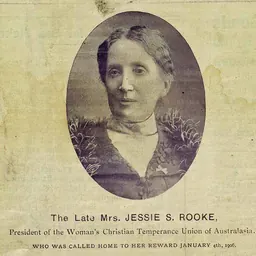
Suffrage By the time she was twenty seven, Kermode had become an active suffragette and ran the Campbell Town Woman's Christian Temperance Union. Kermode became the Colonial Suffrage Superintendent of the WCTU. She organised propaganda to put pressure on politicians and in 1896 she arranged a winter campaign of meetings and petitions all over Tasmania. She worked with Jessie Rooke.
Career Kermode's husband held mining interests and Kermode became a director of the Tasmanian Metals Extraction Co. Ltd. She became an expert in the metal ores of Tasmania. The business had technical difficulties in reaching the metals and Kermode travelled to England to gain expertise in the electrolytic extraction for the treatment of the zinc-lead ores in about 1904. Kermode did not return to Australia. Her husband did travel to the UK when he joined the army in 1914. From 1907 to 1923 Kermode took out patents for a variety of inventions. There were 27 across the United Kingdom, France, Switzerland, Denmark and the United States. Her main inventions related to the automatic vending of postage stamps. The UK post office bought her automatic machines and the very first of them was put in Houses of Parliament. They were in place until 1920. One of the advantages of her machines was the improved ability to detect counterfeit coins. Other patents were for improvements in furnaces, breathing apparatus for firefighters and divers, and a diving suit.
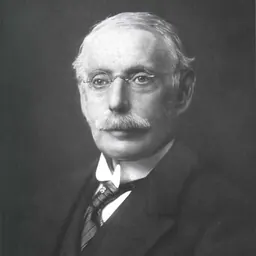
When she was elected to the Institute of Metals on 21 December 1916 Kermode became the first woman to be a member. She was proposed by Sir George Beilby, Professor Alfred Kirby Huntington and Thomas Turner. She was a regular attendee at institute events and was involved in other mining organisations. She died in Middlesex and was taken to Tasmania to be buried.
References and sources
Don’t just read it —
keep it.
Full-length biographies made to live with: read them, listen on the way to work, watch them tonight.
- E-book
- Audio
- Video
Instant download · yours to keep · every purchase keeps this site free
Important facts
People in Georgina Kermode's life
Named in this biography and alive at the same time


Related people
Same field, nearest in time

Contemporaries
People whose lives overlapped Georgina Kermode's


Frequently asked questions
Who was Georgina Kermode?
suffrage campaigner and engineer
When was Georgina Kermode born?
Georgina Kermode was born in 1868 in Barnet.
When did Georgina Kermode die?
Georgina Kermode died on 5 September 1923 in London.
What was Georgina Kermode's occupation?
Georgina Kermode was an engineer and suffragist.
What nationality was Georgina Kermode?
Georgina Kermode was British and Australian.
Sources & further reading
Cite this page
APA: Biography.guide. (2026). Georgina Kermode. https://biography.guide/georgina-kermode/
MLA: "Georgina Kermode." Biography.guide, https://biography.guide/georgina-kermode/.
Chicago: "Georgina Kermode." Biography.guide. https://biography.guide/georgina-kermode/.
Data last updated: 2026-09-20 · Spot an error? Report a correction.
Page generated 2026-09-27 05:29 UTC