
Georges Sébastian
Hungarian-born French conductor
About Georges Sébastian
Lived 1903 – 1989 (aged 85). Georges Sébastian was a Hungarian and French conductor, theatre manager, stage manager, musician, music educator and chapelmaster.
Georges Sébastian (August 17, 1903 – April 12, 1989) was a French conductor of Hungarian birth, particularly associated with Wagner and the post-romantic repertory (Bruckner, Mahler, Richard Strauss). He was born in Budapest and died in La Hauteville.
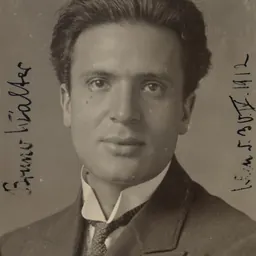
Born György Sebestyén, he studied first the piano and violin in his native Budapest, before turning to composition. He then worked with Leo Weiner, Zoltán Kodály and Béla Bartók. In 1921, he was engaged as répétiteur at the Munich State Opera, where he worked with Bruno Walter and became his assistant conductor the following year.
He then spent one season from 1923–24 as assistant conductor at the Metropolitan Opera in New York, where he was heard as pianist. Upon his return in Europe, he conducted at the opera houses of Hamburg and Leipzig, before becoming first conductor at the Städtische Oper Berlin (1927–30). He then became musical director of the Moscow Radio and Philharmonic Orchestra (1931–37). In 1935, he conducted there the first performance of the original version of Moussorgsky's opera, Boris Godunov.
In 1938, he returned to America and spent the war years there, holding several posts including conductor at the San Francisco Opera, musical director of a radio program for CBS, and musical director of the Scranton Philharmonic Orchestra.
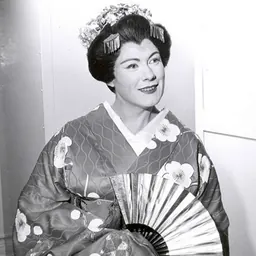
After the war, he returned to Europe, and settled in France. He made his debut at the Palais Garnier in 1947, and was to conduct there the debuts of both Maria Callas (1958) and Renata Tebaldi (1959). He was also very active conducting on French radio, notably the complete symphonies of Bruckner and Mahler.
He recorded complete sets of Lakmé (with Mado Robin, 1952) and Mignon (1953) for Decca Records; and Thaïs (with Géori Boué, 1952) and Werther (with Suzanne Juyol, 1952) for Urania. His best-known recording may be, however, that of excerpts from Carmen (1946), with Risë Stevens, Nadine Conner, Raoul Jobin and Robert Weede, for Columbia Records. Among Sébastian's "pirate" recordings are Elektra (1966) and Salome (1967), both with Anja Silja.
EMI has published the kinescope of the Callas debut, "La Grande Nuit de l'Opéra," on DVD. Included are excerpts from La forza del destino, Norma, Il trovatore, Il barbiere di Siviglia, and a staged Act II of Tosca (also with Albert Lance and Tito Gobbi).
Don’t just read it —
keep it.
Full-length biographies made to live with: read them, listen on the way to work, watch them tonight.
- E-book
- Audio
- Video
Instant download · yours to keep · every purchase keeps this site free
Important facts
People in Georges Sébastian's life
Named in this biography and alive at the same time



Related people
Same field, nearest in time



Contemporaries
People whose lives overlapped Georges Sébastian's
Frequently asked questions
Who was Georges Sébastian?
Hungarian-born French conductor (1903-1989)
When was Georges Sébastian born?
Georges Sébastian was born on 17 August 1903 in Budapest.
When did Georges Sébastian die?
Georges Sébastian died on 12 April 1989 in La Hauteville.
What was Georges Sébastian's occupation?
Georges Sébastian was a conductor, theatre manager, stage manager, musician, music educator and chapelmaster.
What nationality was Georges Sébastian?
Georges Sébastian was Hungarian and French.
Sources & further reading
· Wikipedia: Georges Sébastian
Cite this page
APA: Biography.guide. (2026). Georges Sébastian. https://biography.guide/georges-sebastian/
MLA: "Georges Sébastian." Biography.guide, https://biography.guide/georges-sebastian/.
Chicago: "Georges Sébastian." Biography.guide. https://biography.guide/georges-sebastian/.
Data last updated: 2026-09-20 · Spot an error? Report a correction.
Page generated 2026-09-27 05:18 UTC