
About Georges Phillipe Trousseau
Lived 1833 – 1894 (aged 61). Georges Phillipe Trousseau was a French physician.
Georges Phillipe Trousseau (1 May 1833 – 4 May 1894) was a French physician who became the royal doctor of the Kingdom of Hawaii, and engaged in a variety of agricultural ventures.
Biography Georges Phillipe Trousseau was born in Paris on 1 May 1833. His father was pioneering internist Armand Trousseau (1801–1867). He claimed to have served in the army during the French Revolution of 1848 known as the "June days". He taught Georges Philippe biology, he said: "I gave him Spallanzani, and every day he reads and analyzes a chapter." He also taught him botany. He and his wife legally separated by 1865.
He followed his father's profession and became a physician in 1858.
Hawaiian practice After his father's death in 1867, Trousseau sailed to Australia. At some time he went to New Zealand, and then to the Hawaiian Islands in May 1872. There he became known with the slightly less French-sounding name George P. Trousseau. Perhaps coincidentally, his father's colleague Philippe Ricord had a nephew who took the name John Ricord when he came to Hawaii in the 1840s. President of the board of health and Minister of the Interior Ferdinand W. Hutchinson consulted Trousseau when Kamehameha V became ill, but the king died that December. His successor, King Lunalilo, was elected by the legislature. Since Lunalilo was also a patient of Trousseau, his influence grew. On 18 March 1873 he officially became a citizen of the Kingdom of Hawaii. One of his first public health issues was a smallpox epidemic. Trousseau was a firm believer in the germ theory of disease, and used this knowledge to limit the death toll of the outbreak, compared to previous waves that had devastated the native Hawaiian population. His other major influence was on the leprosy policy. Convinced that leprosy was contagious, Trousseau advocated the enforcement of a strict segregation policy. Kalākaua was also a patient of Trousseau, and some reports tell of Kalākaua hiding in Trousseau's house during the protests following his election. He also entered into a relationship with a Hawaiian woman Makanoe, who was already married.
In 1879 he sold the ranch and 11000 sheep to English merchant Henry Nicholas Greenwell and started a new venture,
Around this time, his wife back in Paris started legal action to recover some debts of Trousseau's that she had settled.
Medicine and ostriches He re-opened his medical practice in May 1882. When Father Damien was visiting Honolulu from Kalawao in the leper colony at Kalaupapa on the island of Molokai early in 1885, Trousseau diagnosed that the future saint had contracted the disease. In 1885 he attended Queen Emma when she died. The birds could be viewed by visitors to Kapiolani Park.
His nephew Jean Morisseau, the son of Achille Morisseau and his only sister Madame Morriseau, managed the ranch, until his sister's death in early 1894. The farm was later sold to Paul Isenberg.
Later years and death After the overthrow of the Kingdom of Hawaii, he was attacked for being a royalist because of his associations with kings and queens. However, he pointed out that and his father fought for making and keeping France a republic. In the Blount Report, Trousseau accused the descendants of American missions of conspiring with John L. Stevens in the overthrow. Stevenson composed a poem "The Pirates' Island" on the suggestion of Trousseau while recovering.
J. Marion Sims, a colleague of his father, attacked Trousseau in his autobiography:He was a gambler and every thing else that was bad. His father was worried to death with his dissoluteness and foolish extravagance, and had to pay enormous sums of money to extricate him from his disgraceful orgies and gambling complications. Trousseau admitted he left Paris penniless after losing his money on speculations, but said Sims sensationalized the story.
In July 1893 he resigned from the board of health, protesting that the strict segregation policy (which he had supported about 20 years earlier) was no longer scientifically necessary.
Trousseau died on 4 May 1894 and was buried in Makiki Cemetery by his mistress Makanoe. Alexander Cartwright was executor of his will, although he died first and the new executor was Alexander's son Bruce Cartwright. His properties were left to Makanoe. This resulting in several lawsuits by his widow, who was still owed money from the earlier settlement. Trousseau had mortgages and other debts which had to be paid off. Lawyers hired by his widow included Alfred S. Hartwell and William F. L. Stanley.
A street is named for him in the part of Honolulu that used to be the ostrich farm, at . In the 1999 film Molokai: The Story of Father Damien, Trousseau was played by Michael W. Perry.
Don’t just read it —
keep it.
Full-length biographies made to live with: read them, listen on the way to work, watch them tonight.
- E-book
- Audio
- Video
Instant download · yours to keep · every purchase keeps this site free
Important facts
Family & relationships
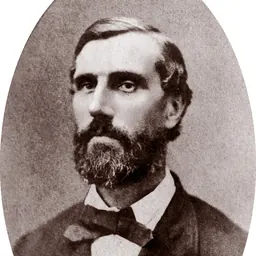
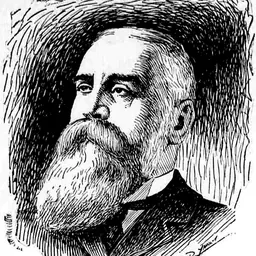
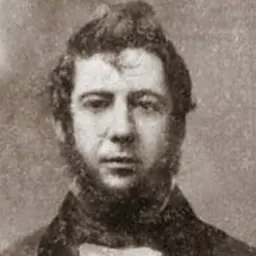
People in Georges Phillipe Trousseau's life
Named in this biography and alive at the same time




Related people
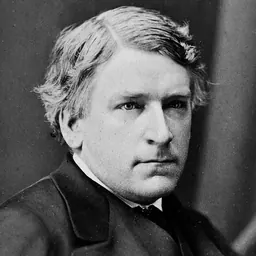
Same field, nearest in time

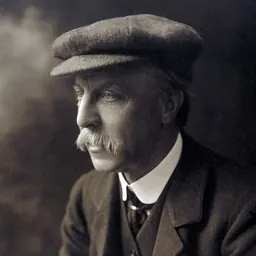
Contemporaries
People whose lives overlapped Georges Phillipe Trousseau's
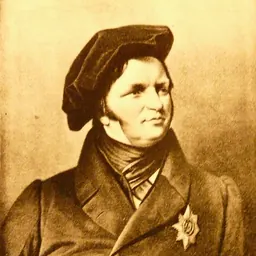
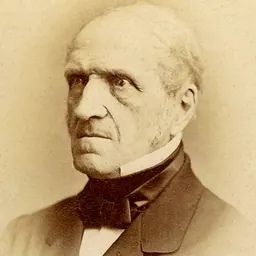




Frequently asked questions
Who was Georges Phillipe Trousseau?
French physician (1833-1894)
When was Georges Phillipe Trousseau born?
Georges Phillipe Trousseau was born on 1 May 1833 in Paris.
When did Georges Phillipe Trousseau die?
Georges Phillipe Trousseau died on 4 May 1894 in Honolulu.
What was Georges Phillipe Trousseau's occupation?
Georges Phillipe Trousseau was a physician.
What nationality was Georges Phillipe Trousseau?
Georges Phillipe Trousseau was French.
Sources & further reading
· Wikipedia: Georges Phillipe Trousseau
· DBpedia: Georges Phillipe Trousseau
Cite this page
APA: Biography.guide. (2026). Georges Phillipe Trousseau. https://biography.guide/georges-phillipe-trousseau/
MLA: "Georges Phillipe Trousseau." Biography.guide, https://biography.guide/georges-phillipe-trousseau/.
Chicago: "Georges Phillipe Trousseau." Biography.guide. https://biography.guide/georges-phillipe-trousseau/.
Data last updated: 2026-09-22 · Spot an error? Report a correction.
Page generated 2026-09-27 05:29 UTC