
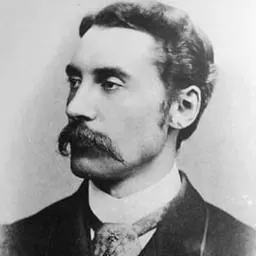
Georges de Morsier
Swiss neurologist and psychiatrist
About Georges de Morsier
Lived 1894 – 1982 (aged 87). Georges de Morsier was a Swiss neurologist, psychiatrist and university teacher.
Georges de Morsier (25 February 1894, Paris – 9 January 1982, Geneva) was a Swiss neurologist and psychiatrist best known for his work on the classification of hallucinatory syndromes. He distinguish between those caused by sensory deprivation, organic brain lesions, and chronic psychosis. He is also remembered for naming several syndromes, including Charles Bonnet syndrome, Zingerle syndrome, Clérambault syndrome, and for the eponym De Morsier's syndrome (now known as septo-optic dysplasia).
Early life and education De Morsier studied natural sciences and medicine at the University of Geneva, completing his medical degree in the early 1920s. He then moved to Paris for clinical training, where he became a resident under the French psychiatrist Gaétan de Clérambault, whose work on automatisme mental would later shape De Morsier's theoretical contributions to psychiatry.
Returning to Geneva, he began teaching at the University of Geneva, where he was appointed Privatdozent in 1928 and associate professor in 1941. His growing reputation in the field led to his election as president of the Swiss Neurological Society from 1946 to 1949, a role that marked his consolidation as a leading figure in Swiss neuropsychiatry.
In 1960, he was appointed full professor of neurology, and from 1962 onward, he directed the neurological polyclinic at Geneva University Hospital.
Contributions to psychiatry and neurology
Hallucinatory syndromes and clinical classification De Morsier's most significant contribution was his attempt to create a clinical cartography of hallucinations. He aimed to describe the hallucinations, distinguishing their causes, structures, and psychological contexts. He identified and formalized several distinct syndromes involving hallucinations:
Charles Bonnet syndrome refers to complex visual hallucinations experienced by cognitively healthy individuals with significant visual impairment. First described in the 18th century by Swiss naturalist Charles Bonnet, De Morsier reintroduced and named the condition in the 20th century. His framing helped establish that hallucinations can occur in the absence of psychosis, particularly in cases of sensory deprivation. Zingerle syndrome, named after Austrian neurologist Hermann Zingerle, involves a combination of visual, tactile, and somatic hallucinations along with paranoid delusions. De Morsier highlighted the syndrome's association with organic brain pathology, such as temporal lobe epilepsy, differentiating it from purely psychiatric hallucinosis. Clérambault syndrome was named by De Morsier in honor of his mentor, Gaétan de Clérambault. While Clérambault had already described a phenomenon known as automatisme mental, De Morsier formalized a clinical syndrome characterized by auditory and visual hallucinations, mental automatisms, and self-referential delusions, typically occurring in chronic psychosis. By coining the term, he preserved Clérambault's legacy within a modern diagnostic framework.
Through these syndromes, De Morsier illustrated that hallucinations arise from different neural and psychological processes, challenging the prevailing notion that all hallucinations were indicative of schizophrenia or psychosis.
Septo-optic dysplasia De Morsier is also credited with early descriptions of a rare congenital malformation now known as septo-optic dysplasia, a condition involving optic nerve hypoplasia and absence of the septum pellucidum. The condition was historically referred to as De Morsier's syndrome, based on his 1956 paper describing these anatomical anomalies.
Selected works Les trémulations fibrillaires et la contracture rigide du cœur. Medical thesis, Geneva, 1922. Pathologie du diencéphale. Les syndromes psychologiques et syndromes sensorio-moteurs. Schweizer Archiv für Neurologie und Psychiatrie, 1944. Études sur les dysraphies crânioencéphaliques. III. Agénésie du septum pellucidum avec malformation du tractus optique. Schweizer Archiv, 1956. Contribution à l’étude clinique des altérations de la formation réticulée: Le syndrome sensorio-moteur et psychologique. Journal of the Neurological Sciences, 1966.
Don’t just read it —
keep it.
Full-length biographies made to live with: read them, listen on the way to work, watch them tonight.
- E-book
- Audio
- Video
Instant download · yours to keep · every purchase keeps this site free
Important facts
People in Georges de Morsier's life
Named in this biography and alive at the same time

Related people
Same field, nearest in time


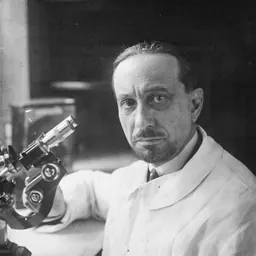
Contemporaries
People whose lives overlapped Georges de Morsier's
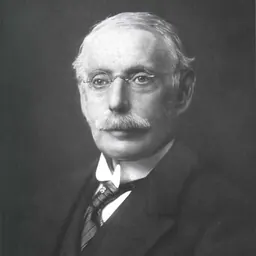

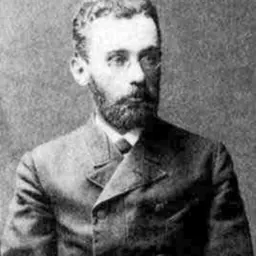
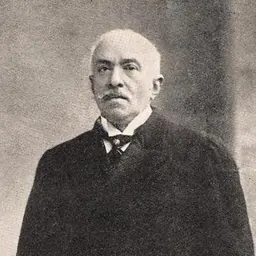

Frequently asked questions
Who was Georges de Morsier?
Swiss neurologist and psychiatrist (1894-1982)
When was Georges de Morsier born?
Georges de Morsier was born on 25 February 1894 in 16th arrondissement of Paris.
When did Georges de Morsier die?
Georges de Morsier died on 9 January 1982 in Geneva.
What was Georges de Morsier's occupation?
Georges de Morsier was a neurologist, psychiatrist and university teacher.
What nationality was Georges de Morsier?
Georges de Morsier was Swiss.
Sources & further reading
· Wikipedia: Georges de Morsier
Cite this page
APA: Biography.guide. (2026). Georges de Morsier. https://biography.guide/georges-de-morsier/
MLA: "Georges de Morsier." Biography.guide, https://biography.guide/georges-de-morsier/.
Chicago: "Georges de Morsier." Biography.guide. https://biography.guide/georges-de-morsier/.
Data last updated: 2026-09-20 · Spot an error? Report a correction.
Page generated 2026-09-27 05:24 UTC