
About George Zweig
Born 1937. George Zweig is an American physicist, neuroscientist and neurobiologist, known for Quark model.
George Zweig (; born May 30, 1937) is an American physicist of Russian-Jewish origin. He was trained as a particle physicist under Richard Feynman. He introduced, independently of Murray Gell-Mann, the quark model (although he named it "aces"). He later turned his attention to neurobiology. He has worked as a research scientist at Los Alamos National Laboratory and Massachusetts Institute of Technology, and in the financial services industry.
Early life and education Zweig was born on May 30, 1937 in Moscow, Russian SFSR , Soviet Union , into a Jewish family. The introduction of the concept of quarks provided a cornerstone for particle physics.
Like Gell-Mann, he realized that several important properties of particles such as baryons (e.g., protons and neutrons) could be explained by treating them as triplets of other constituent particles, with fractional baryon number and electric charge. Unlike Gell-Mann, Zweig was partly led to his picture of the quark model by the peculiarly attenuated decays of the meson to , a feature codified by what is now known as the OZI Rule, the "Z" in which stands for "Zweig". In subsequent technical terminology, ultimately Gell-Mann's quarks were closer to "current quarks", while Zweig's to "constituent quarks".
Gell-Mann received the Nobel Prize for physics in 1969, for his overall contributions and discoveries concerning the classification of elementary particles and their interactions; at that time, quark theory had not become fully accepted, and was not specifically mentioned in the official citation of the prize. In 1977 Richard Feynman nominated both Zweig, and Gell-Mann again, for the Nobel prize, but the nomination failed.
Zweig later turned to research on hearing and neurobiology, and studied the transduction of sound into nerve impulses in the cochlea of the human ear, and how the brain maps sound onto the spatial dimensions of the cerebral cortex. In 1975, while studying the ear, he introduced a version of the continuous wavelet transform, the cochlear transform.
In 2003, Zweig joined the quantitative hedge fund Renaissance Technologies, founded by the former Cold War code breaker James Simons. He left the firm in 2010. Once his four-year confidentiality agreement with Renaissance Technologies expired, the 78-year-old Zweig returned to Wall Street and co-founded a quantitative hedge fund, called Signition, with two younger partners. They began trading in 2015.
Awards and honors MacArthur Prize Fellowship (1981) National Academy of Sciences (1996) Sakurai Prize (2015)
Don’t just read it —
keep it.
Full-length biographies made to live with: read them, listen on the way to work, watch them tonight.
- E-book
- Audio
- Video
Instant download · yours to keep · every purchase keeps this site free
Important facts
People in George Zweig's life
Named in this biography and alive at the same time
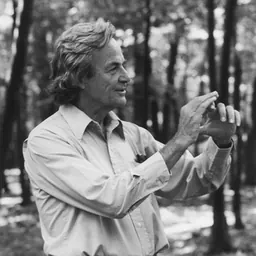
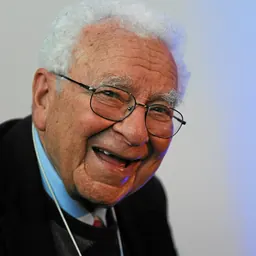
Related people
Same field, nearest in time

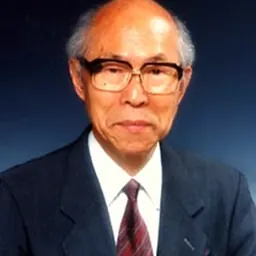
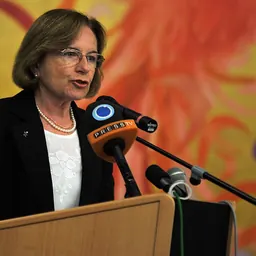


Contemporaries
People whose lives overlapped George Zweig's


Frequently asked questions
Who is George Zweig?
American physicist
When was George Zweig born?
George Zweig was born on 30 May 1937 in Moscow.
What is George Zweig's occupation?
George Zweig is a physicist, neuroscientist and neurobiologist.
What is George Zweig known for?
George Zweig is known for Quark model.
What nationality is George Zweig?
George Zweig is American.
Sources & further reading
Cite this page
APA: Biography.guide. (2026). George Zweig. https://biography.guide/george-zweig/
MLA: "George Zweig." Biography.guide, https://biography.guide/george-zweig/.
Chicago: "George Zweig." Biography.guide. https://biography.guide/george-zweig/.
Data last updated: 2026-09-20 · Spot an error? Report a correction.
Page generated 2026-09-27 05:22 UTC