
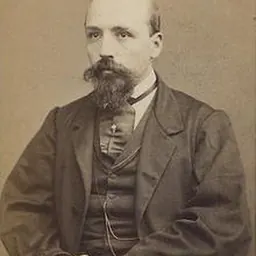
About George Zabriskie
Lived 1868 – 1954 (aged 85). George Zabriskie was a businessperson.
George Albert Zabriskie (December 7, 1868 – January 2, 1954) was an American flour merchant, food-industry executive, wartime administrator, historical collector, and preservationist. During World War I, he served under United States Food Administrator Herbert Hoover as federal flour administrator, sugar administrator, and chief of the United States Food Administration's Distribution Division. He was also a director and later president of the government-owned Sugar Equalization Board, which purchased and distributed sugar in an effort to stabilize wartime supplies and prices.
After the war, Zabriskie remained active in the flour, baking, sugar, and banking industries. His principal interests, however, increasingly became American history, art, rare books, and historic preservation. He was the twenty-second president of the New-York Historical Society from 1939 to 1947, a president of the Sons of the Revolution in the State of New York, and a member of the American Antiquarian Society.
Early life and business career
Zabriskie was born in New York City on December 7, 1868, the son of John Albert Zabriskie and Martha L. (Knox) Zabriskie. He was descended from a family established in colonial New Jersey in the seventeenth century. He attended New York public schools and began earning his own living while still a boy.
In 1883, at the age of fourteen, he joined the New York office of the Pillsbury Flour Mills Company. He later managed the office and became Pillsbury's resident director and New York representative.
Zabriskie's flour-distribution business grew into a large wholesale organization. Before entering federal service, he became well known in the New York produce trade and belonged to organizations including the New York Produce Exchange, the Merchants' Association of New York, and the United States Chamber of Commerce.
World War I food administration
When the United States entered World War I, the Food Administration recruited businessmen with experience in commodity distribution. Zabriskie joined its flour-distribution work during the winter of 1917–1918. Contemporary accounts credited his knowledge of the trade and his administration with helping operate the government's flour-conservation and distribution program. He supervised the Sugar Distribution Division, including the certificate system used to allocate sugar among manufacturers, wholesalers, retailers, and household consumers. In October 1918 he was appointed chief of the Food Administration's Distribution Division, with responsibility extending beyond sugar to the distribution of other controlled foods. The board purchased the 1919 Cuban sugar crop and distributed it to American refiners. A later federal appellate decision recorded that the board accumulated approximately $39 million in profits, of which $30 million was paid to the U.S. Treasury, while it sold sugar at prices alleged to be below those that otherwise would have prevailed.
Zabriskie remained president while the board liquidated its operations after the war. In that capacity he corresponded with Presidents Woodrow Wilson, Warren G. Harding, and Calvin Coolidge about outstanding claims and the disposal of the board's assets.
Historical, artistic, and civic activities
Zabriskie collected paintings, watercolors, prints, rare books, manuscripts, and historical objects. His art holdings were particularly strong in the Hudson River School, and he donated works and documents to a number of museums and libraries. He became the society's president in May 1939 and served until January 1947, when he was named honorary president. During his presidency he supported expansion of the collections and the society's public historical work.
An amateur painter as well as a collector, Zabriskie exhibited livestock and paintings and was a member of the Salmagundi Club. The club awarded him its Gari Melchers Memorial Medal in 1952 for service to the fine arts.
During Prohibition, Zabriskie was an officer of the Moderation League, a New York organization that advocated modification of the national liquor ban. A sterling-silver hip flask that he owned later entered the New-York Historical Society's collection, together with numerous other objects and works of art that he donated.
Bookbinding and writing
Zabriskie practiced fine bookbinding as an amateur hand-tooling and finishing specialist. His bindings often featured elaborate leatherwork, gilt decoration, and specially designed doublures. The New-York Historical Society preserves a collection of books bound by him. His collection of fine bindings and other books was sold by Parke-Bernet Galleries after his death.
He also wrote and privately printed short historical works, many issued as limited-edition Christmas books for friends. Their subjects included American national identity, naval history, polar exploration, folk culture, music, and New York maritime art. His 1933 The Bon Vivant's Companion was a compilation of cocktail recipes and included a drink named the "Zabriskie."
Personal life
Zabriskie's principal New York residence was on Central Park South. In 1911 he built Cliffdale, a fifteen-room summer house on a estate atop the New Jersey Palisades in Alpine, New Jersey. Built of native stone, the estate included terraced gardens, a pond, gatehouse, greenhouses, cottages, and farm buildings.
Zabriskie was an Episcopalian and a Democrat. He never married. Rollins College awarded him an honorary Doctor of Laws degree in 1942. Stephen Collins Foster (1941) Ships' Figureheads in and about New York (1946) Commodore Matthew Calbraith Perry (1946) The Pathfinder (1947) John Brown: Saint or Sinner? (1949) Perry's Expedition to Japan, 1853–4 (1951) Songs of the Azooks: Being a Collection of Verse and Worse Sung by That Ancient and Honorable Society of Golfers, by One of 'Em
Don’t just read it —
keep it.
Full-length biographies made to live with: read them, listen on the way to work, watch them tonight.
- E-book
- Audio
- Video
Instant download · yours to keep · every purchase keeps this site free
Important facts
People in George Zabriskie's life
Named in this biography and alive at the same time





Related people
Same field, nearest in time

Contemporaries
People whose lives overlapped George Zabriskie's

Frequently asked questions
Who was George Zabriskie?
American businessman and wartime food administrator (1868–1954)
When was George Zabriskie born?
George Zabriskie was born on 7 December 1868.
When did George Zabriskie die?
George Zabriskie died on 2 January 1954.
What was George Zabriskie's occupation?
George Zabriskie was a businessperson.
Sources & further reading
Cite this page
APA: Biography.guide. (2026). George Zabriskie. https://biography.guide/george-zabriskie/
MLA: "George Zabriskie." Biography.guide, https://biography.guide/george-zabriskie/.
Chicago: "George Zabriskie." Biography.guide. https://biography.guide/george-zabriskie/.
Data last updated: 2026-09-20 · Spot an error? Report a correction.
Page generated 2026-09-27 05:06 UTC