
About George Ward Price
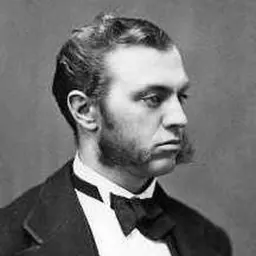
Lived 1886 – 1961 (aged 75). George Ward Price was a journalist and war correspondent.
George Ward Price (17 February 1886 – 22 August 1961) was a journalist who worked as a foreign correspondent for the Daily Mail newspaper.
Early life and career Price was born to the Reverend Henry Ward Price in 1886 and attended St Catharine's College, Cambridge.
Foreign correspondent In 1910 he reported from Turkey and the First Balkan War. Following this, Price became the Daily Mail Paris correspondent at the age of 26.
First World War The outbreak of the First World War saw Price return to Turkey to cover the Gallipoli campaign on behalf of the Newspaper Proprietors Association members.
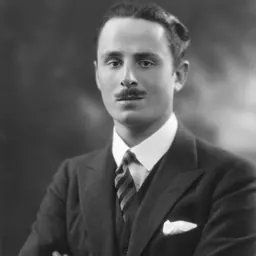
After covering the evacuation which ended the campaign he moved to the Salonika front. The Armée d'Orient based in Thessaloniki was one of the more colourful forces in World War One, being made up of French, British, Indian, Vietnamese, Serb, Italian, Senegalese, Russian and Greek soldiers. Feeling things had quietened there he redeployed to the Italian Front and witnessed the retreat from Caporetto. In October 1932, Sir Oswald Mosley converted his New Party into the British Union of Fascists (BUF) following a visit to Rome. Much of the British press treated Mosley's movement as something of a joke, regarding his uniformed followers as absurd. Ward Price in his articles reporting on the BUF in the Daily Mail was one of the few British journalists to take the BUF seriously, writing that fascism was "a worldwide modern creed" that offered the solution to the problems of the modern world and gave a favourable review of Mosley's book The Greater Britain. In 1933, he followed the French Foreign Legion in Morocco.
In newsreel footage of the scenes in Vienna, Price can be seen near Hitler on the balcony of the Hofburg Palace.
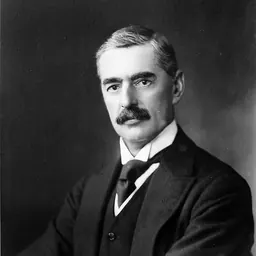
With the Munich Crisis, he covered the visit of Neville Chamberlain to Berchtesgaden and witnessed the entry of German troops in the Sudetenland. Ward Price backed Giraud and in 1944 published the book Giraud and the African Scene arguing the case for Giraud. In a review of Giraud and the African Scene, the American journalist Robert Gale Woolbert wrote: "This would appear to be an authorized defense of the general's career, with emphasis on his role in North Africa. Mr. Price, formerly a confessed appeaser, still evinces a preference for Pétain and treats his subject most sympathetically."
Post-war period On 28 February 1949 Ward Price had an interview in Tokyo with General Douglas MacArthur who was in charge of the American occupation of Japan, which was published on 1 March 1949 in the Daily Mail. MacArthur had a reputation as an Anglophobe, but in the interview, MacArthur insisted that he was really an Anglophile, saying he was very proud of his Scots heritage as his paternal grandfather had immigrated from Scotland to the United States. In the same interview, MacArthur spoke of the Cold War in Asia, saying: "Our line of defense starts in the Philippines and continues through the Ryukyu archipelago, which includes its main bastion, Okinawa, and then backs through Japan and the Aleutian island chain to Alaska". Notably, MacArthur excluded South Korea from the "line of defense". MacArthur told Ward Price that he envisioned Japan as neutral in the Cold War, but stated that the United States would to go to war to defend Japan from the Soviet Union. However, MacArthur went on to say: "Even if the Soviet government had aggressive intentions towards her [Japan], it would be incapable of carrying them out, unless it could secure mastery of the air and either had a Far Eastern fleet of its own or possessed the means of neutralising any action by our own fleet".
Believing it might be the beginning of a Third World War, Price travelled to the Korean War in 1950 after learning of the outbreak while in Canada. Ward Price had a marked tendency towards hero worship, always seeking some "great man" for him to glorify. In the Korean War, he found his hero in General MacArthur, a megalomaniac U.S. Army general of extreme right-wing views, whom he gloried as a great military genius, and as result was allowed to interview MacArthur on a regular basis.
In 1957, he published his memoir Extra-Special Correspondent, which has been widely criticised for its dishonesty as he retroactively sought to portray himself as an anti-fascist. In Extra-Special Correspondent, Ward Price wrote: "The many meetings that I had with Hitler...always filled me with astonishment that a man of his neurotic character and limited perceptions should be able to maintain personal domination over a race possessing such varied and conspicuous qualities as the Germans...I was surprised to see the deference displayed towards him by so many Germans who were his superiors in education, intellect and experience." Griffiths noted that in his 1937 book I Know These Dictators, Ward Price took a fawning tone towards both Fascist Italy and Nazi Germany, portraying himself as a close friend of both Mussolini and Hitler, which was very difficult to reconcile with the self-portrayal of himself as a determined opponent of fascism that he made in Extra-Special Correspondent.
Price died on 22 August 1961 at the age of 75.
Images George Ward Price and Henry Nevinson at Gallipoli – Imperial War Museum
George Ward Price in Germany, 1938 – National Portrait Gallery
Books and articles
Don’t just read it —
keep it.
Full-length biographies made to live with: read them, listen on the way to work, watch them tonight.
- E-book
- Audio
- Video
Instant download · yours to keep · every purchase keeps this site free
Important facts
People in George Ward Price's life
Named in this biography and alive at the same time



Related people
Same field, nearest in time




Contemporaries
People whose lives overlapped George Ward Price's





Frequently asked questions
Who was George Ward Price?
British journalist (1886-1961)
When was George Ward Price born?
George Ward Price was born on 17 February 1886.
When did George Ward Price die?
George Ward Price died on 22 August 1961.
What was George Ward Price's occupation?
George Ward Price was a journalist and war correspondent.
Sources & further reading
· Wikipedia: George Ward Price
Cite this page
APA: Biography.guide. (2026). George Ward Price. https://biography.guide/george-ward-price/
MLA: "George Ward Price." Biography.guide, https://biography.guide/george-ward-price/.
Chicago: "George Ward Price." Biography.guide. https://biography.guide/george-ward-price/.
Data last updated: 2026-09-20 · Spot an error? Report a correction.
Page generated 2026-09-27 05:22 UTC