
About George W. LeVere
Lived 1820 – 1886 (aged 66). George W. LeVere was an American politician, pastor, educator, abolitionist, civil rights advocate and correspondent.
George Washington LeVere (October 9, 1820 – October 10, 1886) was an African American pastor, educator, abolitionist, and civil rights activist. As president of the African Civilization Society, LeVere met with President Abraham Lincoln and discussed the educational needs of freedmen. LeVere was a chaplain with the United States Colored Troops and served as a delegate to two Colored National Conventions and numerous Tennessee Republican Conventions. He was also the National Grand Master of the National Grand Lodge, Free and Accepted Ancient York Rite Masons, Prince Hall Origin, National Compact, from 1877 to 1886.
Early life LeVere was born in Brooklyn, New York on October 9, 1820. He attended school in Brooklyn. He joined the Second Street Bethel Church, having been converted by Rev. Richard Robinson. He studied theology under Dr. Starrs. '' In this capacity, he met with and made a presentation to President Abraham Lincoln on November 5, 1863. LeVere described the meeting as "highly satisfactory".
By 1867, LaVere established and was superintendent of a sabbath school and a day school in basement of Shiloh Presbyterian Church. He was the supervisor of the Shieldstown School in Knoxville. In October 1881, LeVere was elected a trustee of Maryville College.
LeVere also helped organize and was an officer of the Colored Mechanics of Knoxville, a trade association.
After the war, LeVene was recruited to be a missionary in Knoxville, Tennessee. He was officially installed as pastor of the Shiloh Presbyterian Church on May 13, 1881, after sixteen years of serving in that capacity. He stayed with the Shiloh Church for a total of seventeen years. He campaigned won behalf of Republican John C. Frémont in 1856. He was an officer of the New York Suffrage Association and allowed his church in Brooklyn to host meetings to discuss the Black Suffrage Plan of 1858. In October 1874, 116 black citizens of Knoxville signed a petition for LeVere to run for the United States Congress against a White candidate, primarily to support the Civil Rights Bill. LeVere candicacy for Republican candidacy quickly failed as two of the three White candidates withdrew to strengthen the fight against Black rights. He was one of Tennessee's delegates to the Colored National Convention in April 1876 and again in May 1879. At the latter, he was appointed to the convention's Committee for Permanent Organization. He was selected to serve as the alternate for the 1876 Republican National Convention representing the state of Tennessee at Large. He was again a delegate to the Tennessee Republican Convention in 1877 and 1878, this time presenting the twelfth district. He served as the secretary of the Knox County Republican Party in 1878.
In July 1880, Levere was a vice president of a temperance association formed by a consortium of religious organizations in the Knoxville area. Later that year, he was a public speaker on behalf of Republicans for the county canvass. He was an election enumerator for Knox County in 1881.
Personal life Levere's first wife was Loretta, a trained nurse who volunteered with the Howard Association.
LeVere was a member of Prince Hall Freemasonry and was a charter member of the Meridian Lodge No. 42 of Knoxville in 1870. In July 1876, he co-founded a masonic lodge Greenville, Tennessee. On August 31, 1876, he was elected the National Grand Secretary at the national convention in Leavenworth, Kansas. However, Levere maintained that the challenge was from a disassociated group that did not represent the national fraternal order.
In early August 1881, LeVere became ill with bilious fever and was confined for several weeks. LeVere died on October 10, 1886, in Summerville, South Carolina after being ill will bilious fever for several days. His wife died six days later. His funeral was conducted by Bishop Turner of Atlanta, Georgia at Shiloh Presbyterian Church in Knoxville and was attended by both Blacks and Whites. LeVene was buried in the Daughters of Zion Cemetery.
Don’t just read it —
keep it.
Full-length biographies made to live with: read them, listen on the way to work, watch them tonight.
- E-book
- Audio
- Video
Instant download · yours to keep · every purchase keeps this site free
Important facts
People in George W. LeVere's life
Named in this biography and alive at the same time
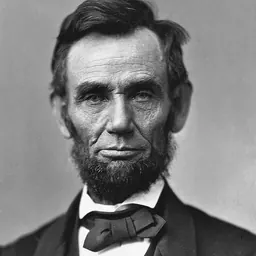

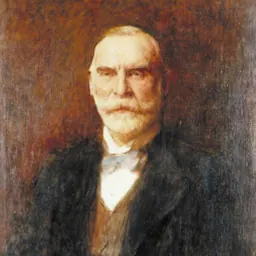

Related people
Same field, nearest in time


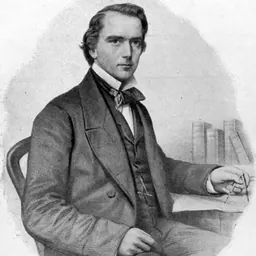

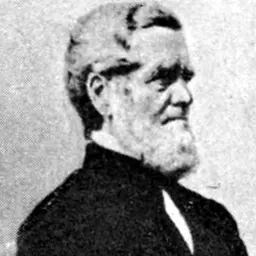

Contemporaries
People whose lives overlapped George W. LeVere's






Frequently asked questions
Who was George W. LeVere?
African American pastor (1820–1886)
When was George W. LeVere born?
George W. LeVere was born on 9 October 1820 in Brooklyn.
When did George W. LeVere die?
George W. LeVere died on 10 October 1886 in Summerville.
What was George W. LeVere's occupation?
George W. LeVere was a politician, pastor, educator, abolitionist, civil rights advocate and correspondent.
What nationality was George W. LeVere?
George W. LeVere was American.
Sources & further reading
Cite this page
APA: Biography.guide. (2026). George W. LeVere. https://biography.guide/george-w-levere/
MLA: "George W. LeVere." Biography.guide, https://biography.guide/george-w-levere/.
Chicago: "George W. LeVere." Biography.guide. https://biography.guide/george-w-levere/.
Data last updated: 2026-09-20 · Spot an error? Report a correction.
Page generated 2026-09-27 05:01 UTC