
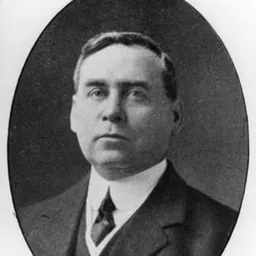
George W. Lee
American minister, grocer, civil rights activist
About George W. Lee
Lived 1903 – 1955 (aged 51). George W. Lee was an American entrepreneur and religious leader, known for Civil Rights Movement, NAACP and Regional Council of Negro Leadership.
George Washington Lee (December 25, 1903 – May 7, 1955) was an African-American civil rights leader, minister, and entrepreneur. He was a vice president of the Regional Council of Negro Leadership and head of the Belzoni, Mississippi, branch of the National Association for the Advancement of Colored People. He was assassinated in 1955 in retaliation for his efforts to register African Americans to vote. Since 1890 they had been effectively disenfranchised in Mississippi due to a new state constitution; other states across the South passed similar acts and constitutions, excluding millions of people from the political system and establishing one-party states.
Biography Born in 1903, George Wesley Lee grew up in poverty in Edwards, Mississippi. His mother was a plantation worker who married after Lee was born; his stepfather was abusive. After Lee's mother died when George was young, he was taken in by her sister. Lee graduated from high school, a rarity for blacks living in his circumstances. Afterward he went to the port of New Orleans, where he worked on the banana docks and took a correspondence course in typesetting. Lee was typical of a generation of activists who came to civil rights after they had made a success in business. Like so many in this category, he came up the hard way through backbreaking work, thrift, determination, and luck.
During the 1930s and the Great Depression, Lee accepted a call to become a preacher in Belzoni, Mississippi, where he led a Baptist congregation. The town was located in Humphreys County in the heart of the Mississippi Delta. Most blacks in the state lived in this region and the majority in extreme poverty as farm workers. Lee continued to work to improve himself; he joined with local black business and community leaders. Serving as pastor at four churches, he also opened a small grocery store. Lee considered both vocations as serving the African-American community. In a back room of his house, he and his wife, Rosebud, set up a small printing business. These efforts provided enough resources that Lee felt he had a base for entering the battle for civil rights in the early 1950s. As a part of the NAACP, Lee worked tirelessly in trying to register African Americans to vote.
Death and investigation Less than a month after his famous speech, Lee was shot and killed while driving in his car in Belzoni, Mississippi. An unidentified shooter pulled alongside Lee's car and fired three times from a shotgun, shattering Lee's jaw and causing his car to leave the road. Lee died before arriving at a local hospital. According to the autopsy, lead pellets extracted from his face were consistent with buckshot. A few days before, Lee had received a threatening note. The sheriff, Ike Shelton, wanted to call the incident a traffic accident and close the case. He said the buckshot pellets were dental fillings torn loose by the impact of the crash.
Howard, Evers and others demanded a thorough investigation. The sheriff and governor spurned them, but U.S. Attorney General Herbert Brownell Jr. ordered the Justice Department to look into the matter.
Lee's funeral in Belzoni attracted reporters from major black newspapers. His widow Rosebud decided to have an open casket, to reveal how her husband had suffered. Emmett Till's mother would do the same a few months later after her teenage son was lynched. Readers of the Chicago Defender shared Rosebud Lee's outrage by viewing a photo of her husband's body. The NAACP-organized memorial service in Belzoni drew more than 1,000 attendees. Tensions were high in this small rural Delta town, as whites had long expected deference from the black majority. Howard and Roy Wilkins, the national president of the NAACP, shared the speakers' platform at Lee's funeral. Howard said that some blacks "would sell their grandmas for half a dollar, but Reverend Lee was not one of them."
Civil rights activists searched the Delta looking for evidence to find the killers. Medgar Evers reputedly "cut his teeth" on the Lee case, continually feeding information to the press. Despite the efforts of activists, interest began to wane, and the FBI investigation was eventually closed. Agents had identified credible white suspects, but said that potential witnesses appeared afraid to talk. No charges were ever brought against any suspect for Lee's murder.
Legacy Lee's death captured national attention, highlighting the oppressive nature of Mississippi Jim Crow and the violence black residents had to face to exercise ordinary rights. In the state, Lee's death served as a catalyst for some activists to step up their efforts.
Lee exemplified a generation of activists who used business success to build a platform to work as mature men on civil rights. He paved the way for other leaders to come up from the African-American community, and emphasized the power of the vote.
Don’t just read it —
keep it.
Full-length biographies made to live with: read them, listen on the way to work, watch them tonight.
- E-book
- Audio
- Video
Instant download · yours to keep · every purchase keeps this site free
Important facts
People in George W. Lee's life
Named in this biography and alive at the same time




Related people
Same field, nearest in time



Contemporaries
People whose lives overlapped George W. Lee's

Frequently asked questions
Who was George W. Lee?
American minister, grocer, civil rights activist (1903-1955)
When was George W. Lee born?
George W. Lee was born on 25 December 1903 in Edwards.
When did George W. Lee die?
George W. Lee died on 7 May 1955 in Midnight.
What was George W. Lee's occupation?
George W. Lee was an entrepreneur and religious leader.
What was George W. Lee known for?
George W. Lee was known for Civil Rights Movement, NAACP and Regional Council of Negro Leadership.
What nationality was George W. Lee?
George W. Lee was American.
Sources & further reading
Cite this page
APA: Biography.guide. (2026). George W. Lee. https://biography.guide/george-w-lee-entrepreneur/
MLA: "George W. Lee." Biography.guide, https://biography.guide/george-w-lee-entrepreneur/.
Chicago: "George W. Lee." Biography.guide. https://biography.guide/george-w-lee-entrepreneur/.
Data last updated: 2026-09-22 · Spot an error? Report a correction.
Page generated 2026-09-27 05:31 UTC