
About George W. Hammond
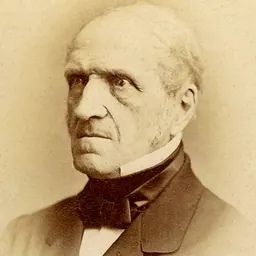
Lived 1833 – 1908 (aged 74). George W. Hammond was a businessperson and arborist.
George Warren Hammond (April 4, 1833 – January 6, 1908)
Hammond was also co-owner of Forest Paper Company, which was the largest paper mill in the world at the time of his death. The mill was also known as a pioneer in the processing of soda pulp.
Early life Hammond was born on April 4, 1833, in Grafton, Massachusetts,
He received an honorary degree of Master of Arts degree from Bowdoin College in 1900.
Career Forest Paper Company, viewed from the top of the meetinghouse on Hillside Street, looking southeast. Camp Hammond is in the top right (c.1900)
After finishing school, Hammond began working at Howe & Leeds Wholesale West India Goods Store on Boston's Long Wharf. The same year, he became a clerk with J. W. Blodgett & Co.
Hammond attended the Massachusetts Institute of Technology as a special student on the chemistry of paper manufacturing. Hammond also worked at the S. D. Warren mill until 1876, before transferring full-time to Yarmouth as the manager of the new business. who was the engineer and draftsman of Forest Paper Company, Hammond designed what is today known as Camp Hammond, set back from Yarmouth's Main Street and from which Hammond could see his mill. Twombly also designed several buildings in Boston. Frederick Law Olmsted, who designed Central Park in New York City, designed the gardens of the property. With the Hammonds splitting their time between Boston and Yarmouth, the property became known as the Camp.
Among the many roles Hammond took on without payment was as president of the Yarmouth Water Committee, Hammond donated Forest Paper Company land for the 1903 construction of Merrill Memorial Library, on Main Street,
Hammond served in the Maine Legislature between 1868 and 1870, was on the Maine Board of Agriculture and the board of trustees of North Yarmouth Academy, was a member of the American Association for the Advancement of Science, the Society of Chemical Industry, the American Institute of Mining, Metallurgical, and Petroleum Engineers, The Society of Arts and Crafts of Boston, the Massachusetts Historical Society, the New England Historic Genealogical Society (from January 1876), The Bostonian Society and the Franklin Institute. He was also a Freemason.
A member of the American Horticultural Society, he was a keen arborist, and his knowledge of trees and plants earned him a place on the Overseers' Committee at Harvard University's Gray Herbarium between 1888 and the time of his death.
The Hammonds were members of Yarmouth's First Parish Congregational Church and Boston's Trinity Church.
Death Hammond died on January 6, 1908, aged 74. He is interred in Mount Auburn Cemetery, Cambridge, Massachusetts.
Don’t just read it —
keep it.
Full-length biographies made to live with: read them, listen on the way to work, watch them tonight.
- E-book
- Audio
- Video
Instant download · yours to keep · every purchase keeps this site free
Important facts
Family & relationships
People in George W. Hammond's life
Named in this biography and alive at the same time


Related people
Same field, nearest in time


Contemporaries
People whose lives overlapped George W. Hammond's



Frequently asked questions
Who was George W. Hammond?
American businessman
When was George W. Hammond born?
George W. Hammond was born on 4 April 1833 in Grafton, Massachusetts.
When did George W. Hammond die?
George W. Hammond died on 6 January 1908 in Yarmouth, Maine.
What was George W. Hammond's occupation?
George W. Hammond was a businessperson and arborist.
Sources & further reading
· Wikipedia: George W. Hammond
Cite this page
APA: Biography.guide. (2026). George W. Hammond. https://biography.guide/george-w-hammond/
MLA: "George W. Hammond." Biography.guide, https://biography.guide/george-w-hammond/.
Chicago: "George W. Hammond." Biography.guide. https://biography.guide/george-w-hammond/.
Data last updated: 2026-09-22 · Spot an error? Report a correction.
Page generated 2026-09-27 05:12 UTC