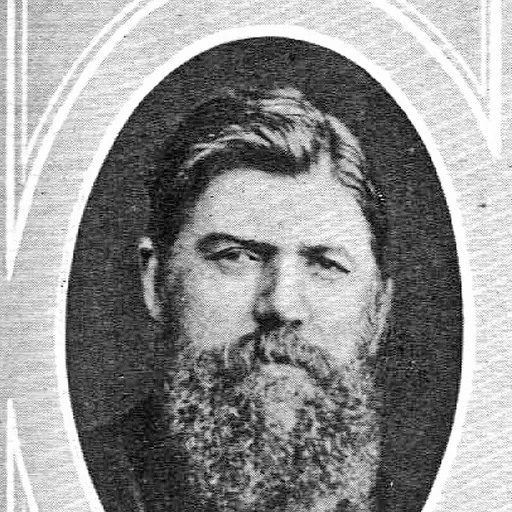
About George Stott
Lived 1835 – 1889 (aged 54). George Stott was a British missionary.
George Stott (13 April 1835 – 21 April 1889) was a British Protestant Christian missionary to China with the China Inland Mission.
Despite physical disabilities, Stott was a highly effective mission leader. In China he has been credited, alongside William Edward Soothill, for laying the groundwork for the large number of Christian adherents in Wenzhou, Zhejiang Province. Although his wife, Grace Stott worked with him and led the mission for twenty years after his death.
Early life and education Born in Belhelvie, Aberdeenshire, Scotland, the son of John Stott, a crofter, and his wife, Jane Anderson. Stott initially worked in agriculture, but due to a serious knee injury at the age of nineteen, a subsequent leg amputation and evangelical Christian conversion, he became a schoolmaster and active member of the Free Church of Scotland.
Mission Work in China In early 1865, Stott learnt that James Hudson Taylor was looking to recruit pioneer missionaries for his non-denominational China Inland Mission. Stott was duly hired, provided with a new artificial leg and set sail for China on October 4, 1865. Arriving in Shanghai on February 6, 1866, Stott quickly relocated to the port city of Wenzhou in Zhejiang province, where Christian teaching had been previously unknown. The oldest church in the city, Chengxi Christian Church, still stands as a testimony to his work. As a result of the ongoing influence brought there by the Stotts and others, Wenzhou is known in China as the “Jerusalem of the East” because in the entire Wenzhou Municipality, which has 6 million inhabitants, there are more than 600,000 evangelical Protestants – 10% of the population.
"In accepting Mr. Stott for mission work, Hudson Taylor manifested faith, for no Society would have sent an amputee to such a country to pioneer work, and Mr. Stott often referred with gratitude to Mr. Taylor's acceptance of him. When asked why he, with only one leg, should think of going to China, his remark was,
His wife and his followers learnt to handle his manner which could be direct. He increasingly came into conflict with Hudson Taylor and offered to resign in a protest letter. The CIM stopped sending recruits to his station and eventually they "let him go". Stott found out that he had cancer and he and Grace returned to Scotland.
Stott died at William Thomas Berger's house
Don’t just read it —
keep it.
Full-length biographies made to live with: read them, listen on the way to work, watch them tonight.
- E-book
- Audio
- Video
Instant download · yours to keep · every purchase keeps this site free
Important facts
People in George Stott's life
Named in this biography and alive at the same time




Related people
Same field, nearest in time
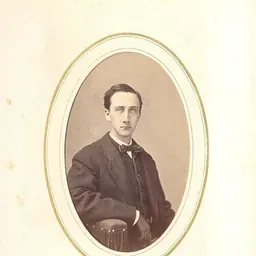
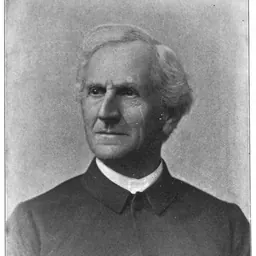
Contemporaries
People whose lives overlapped George Stott's



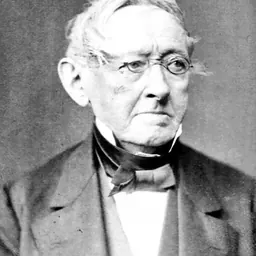

Frequently asked questions
Who was George Stott?
British missionary in China and amputee
When was George Stott born?
George Stott was born on 13 April 1835 in Scotland.
When did George Stott die?
George Stott died on 21 April 1889 in Cannes.
What was George Stott's occupation?
George Stott was a missionary.
What nationality was George Stott?
George Stott was British.
Sources & further reading
· DBpedia: George Stott (missionary)
Cite this page
APA: Biography.guide. (2026). George Stott. https://biography.guide/george-stott/
MLA: "George Stott." Biography.guide, https://biography.guide/george-stott/.
Chicago: "George Stott." Biography.guide. https://biography.guide/george-stott/.
Data last updated: 2026-09-24 · Spot an error? Report a correction.
Portrait: Wikimedia Commons · author & licence
Page generated 2026-09-27 05:08 UTC