
About George P. Foster
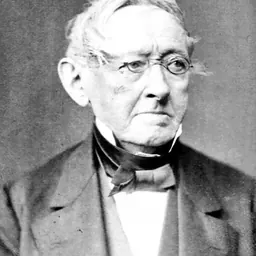
Lived 1835 – 1879 (aged 43). George P. Foster was an American military officer, teacher and uS Marshal.
George Perkins Foster (October 3, 1835 – March 19, 1879) was a school teacher, colonel, and brevet brigadier general in the Union Army during the American Civil War, and later a United States Marshal.
Early life and career Foster was born in Walden, Vermont, the son of Ephraim and Emily (Perkins) Foster. Little is known of his early life except that he was a teacher in his hometown school district.
Civil War He was commissioned captain of Company G, 4th Vermont Infantry, on September 21, 1861, and promoted to major on July 18, 1862, lieutenant colonel November 5, 1862, and colonel on February 3, 1864, replacing Charles B. Stoughton, who had resigned.
According to Vermont's military historian, George Benedict, Foster was "of stalwart proportions, and handsome face and figure...one of the finest looking officers in the brigade. He was a favorite with his men, [and] distinguished himself as emphatically a fighting colonel."
He participated in every action of the Vermont Brigade until he was severely wounded in the thigh on the first day of the Battle of the Wilderness, on May 5, 1864. While recuperating from his wounds at home, he married Sarah Salome Hubbell (1840–1891), of Burlington, on July 5, 1864, in Wolcott, Vermont.
At the Battle at Lee's Mills, April 16, 1862, he led a company of skirmishers early in the engagement. On December 13, 1862, at the Battle of Fredericksburg, Lieutenant Colonel Foster led the 4th Vermont Infantry on the skirmish line in front of Howe's division of the VI Corps. At the battle of Winchester, Colonel Foster commanded the Vermont Brigade.
He was nominated to receive the brevet rank of brigadier general by President Abraham Lincoln on January 1, 1865, "for gallant and meritorious service before Richmond and in the Shenandoah Valley, Virginia," to date from August 1, 1864. The Senate approved the appointment on February 14, 1865.
He mustered out of Federal service with his regiment on July 13, 1865.
Postwar career President Ulysses S. Grant nominated Foster to be U.S. Marshal for the district of Vermont on January 10, 1870, succeeding Hugh H. Henry, who had died in office. He was appointed January 24, and served in that position until his death.
His tenure was highlighted "by his bold arrest of the Fenian commander, General John O'Neill, in the midst of his army, during the Fenian invasion of Canada, in 1870." He made the arrest immediately after O'Neill's defeat at the Battle of Trout River.
He died in Burlington, Vermont, and is buried in Burlington's Lakeview Cemetery.
Don’t just read it —
keep it.
Full-length biographies made to live with: read them, listen on the way to work, watch them tonight.
- E-book
- Audio
- Video
Instant download · yours to keep · every purchase keeps this site free
Important facts
People in George P. Foster's life
Named in this biography and alive at the same time
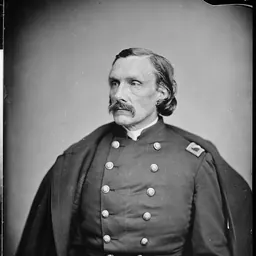
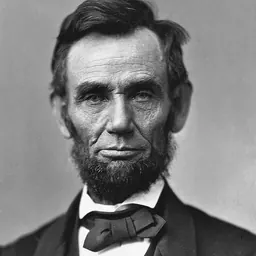

Related people
Same field, nearest in time

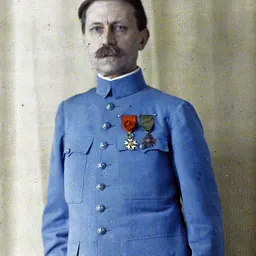
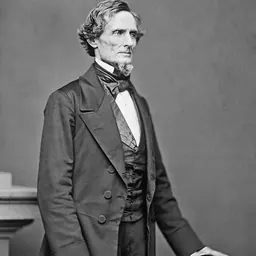


Contemporaries
People whose lives overlapped George P. Foster's





Frequently asked questions
Who was George P. Foster?
Union Army general
When was George P. Foster born?
George P. Foster was born on 3 October 1835 in Walden.
When did George P. Foster die?
George P. Foster died on 19 March 1879 in Burlington.
What was George P. Foster's occupation?
George P. Foster was a military officer, teacher and uS Marshal.
What nationality was George P. Foster?
George P. Foster was American.
Sources & further reading
Cite this page
APA: Biography.guide. (2026). George P. Foster. https://biography.guide/george-p-foster/
MLA: "George P. Foster." Biography.guide, https://biography.guide/george-p-foster/.
Chicago: "George P. Foster." Biography.guide. https://biography.guide/george-p-foster/.
Data last updated: 2026-09-20 · Spot an error? Report a correction.
Page generated 2026-09-27 05:31 UTC