
About George N. Craig
Lived 1909 – 1992 (aged 83). George N. Craig was an American lawyer, politician, governor and jurist.
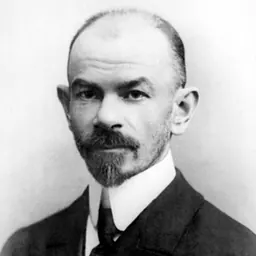
George North Craig (August 6, 1909 – December 17, 1992) was an American attorney and politician who served as the 39th governor of Indiana from 1953 until 1957. A lawyer and veteran of World War II who was promoted to serve in a division command staff, Craig first gained popularity in the state as National Commander of The American Legion. He was a political outsider when he ran for governor and was at odds with more conservative party leadership during his time in office. Although he made significant reforms, his term ended with a high-profile bribery scandal, in which it was found that several high-level state employees had been accepting bribes to influence their decisions in assigning construction contracts. Despite his lack of involvement in the scandal, Craig was blamed for it by the public, damaging his reputation and ending his political career.
Angered by the bribery scandal and at odds with party leaders, he left the state after his term and moved to Virginia, where he opened a law office and later became president of an automotive company. After a decade he returned to Indiana, where he retired from public life, but he resumed activity in the Republican Party as a political adviser until his death in 1992.
Early life George Craig was born August 6, 1909, in Brazil, Indiana, the son of attorney Bernard C. and Clo Branson Craig. He attended local public schools and graduated from Brazil High School in 1927. He enrolled in the University of Arizona in the same year, where he would become a member of the Delta Chi fraternity, and later admitted that he spent little time studying and also joined Kappa Beta Phi, a school-forbidden drinking fraternity. He dropped out in 1929, before he could graduate, and decided to become a lawyer. He enrolled in Indiana University School of Law in 1930, but due to his poor grades from Arizona he was required to meet with the school dean, Paul V. McNutt. After promising to apply himself he was accepted into the school.
Among Craig's classmates was William E. Jenner, who would later become his primary opponent within the Republican Party. The two often argued over politics while in school together. In 1931 Craig married his classmate Kathryn Louisa Heiliger. After graduating with a law degree in 1932, the couple returned to Clay County where they had two children, Margery and John, and Craig began practicing law in his father's firm. As the Great Depression set in, demand for lawyers dropped and Craig had only a few cases a year. He began to become involved in local politics and became the chairman of the county Republican Party in 1938. The following year he became the town of Brazil's attorney. In 1940 the state convention named him a candidate for lieutenant governor, but he did not win the position.
World War II As the United States entered World War II, Craig decided to enlist in the army. He was mustered in as a first lieutenant in the 18th Infantry Division that was training in Camp Bedford Forrest in Tullahoma, Tennessee. He remained with the division for the remainder of the war. His division was soon dispatched to Great Britain where they participated in the Invasion of Normandy. After commanding a platoon in storming the beach, he was promoted to command a company, and later a battalion in the subsequent liberation of France. After the war he earned a Bronze Star Medal with Oak Leaf Cluster and the Croix de Guerre for his service. As the army began invading Germany, he was promoted to the regimental command staff and then the divisional command staff. There he became acquainted with Supreme Allied Commander Dwight Eisenhower who often visited the division level commanders. His friendship with Eisenhower later played an important role in influencing his position on political issues. After the war in Europe ended, Craig was discharged in 1946 with a final rank of lieutenant colonel.
The American Legion Craig returned home and resumed his father's law practice which he eventually took over. By the end of 1947, he became involved in The American Legion as the Clay County commander. He quickly rose in the organizations rank, becoming the vice-commander for the state of Indiana, a national committeeman, and in 1949 he was nominated commander of the national organization. The Legion headquarters were in Indianapolis and the group had significant political influence in the state. Command of the organization had been a stepping stone to the governorship for previous men, but Craig denied that he had such ambitions after being elected to the position. He began to travel national and around the state and became acquainted with many national and international dignitaries and high officeholders. The Legion's "Tide for Toys" campaign which was intended to distribute toys to foreign children, was started during his term. He continued his friendship with Eisenhower during his tenure and influenced the organization to support the anti-communist agenda as the Cold War set in. He personally delivered a number of anti-communist speeches. After 14 months as commander he returned to his law firm, which he moved to Indianapolis in December 1950.
The national Republican Party was at that time going through a period of internal problems over their position on communism, and the best way to deal with the threat—both internally and externally. Craig brought the national party's problem to the state. Jenner and the party leadership supported faction of the party was virulently anti-communist, but Craig openly sided with Eisenhower and the wing of the party advocating a more measured response to the problem. Jenner was incensed not only by Craig's position on communism but also on his campaign platform that advocated significant increased state spending and the start of a number of new programs. The difference between Craig and the party continued throughout his time in office.
Reform agenda
His agenda was largely reform-oriented and included enhancing worker's compensation and unemployment benefits, building new schools, raising teacher's salaries, building a new state prison, constructing new hospitals, and improving traffic safety. Following his inauguration in January 1953, he submitted twenty-six proposals to the Indiana General Assembly that encompassed all of his agenda. His most controversial with the legislation was a proposal to reorganize the states 141 agencies into eleven departments centralized under the governor's control. The Republican legislature dismissed the request out of hand and accused him of trying to restart the battle over executive power that had been ongoing in the past three decades but had largely been avoided by the previous two governors.
Craig wrangled with the legislature over the creation of major highways around Indiana. The assembly didn't want to pay for the roads, so Craig recommended a toll road be created. The assembly leadership balked at the idea, as toll roads had been abolished decades earlier. The assembly finally authorized the Indiana Toll Road in northern Indiana but refused to build anymore, primarily because they didn't want to allow the governor control over a large number of patronage positions which he could potentially use to gain more power in the party. His other construction recommendations, a state office building, new prisons, and the expansion of Purdue University were ignored by the assembly. They also refused what he believed his most economically valuable proposal, creating a shipping harbor on Lake Michigan. Eisenhower praised Craig as a leader and urged the party leaders to help him transition to a federal office. Eisenhower offered to make him Secretary of the Army in 1955, but Craig declined saying he wished to finish his term as governor. In later years, he also said his refusal was in part due to his personal dislike of Secretary of Defense Charles Erwin Wilson. Despite his popularity, he continued to remain at odds with the state party leadership. During the final session of the General Assembly, he recommended that the death penalty be abolished. The request was not considered by the body, and Jenner used it as proof that Craig had abandoned his conservative principles. Lieutenant Governor Harold Handley used the situation to attack Craig and accused him of being responsible for the scandal. Craig himself was not found to be personally involved in the plot but was required to testify before a grand jury in 1957 after he left office. When he left the court building, he gave an interview to the press in which he attacked William Jenner and a number of other party leaders for having a political vendetta against him. The scandal and his interview were published around the state and significantly hurt his popularity. In his later years, he said that he forgave Jenner for his actions while Craig was governor and that the two never agreed on anything except the weather.
Death and legacy In December 1957 Craig and his family left Indiana, largely because of his disgust with the state Republican Party, and moved to Virginia where he opened a law office and later became president of an automotive company. In 1965 he moved again to Los Angeles and continued practicing law. Finally, in 1967, he returned home again to Brazil, Indiana and retired. He resumed some activity in the Republican Party as a political adviser but never made any significant public appearances. He continued practicing law until 1976, and was made a member of the State Board of Law Examiners that year and remained on the board for a decade. He retired in 1986 and lived relatively secluded until his death on December 17, 1992.
Don’t just read it —
keep it.
Full-length biographies made to live with: read them, listen on the way to work, watch them tonight.
- E-book
- Audio
- Video
Instant download · yours to keep · every purchase keeps this site free
Important facts
People in George N. Craig's life
Named in this biography and alive at the same time



Related people
Same field, nearest in time



Contemporaries
People whose lives overlapped George N. Craig's


Frequently asked questions
Who was George N. Craig?
American politician (1909-1992)
When was George N. Craig born?
George N. Craig was born on 6 August 1909 in Brazil.
When did George N. Craig die?
George N. Craig died on 17 December 1992 in Brazil.
What was George N. Craig's occupation?
George N. Craig was a lawyer, politician, governor and jurist.
What nationality was George N. Craig?
George N. Craig was American.
Sources & further reading
Cite this page
APA: Biography.guide. (2026). George N. Craig. https://biography.guide/george-n-craig/
MLA: "George N. Craig." Biography.guide, https://biography.guide/george-n-craig/.
Chicago: "George N. Craig." Biography.guide. https://biography.guide/george-n-craig/.
Data last updated: 2026-09-20 · Spot an error? Report a correction.
Page generated 2026-09-27 05:23 UTC