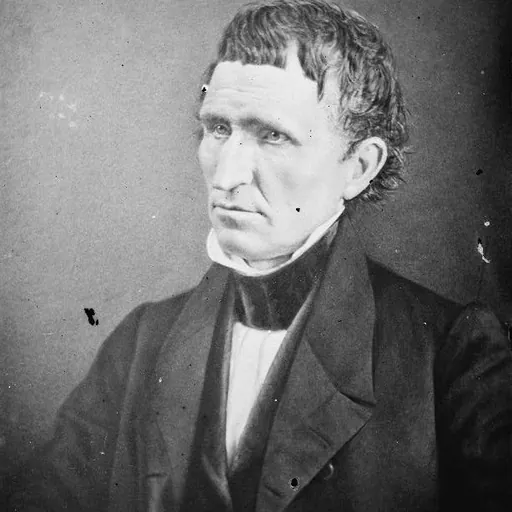
About George McDuffie
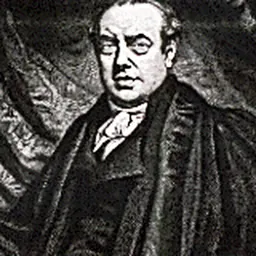
Lived 1790 – 1851 (aged 60). George McDuffie was an American politician, lawyer, judge, governor and jurist.
George McDuffie (August 10, 1790 – March 11, 1851) was the 55th governor of South Carolina and a member of the United States Senate. Though he began his political career as a partisan of Andrew Jackson, he became one of South Carolina's most outspoken advocates of nullification.
Biography Born of modest means in McDuffie County, Georgia, McDuffie's extraordinary intellect was noticed while clerking at a store in Augusta, Georgia. The Calhoun family sponsored his education at Moses Waddel's famous Willington Academy, where he established an outstanding reputation. Graduating from South Carolina College in 1813, he was admitted to the bar in 1814, and went into partnership with Eldred Simkins at Edgefield. Rising rapidly, he served in the South Carolina General Assembly in 1818–1821, and in the United States House of Representatives in 1821–1834. In 1834 he became a major general of the South Carolina Militia.
In 1821 he published a pamphlet in which strict states' rights were strongly denounced; yet in 1832 he became one of the greater nullifiers. The change seems to have been gradual, and to have been determined in part by the influence of John C. Calhoun. When, after 1824, the old Democratic-Republican party split into factions, he followed Andrew Jackson and Martin Van Buren in opposing the Panama Congress and the policy of making Federal appropriations for internal improvements. He did not hesitate, however, to differ from Jackson on the two chief issues of his administration: the Bank and nullification.
In 1832 he was a prominent member of the South Carolina Nullification Convention, and drafted its address to the people of the United States. He served as governor in 1834–1836, during which time he helped to reorganize South Carolina College. From December 23, 1842, until August 17, 1846, he was a member of the United States Senate. The leading Democratic measures of those years all received his hearty support. McDuffie, like Calhoun, became an eloquent champion of state sovereignty; but while Calhoun emphasized state action as the only means of redressing a grievance, McDuffie paid more attention to the grievance itself. Influenced in large measure by Thomas Cooper, he made it his special work to convince the people of the South that the downfall of protection was essential to their material progress. In opposing the 1828 Tariff of Abominations he used the illustration that forty bales of every one hundred went to pay tariffs and therefore Northern interests. His argument that it is the producer who really pays the duty of imports has been called the economic basis of nullification.
In 1822, McDuffie fought a series of duels with Colonel William Cumming, suffering wounds that afflicted him for the rest of his life and darkened his already asocial personality:McDuffie was in youth, manhood and old age, a remarkable man for his taciturnity and reserve. He literally seemed to commune with himself; yet there were occasions, when he met with old friends and companions, in which he seemed to enjoy life with as much zest as any man. Benjamin Perley Poore wrote that McDuffie was a "spare, grim-looking man, who was an admirer of Milton, and who was never known to jest or smile." His oratorical style, too, was "nervous and impassioned, and at times fiercely vehement," on one occasion even driving the famously combative John Randolph from the floor with "vituperation witheringly pungent".
While serving in the United States House of Representatives, McDuffie was appointed an impeachment manager to prosecute the articles of impeachment in the impeachment trial of Judge James H. Peck.
George McDuffie died at his estate "Cherry Hill" in Sumter County, South Carolina, on March 11, 1851. McDuffie County, Georgia, is named after him.
Don’t just read it —
keep it.
Full-length biographies made to live with: read them, listen on the way to work, watch them tonight.
- E-book
- Audio
- Video
Instant download · yours to keep · every purchase keeps this site free
Important facts
People in George McDuffie's life
Named in this biography and alive at the same time



Related people
Same field, nearest in time



Contemporaries
People whose lives overlapped George McDuffie's


Frequently asked questions
Who was George McDuffie?
American politician (1790-1851)
When was George McDuffie born?
George McDuffie was born on 10 August 1790 in Columbia County.
When did George McDuffie die?
George McDuffie died on 11 March 1851 in Sumter County.
What was George McDuffie's occupation?
George McDuffie was a politician, lawyer, judge, governor and jurist.
What nationality was George McDuffie?
George McDuffie was American.
Sources & further reading
Cite this page
APA: Biography.guide. (2026). George McDuffie. https://biography.guide/george-mcduffie/
MLA: "George McDuffie." Biography.guide, https://biography.guide/george-mcduffie/.
Chicago: "George McDuffie." Biography.guide. https://biography.guide/george-mcduffie/.
Data last updated: 2026-09-23 · Spot an error? Report a correction.
Portrait: Wikimedia Commons · author & licence
Page generated 2026-09-27 05:06 UTC