
About George Kenner
Lived 1888 – 1971 (aged 82). George Kenner was a German painter.
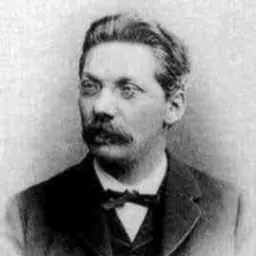
George Kenner (1 November 1888 – 10 July 1971) was a German artist. He made 110 paintings and drawings during the First World War while interned as a German civilian internee in Great Britain and the Isle of Man.
Birth and background Kenner was born Georg Kennerknecht on November 1, 1888, in the small town of Schwabsoien, near the Alps in the Weilheim-Schongau district of Bavaria, Germany. He went to art school in Germany. He moved to London in 1910. He worked at and co-owned the small "process artist" company Waddington & Kennerknecht at 73 Farringdon Street with a British partner. He also attended night school at London's Lambeth School of Art to study airbrush techniques. He was registered as an "alien enemy" on August 23, 1914, then abruptly interned five days after the RMS Lusitania was sunk by a German U-boat on May 7, 1915.
Being a trained commercial artist by profession, and wanting to stay in practice with his work, he negotiated with the PoW camp authorities to be allowed to create what became the most extensive collection of World War I internment scenes known. near Frimley, in Surrey. The camp grew to hold 2,000 civilian prisoners, but was considered unsuitable for the approaching winter. On September 29, 1915, Kenner was sent to Alexandra Palace in North London. 3,000 internees were held in three sections. Conditions were better here. In June 1916, Kenner was sent to the Knockaloe internment camp near Peel on the Isle of Man in the Irish Sea. This camp held 30,000 civilian prisoners for the remainder of the war and beyond. He was finally sent back to Germany in a prisoner exchange in March 1919, four months after the Armistice.
Three other British museums acquired the art that Kenner produced in their particular areas during the war: the Surrey Heath Museum, in Camberley, the Manx National Heritage Museum in Douglas, Isle of Man, and Bruce Castle Museum in London.
Several of Kenner's paintings from his Frith Hill PoW camp period were used in the book Reflections – A Heatherside Miscellany by Nick McCormick, published in June 2006.
Several other paintings from Kenner's Alexandra Palace PoW period were used in the book Ally Pally Prison Camp by Maggie Butt, published in June 2011.
Gallery
Don’t just read it —
keep it.
Full-length biographies made to live with: read them, listen on the way to work, watch them tonight.
- E-book
- Audio
- Video
Instant download · yours to keep · every purchase keeps this site free
Important facts
Related people
Same field, nearest in time


Contemporaries
People whose lives overlapped George Kenner's




Frequently asked questions
Who was George Kenner?
artist (1888-1971)
When was George Kenner born?
George Kenner was born on 1 November 1888 in Schwabsoien.
When did George Kenner die?
George Kenner died on 10 July 1971 in Cheltenham.
What was George Kenner's occupation?
George Kenner was a painter.
What nationality was George Kenner?
George Kenner was German.
Sources & further reading
Cite this page
APA: Biography.guide. (2026). George Kenner. https://biography.guide/george-kenner/
MLA: "George Kenner." Biography.guide, https://biography.guide/george-kenner/.
Chicago: "George Kenner." Biography.guide. https://biography.guide/george-kenner/.
Data last updated: 2026-09-20 · Spot an error? Report a correction.
Page generated 2026-09-27 05:31 UTC