
About George Kemp, 1st Baron Rochdale
Lived 1866 – 1945 (aged 78). George Kemp, 1st Baron Rochdale was a British cricketer, politician, military officer and art collector.
George Kemp, 1st Baron Rochdale, (9 June 1866 – 24 March 1945) was a British politician, soldier, businessman and cricketer.
Education and business career Kemp was born at Beechwood, Rochdale, Lancashire, and educated at Shrewsbury and Mill Hill Schools. Matriculating at Balliol College, Oxford, in 1883, aged 16, Kemp transferred to Trinity College, Cambridge, in 1884, where he graduated B.A. in the Classical Tripos in 1888. In business, Kemp went into the woollen industry eventually becoming Chairman of Kelsall & Kemp, flannel manufacturers.
Cricket From 1885 to 1892, Kemp played first-class cricket for Lancashire and Cambridge University. A batsman, he scored three centuries all against Yorkshire - 109 in the Roses Match, at Huddersfield, in 1885 whilst still a teenager and 125 and 103 within 18 days of each other in 1886 at Fenner's and Sheffield respectively. While at Shrewsbury School he appeared in one county cricket match for Shropshire. He was also, at university, a lawn tennis 'Blue'.
Politics In 1895, he was elected Member of Parliament (MP) for Heywood as Liberal Unionist. He served as Parliamentary Private Secretary to William Ellison-Macartney, Parliamentary Secretary to the Admiralty, until January 1900, when he resigned to serve in the Second Boer War.
In 1904, along with Winston Churchill, Kemp was among a group of Conservative and Liberal Unionist Free Traders who crossed the floor to join the Liberals in response to Joseph Chamberlain's Tariff reform policies. In 1909, he was knighted for his war services and at the January 1910 general election he was elected MP for Manchester North West, this time as a Liberal. Kemp found himself increasingly out of step with the actions of the Liberal government. He was opposed to the Liberal Chancellor of the Exchequer Lloyd George's financial policies. He also opposed Lloyd George's advocacy of Welsh disestablishment. His long-standing opposition to Irish Home Rule had not diminished and he opposed the Liberal Government's Irish Home Rule bill. As he still felt out of step with the Unionist's advocacy of Tariff Reform, he decided to retire from the House of Commons. He declared that he "loathed politics". in command of the 23rd company (the Yeomanry detachment of the Duke of Lancaster's Own Yeomanry), to serve as part of the 8th Battalion Imperial Yeomanry. His company left Liverpool on the SS Africa on 12 February, and arrived in Cape Town the following month. For his service he was mentioned in despatches. He left again for South Africa in May 1902, as temporary lieutenant-colonel in command of the 32nd Battalion of the Imperial Yeomanry, including a machine-gun section which he had helped raise.
The battalion arrived shortly after the war ended by the Treaty of Vereeniging on 31 May 1902, and never saw any fighting. Kemp obtained leave to return home before his regiment, and left Cape Town on the in late September 1902, arriving at Southampton the following month.
He relinquished his commission with the Imperial Yeomanry and was granted the honorary rank of Lieutenant-Colonel in the Army on 12 October 1902.
Called to war again in 1914, Lord Rochdale was Lieutenant-Colonel in command the 1st/6th Battalion, Lancashire Fusiliers, part of 125th (1/1st Lancashire Fusiliers) Brigade, and was temporarily brigadier general of 127th (1/1st Manchester) Brigade of the 42nd (East Lancashire) Division during the Battle of Gallipoli in 1915. He was promoted to lieutenant colonel in August 1916 and honorary colonel in May 1923.
Family Kemp married, on 5 August 1896, Lady Beatrice Mary Egerton (1871–1966), third daughter of Francis Egerton, 3rd Earl of Ellesmere. Lady Beatrice Kemp joined her husband in South Africa in early 1900.
They had three children. Lord Rochdale died at Lingholm near Keswick, Cumberland
Don’t just read it —
keep it.
Full-length biographies made to live with: read them, listen on the way to work, watch them tonight.
- E-book
- Audio
- Video
Instant download · yours to keep · every purchase keeps this site free
Important facts
People in George Kemp, 1st Baron Rochdale's life
Named in this biography and alive at the same time

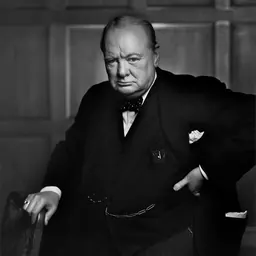
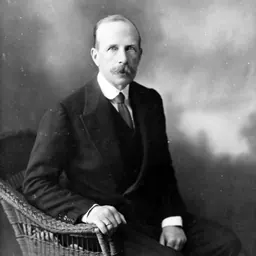

Related people
Same field, nearest in time

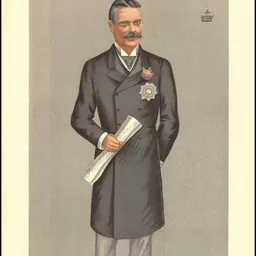
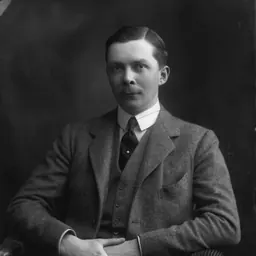

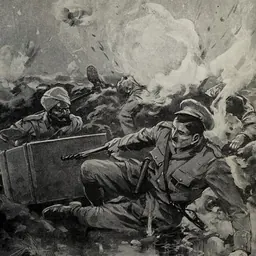
Contemporaries
People whose lives overlapped George Kemp, 1st Baron Rochdale's

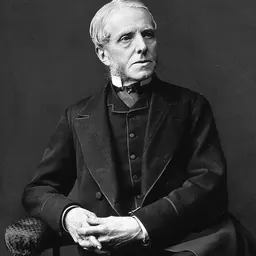
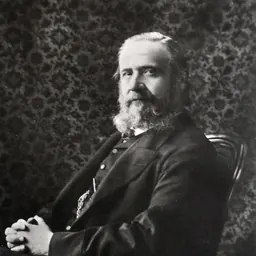


Frequently asked questions
Who was George Kemp, 1st Baron Rochdale?
English cricketer (1866-1945)
When was George Kemp, 1st Baron Rochdale born?
George Kemp, 1st Baron Rochdale was born on 9 June 1866 in Rochdale.
When did George Kemp, 1st Baron Rochdale die?
George Kemp, 1st Baron Rochdale died on 24 March 1945 in Lingholm.
What was George Kemp, 1st Baron Rochdale's occupation?
George Kemp, 1st Baron Rochdale was a cricketer, politician, military officer and art collector.
What nationality was George Kemp, 1st Baron Rochdale?
George Kemp, 1st Baron Rochdale was British.
Sources & further reading
· Wikipedia: George Kemp, 1st Baron Rochdale
· DBpedia: George Kemp, 1st Baron Rochdale
Cite this page
APA: Biography.guide. (2026). George Kemp, 1st Baron Rochdale. https://biography.guide/george-kemp-1st-baron-rochdale/
MLA: "George Kemp, 1st Baron Rochdale." Biography.guide, https://biography.guide/george-kemp-1st-baron-rochdale/.
Chicago: "George Kemp, 1st Baron Rochdale." Biography.guide. https://biography.guide/george-kemp-1st-baron-rochdale/.
Data last updated: 2026-09-20 · Spot an error? Report a correction.
Page generated 2026-09-27 05:30 UTC