
About George Julian Zolnay
Lived 1863 – 1949 (aged 85). George Julian Zolnay was an American and Hungarian sculptor.
George Julian Zolnay (Gyula Zsolnay) (July 4, 1863 – May 1, 1949) was a Romanian, Hungarian, and American sculptor called the "sculptor of the Confederacy".
Early years
Zolnay was born on July 4, 1863, to Ignác (Ignatius) Zolnay, originally from Pécs, and Carolina Vagán Zolnay, from Bucharest. though some mention Pécs.
He grew up in Bucharest, attending the Saint Sava National College. He then went to Paris, France to study under William-Adolphe Bouguereau and Alexandre Falguière, as then to the Imperial Academy of Fine Arts of Vienna where he studied under Edmund von Hellmer and Carl Kundmann,
"Sculptor of the Confederacy"
Zolnay came to the United States in 1893 to attend the World's Columbian Exposition, at the behest of the U.S. consul-general to Vienna. He intended to return home, but chose New York City for his new home in 1894, eventually becoming an American citizen.
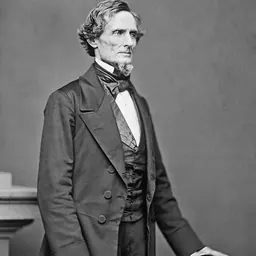
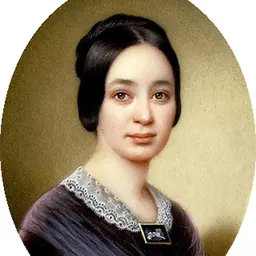
He became a favorite sculptor of Southerners in 1897 after he sculpted a statue of Sam Davis, a Confederate spy who was executed; as no pictures of Davis survived, Zolnay based the likeness on Davis' relatives. becoming its first vice-president. The widow of Jefferson Davis and former First Lady of the Confederate States, Varina Davis, had moved to New York City that same year, and was quoted in the article with kind words for Zolnay, with whom she'd collaborated for six months on the statue. For verisimilitude, she'd loaned Zolnay the clothes in which Davis had been captured.
Family sources and Zolnay's biographer describe his friendship with Varina Davis, and access to the social circle she'd built in New York City, as the foundation of a whole phase of his American career, his "Confederate Period", from 1899 to 1923.
St. Louis, Washington, D.C.
In 1903 Zolnay moved to St. Louis to head the sculpture department of the St. Louis School of Fine Arts, taking the place of Robert P. Bringhurst, and teaching there several years while continuing to pursue commissions, many in the south. Among Zolnay's students in St. Louis were Caroline Risque, Nancy Coonsman, and Adele Schulenburg Gleeson. As of November 19, 1903, Zolnay was the instructor of modeling at the school, curator of sculpture in its associated Museum of Fine Arts, and had just been appointed to the three-man board overseeing the Art Department at the 1904 Louisiana Purchase Exposition, a role in which he would report to Halsey Ives, who had founded the school 20 years prior. Zolnay also contributed two significant figures for the Transportation Building at the fair.
In the same years Zolnay and his studio assistants received a large commission for the two eight-ton lion and tiger, to be placed on top of 40-foot columns, flanking the Delmar road entrance to newly-founded University City, Missouri, an inner suburb developed in parallel with the 1904 fair. Their client was the founder and first mayor of U. City, promoter and publisher Edward Gardner Lewis.
After the lion and tiger were completed in 1909, Zolnay left the St. Louis School of Fine Arts, and went to work for his client Lewis, taking at least two of his student proteges (Coonsman and Risque) along. Mr. Lewis was a font of interlocking schemes, on a national scale, and the head of a lucrative publishing empire. He made Zolnay the head of the sculptural program at the Art Academy of the People's University of the American Women's League, which meant contributing to an ongoing building program in U. City, devising sculptural education material suitable for correspondence courses, and designing a hearth sculpture a proposed national network of League chapter houses of the League, such as the completed example in the Katy Hamman-Stricker Library, Calvert, Texas.
In 1913 Zolnay moved his studios to Washington, D.C. Beside his sculptural activity, and holding sculpture classes at the Zolnay Atelier, and did illustration work for the two volumes of the book The Roumanians and Their Lands issued by the Roumanian Relief Committee of America in 1919.
Personal life
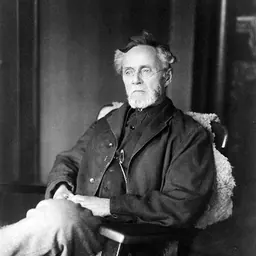
Zolnay married Abigail (Abbie) Rowan Gillim on November 23, 1902. She was a Southerner; Later on the king awarded Zolnay the Knight's Cross of the Order of the Crown. fountain at the Trans-Mississippi and International Exposition, Omaha, 1898 Ye Shall Know the Truth, and the Truth Shall Make You Free, stamped concrete pediment sculpture, Cabell Hall at the University of Virginia, Charlottesville, Virginia, 1898 Jefferson Davis, bronze on granite pedestal, Hollywood Cemetery, Richmond, Virginia, 1899 Angel of Grief, Varina Anne "Winnie" Davis Memorial, Hollywood Cemetery, Richmond, Virginia, 1899 Confederate Monument, on the grounds of the Daviess County Courthouse, Owensboro, Kentucky, 1900 concrete lions at the Gates of Opportunity and other work around the Woman's Magazine Building, University City, Missouri, 1903–09 two seated figures for Transportation Building, and perhaps other work, at the 1904 Louisiana Purchase Exposition, St. Louis elaborate interior work with multiple caryatids and groups, James R. Browning United States Court of Appeals Building, San Francisco, for architect James Knox Taylor, 1905 Nathaniel Parker Willis Monument, bronze, Oak Hill Cemetery, Crawfordsville, Indiana, 1909 bronze Sam Davis Statue, Boy Hero of the Confederacy, on the grounds of the Tennessee State Capitol in Nashville, Tennessee, 1909 Confederate Private Monument, Centennial Park, Nashville, Tennessee, dedicated 1909 Hoo Hoo Monument, Gurdon, Arkansas, 1909 Barnard Monument, Buttonwood Park Historic District, New Bedford, Massachusetts, 1914 bronze Pierre Laclède, grounds of City Hall, St. Louis, 1914 Memorial to the Confederate Dead, Forest Park, St. Louis, 1914 (removed 2017) frieze, Central High School (now Cardozo Senior High School), Washington DC, 1916 Statue of Sequoyah, an Oklahoma entry for the National Statuary Hall Collection, a commission inherited from sculptor Vinnie Ream after her death, 1917 bronze, Dr. Andrew Taylor Still, A.T. Still University, Kirksville, Missouri, 1917 Kiwanis Memorial in Centennial Park (Nashville), 1923 bust of Confederate veteran Edmund William Cole, Kirkland Hall, administration building of Vanderbilt University, Nashville bronze bust of Edgar Allan Poe, University of Virginia, Charlottesville, Virginia bas relief on Vinnie Ream's grave monument, Arlington National Cemetery.
Gallery
Don’t just read it —
keep it.
Full-length biographies made to live with: read them, listen on the way to work, watch them tonight.
- E-book
- Audio
- Video
Instant download · yours to keep · every purchase keeps this site free
Important facts
People in George Julian Zolnay's life
Named in this biography and alive at the same time



Related people
Same field, nearest in time



Contemporaries
People whose lives overlapped George Julian Zolnay's



Frequently asked questions
Who was George Julian Zolnay?
Hungarian sculptor (1863–1949)
When was George Julian Zolnay born?
George Julian Zolnay was born on 4 July 1863 in Bucharest.
When did George Julian Zolnay die?
George Julian Zolnay died on 1 May 1949 in New York City.
What was George Julian Zolnay's occupation?
George Julian Zolnay was a sculptor.
What nationality was George Julian Zolnay?
George Julian Zolnay was American and Hungarian.
Sources & further reading
· Wikipedia: George Julian Zolnay
· DBpedia: George Julian Zolnay
Cite this page
APA: Biography.guide. (2026). George Julian Zolnay. https://biography.guide/george-julian-zolnay/
MLA: "George Julian Zolnay." Biography.guide, https://biography.guide/george-julian-zolnay/.
Chicago: "George Julian Zolnay." Biography.guide. https://biography.guide/george-julian-zolnay/.
Data last updated: 2026-09-20 · Spot an error? Report a correction.
Page generated 2026-09-27 05:20 UTC