
About George Gascoigne
Lived 1525 – 1577 (aged 51–52). George Gascoigne was an English poet, poet lawyer, writer and politician.
George Gascoigne ( ; 7 October 1577) was an English poet, soldier and unsuccessful courtier. He is considered the most important poet of the early Elizabethan era, following Sir Thomas Wyatt and Henry Howard, Earl of Surrey, and leading to the emergence of Philip Sidney. He was the first poet to deify Queen Elizabeth I, in effect establishing her cult as a virgin goddess married to her kingdom and subjects. His most noted works include A Discourse of the Adventures of Master FJ, an account of courtly intrigue and one of the earliest English prose fictions; The Supposes (performed in 1566, printed in 1573), an early translation of Ariosto and the first comedy written in English prose, which was used by Shakespeare as a source for The Taming of the Shrew; and the frequently anthologised short poem "Gascoignes woodmanship" (1573) and "Certayne Notes of Instruction concerning the making of verse or ryme in English" (1575), the first essay on English versification.
Early life The eldest son of Sir John Gascoigne of Cardington, Bedfordshire, Gascoigne was educated at Trinity College, Cambridge, and on leaving the university is supposed to have joined the Middle Temple. He became a member of Gray's Inn in 1555.
A Hundreth Sundry Flowres (1573) and Posies of Gascoigne (1575) Gascoigne's best known and controversial work was originally published in 1573 under the title by London printer Richarde Smith. The book purports to be an anthology of courtly poets, gathered and edited by Gascoigne and two other editors known only by the initials "H.W." and "G.T." The book's content is throughout suggestive of courtly scandal, and the aura of scandal is skilfully elaborated through the effective use of initials and posies—Latin or English tags supposed to denote particular authors—in place of the real names of actual or alleged authors.
Judged to be offensive, the book was "seized by Her Majesty's High Commissioners." Gascoigne republished the book with certain additions and deletions two years later under the alternative title, The Posies of George Gascoigne, Esquire. The new edition contains three new dedicatory epistles, signed by Gascoigne, which apologise for the offence that the original edition had caused. This effort failed, however, as the book was also ruled offensive and likewise seized.
At war in the Netherlands When Gascoigne sailed as a soldier of fortune to the Low Countries in 1572, his ship was driven by stress of weather to Brielle, which luckily for him had just fallen into the hands of the Dutch. He obtained a captain's commission, and took an active part in the campaigns of the next two years including the Middelburg siege, during which he acquired a profound dislike of the Dutch, and a great admiration for William of Orange, who had personally intervened on his behalf in a quarrel with his colonel, and secured him against the suspicion caused by his clandestine visits to a lady at the Hague.
Taken prisoner after the evacuation of Valkenburg by English troops during the Siege of Leiden, he was sent to England in the autumn of 1574. He dedicated to Lord Grey de Wilton the story of his adventures, The Fruites of Warres (printed in the edition of 1575) and Gascoigne's Voyage into Hollande. In 1575 he had a share in devising the masques, published in the next year as The Princely Pleasures at the Courte at Kenelworth, written to celebrate the queen's 1575 visit to the Earl of Leicester at Kenilworth Castle. At Woodstock in 1575 he delivered a prose speech before Elizabeth, and was present at a reading of the Pleasant Tale of Hemetes the Hermit, a brief romance, probably written by the queen's host, Sir Henry Lee. At the queen's annual gift exchange with members of her court the following New Year's, Gascoigne gave her a manuscript of Hemetes which he had translated into Latin, Italian, and French. Its frontispiece shows the Queen rewarding the kneeling poet with an accolade and a purse; its motto, "Tam Marti, quam Mercurio", indicates that he will serve her as a soldier, as a scholar-poet, or as both. He also drew three emblems, with accompanying text in the three other languages. He also translated Jacques du Fouilloux's La Venerie (1561) into English as The Noble Arte of Venerie or Hunting (1575) which was printed together with George Turberville's The Book of Falconrie or Hawking and is thus sometimes misattributed to Turberville though in fact it was a work by Gascoigne.
Later writings and influences Most of his works were published during the last years of his life after his return from the wars. He died in Stamford in Lincolnshire on 7 October 1577 and was buried on 13 October in the graveyard of St Mary's Church, Stamford.
Gascoigne's theory of metrical composition is explained in a short critical treatise, "Certayne notes of instruction concerning the making of verse or ryme in English, written at the request of Master Edouardo Donati", prefixed to his Posies (1575). He acknowledged Chaucer as his master, and differed from the earlier poets of the school of Henry Howard, Earl of Surrey, and Thomas Wyatt chiefly in the greater smoothness and sweetness of his verse. In this text, Gascoigne emphasises the importance of 'invention' in writing a poem: "the rule of invention, which of all other rules is most to be marked".
Don’t just read it —
keep it.
Full-length biographies made to live with: read them, listen on the way to work, watch them tonight.
- E-book
- Audio
- Video
Instant download · yours to keep · every purchase keeps this site free
Important facts
People in George Gascoigne's life
Named in this biography and alive at the same time


Related people
Same field, nearest in time
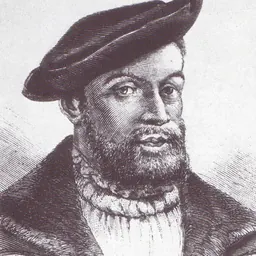
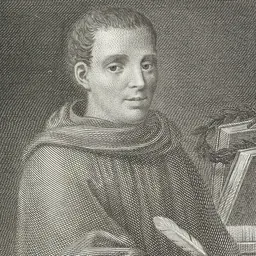
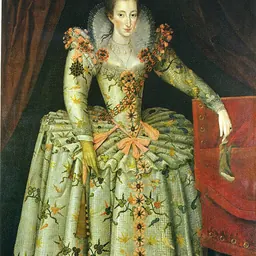
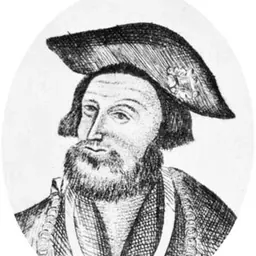
Contemporaries
People whose lives overlapped George Gascoigne's

Frequently asked questions
Who was George Gascoigne?
16th-century English poet and courtier
When was George Gascoigne born?
George Gascoigne was born in 1525 in Cardington.
When did George Gascoigne die?
George Gascoigne died on 7 October 1577 in Barnack.
What was George Gascoigne's occupation?
George Gascoigne was a poet, poet lawyer, writer and politician.
What nationality was George Gascoigne?
George Gascoigne was English.
Sources & further reading
Cite this page
APA: Biography.guide. (2026). George Gascoigne. https://biography.guide/george-gascoigne/
MLA: "George Gascoigne." Biography.guide, https://biography.guide/george-gascoigne/.
Chicago: "George Gascoigne." Biography.guide. https://biography.guide/george-gascoigne/.
Data last updated: 2026-09-20 · Spot an error? Report a correction.
Page generated 2026-09-27 05:30 UTC