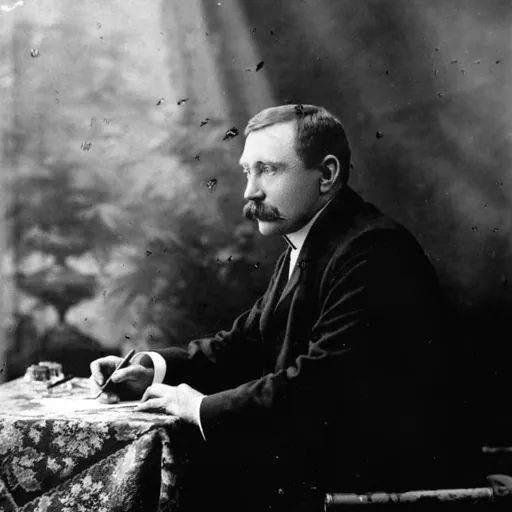
About George Essex Evans
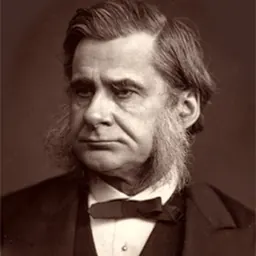
Lived 1863 – 1909 (aged 46). George Essex Evans was a British poet, journalist, farmer, editor and civil servant.
George Essex Evans (18 June 1863 – 10 November 1909) was an Australian poet.
Biography
Essex Evans was born in London on 18 June 1863, to Welsh parents. His father, John Evans Q.C., Treasurer of the Inner Temple and a member of the House of Commons, died in 1864 when his son was only a few months old; he left his family £60,000. George Essex Evans was raised and educated by his mother Mary Ann (née Owen), who was one of the Bowens of Llwynwair, an old Welsh family. She was an educated woman, fluent in both Latin and Greek. The family lived in Haverfordwest in Pembrokeshire where Essex Evans attended Haverfordwest Grammar School and then the St. James Collegiate School of Jersey.
Essex Evans was partly deaf and although he was an excellent athlete, his tutors thought him "dull". His hearing impediment prevented him going into the armed forces.
In 1881, when Essex Evans was 17, the siblings J.B.O. (John Bowen Owen), Blanche Gough and Beatrice emigrated to Queensland, Australia, travelling first class on a journey around the Cape of Good Hope that lasted 65 days. Upon arrival in Queensland, the brothers bought some land in the Darling Downs with the intention of farming. Essex Evans, however, was badly injured in a horse riding accident, when he was thrown against a tree, and was unable to do any physical work.
Essex Evans suffered from increasing deafness as he grew older, and this may be the reason why he was thought to be a secretive, quiet man. He also wrote travel books for the Government Tourist and Intelligence Bureau. He entered the public service in 1888 and eventually became District Registrar of births, deaths and marriages first for Gympie and then later for Toowoomba.
In 1899, Essex Evans married Blanche Hopkins, the young widow of E. B. Hopkins of Goondiwindi, the daughter of the late Rev. William Eglinton, a man who, himself liked to write poems. She was also sister of astronomer Dudley Eglinton, and former Police Magistrate & Native Mounted Police Sub-Inspector Ernest Eglinton. The wedding was described as a very secret affair.
They built their home, "Glenbar", on the Tollbar Road on the eastern slope of the Toowoomba range. Essex Evans's sister continued to live with him.
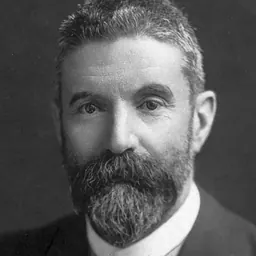
Evans founded the Austral Society in Toowoomba in 1903 to promote music, art, literature, science and industry. However, he was also described as a kind person and a loyal friend. In 1898 another collection of poetry, Loraine and other Verses, was published. In 1901 Evans won a prize of fifty guineas for his "Ode for Commonwealth Day". Although this ode was praised by the then Prime Minister, Alfred Deakin, it was criticised by his peers as trite. During the last two years of his life he wrote prolifically about the resources of his state for the Queensland government.
Essex Evans has over 200 published poems attributed to his name. His work frequently appeared in Australian newspapers and he wrote in many other literary forms including short stories, essays, various humorous works and a novella.
Death
Essex Evans was a great advocate for the construction of a new road northward across the Australia and after falling ill in 1909 he became the first passenger to be transported over it when taken to hospital. The men working on the road were so overcome with sorrow for the poet who had worked hard to bring about the new road that they relieved the ambulance men of their duty. in Federal Parliament as 'Australia's Poet.'
In a speech that was wired to the poet's widow after his death, Australian Prime Minister Deakin shared his sentiments stating that he was "Deeply grieved at sudden and unexpected death of your gifted husband. Australia will mourn the loss of her national poet whose patriotic songs stirred her people profoundly in the arduous campaign for union."
Dark purple, chased with sudden gloom and glory, Like waves in wild unrest. Low-wooded billows and steep summits hoary, Ridge, slope and mountain crest, Cease at her feet with faces turned to greet her, Enthroned, apart, serene, Above her vassal hills whose voices greet her The Mountain Queen.
Many years after his death, on the anniversary of his birthday, large numbers of Toowoomba citizens would gather to pay homage to their great poet, in annual pilgrimages held at his monument in Webb Park.
Legacy
An edition of his Collected Verse was published in 1928.
An annual pilgrimage to his memorial site has been carried out by the Toowoomba Ladies Literary Society since 1929. The society have also established a plaque at the site of Essex Evans's home to commemorate his memory.
A collection of Essex Evans's artefacts and archives can be found at the Toowoomba City Library. Loraine and other Verses, 1898 The Sword of Pain, 1905 The Secret Key and Other Verses, 1906 Kara, and other verses, 1910 The Collected Verse of G. Essex Evans, 1928
Individual poems
The Women of the West (1901) Queen of the North: A Jubilee Ode (1909)
Don’t just read it —
keep it.
Full-length biographies made to live with: read them, listen on the way to work, watch them tonight.
- E-book
- Audio
- Video
Instant download · yours to keep · every purchase keeps this site free
Important facts
People in George Essex Evans's life
Named in this biography and alive at the same time


Related people
Same field, nearest in time

Contemporaries
People whose lives overlapped George Essex Evans's



Frequently asked questions
Who was George Essex Evans?
Australian poet
When was George Essex Evans born?
George Essex Evans was born on 18 June 1863 in London.
When did George Essex Evans die?
George Essex Evans died on 10 November 1909 in Toowoomba.
What was George Essex Evans's occupation?
George Essex Evans was a poet, journalist, farmer, editor and civil servant.
What nationality was George Essex Evans?
George Essex Evans was British.
Sources & further reading
· Wikipedia: George Essex Evans
Cite this page
APA: Biography.guide. (2026). George Essex Evans. https://biography.guide/george-essex-evans/
MLA: "George Essex Evans." Biography.guide, https://biography.guide/george-essex-evans/.
Chicago: "George Essex Evans." Biography.guide. https://biography.guide/george-essex-evans/.
Data last updated: 2026-09-20 · Spot an error? Report a correction.
Portrait: Wikimedia Commons · author & licence
Page generated 2026-09-27 04:58 UTC