
George Elmore
American civil rights activist
About George Elmore
Lived 1905 – 1959 (aged 53).
George Augustus Elmore (March 31, 1905 – February 25, 1959) was an American businessman and civil rights activist from South Carolina who successfully sued the South Carolina Democratic Party in Elmore v. Rice, 72 F. Supp. 516, which eliminated the last white primary in the United States.
Early life and entrepreneurial activities Elmore was born on March 31, 1905 in the town of Holly Hill, South Carolina to Sadie Johnson, a single, unmarried, mulatta mother aged nineteen or twenty; his biological father, whom Elmore never met, has been suggested to be a Jewish man according to family legend, as Elmore's skin color "was a few shades lighter than that of his brothers and sisters." A few years after Elmore's birth, Sadie married a black farmer named George W. Elmore, a former slave who was twice her age; the young George promptly adopted his stepfather's surname. Elmore had an older brother, Ben, and three younger siblings, Willie, Ines, and Esther. In the early 1920s, Elmore moved to the capital of South Carolina, Columbia, for better job opportunities. The couple's first home was at 1212 Lyon Street, which they rented for $8 a month. Besides managing the Waverly Five & Dime, a discount variety store, from 1945 to 1948, Elmore also operated two liquor stores, and had worked as a taxi driver and photographer on the side. In July 2012, the storefront that formerly hosted the Five & Dime at 2313 Gervais Street was demolished by the First Nazareth Baptist Church (who owned the lot) less than one week after a historical marker was unveiled celebrating Elmore's achievements.
George and Laura Elmore had four children together: Essie Naomi, born March 12, 1932; Cresswell Delaney, born November 8, 1938; Vernadine Veranus (named in reference to the Double V campaign), born August 2, 1942; and Yolande Anita, born September 11, 1949. From 1943 to 1954, Elmore and his middle class family lived in a small house at 907 Tree Street, where he would transform the bathroom into a makeshift darkroom.
Activism Elmore was known in the local political scene as the secretary of the Progressive Democratic Party (PDP), a black political party in South Carolina founded in 1944 that challenged the state Democratic Party's opposition to black suffrage and desegregation. As an ordinary citizen activist he worked to challenge the white-only Democratic primaries. He played a key role in getting the Democratic Party to open its primaries to Black voters. He worked to move civil right ideas it practical actions. In mid-1945, Elmore volunteered to perform in a charity burlesque show entitled Puffin' Hot at the Booker T. Washington Auditorium, which was intended to raise funds for the construction of the Good Samaritan-Waverly Hospital. Elmore intended to perform as the singer Kate Smith, best known for her rendition of "God Bless America". Puffin' Hot was initially postponed, and no known newspaper accounts provide any detail about if and when the show took place. In February 1947, while serving as a freelance photographer for the Lighthouse and Informer, Elmore photographed the mangled corpse of Willie Earle, who had recently been lynched in Greenville for the alleged murder of a white taxi driver.
Elmore was highly respected within the Waverly community, with his store being a popular destination for school children eager to buy ice cream cones and other treats after school. In a 2022 interview, Melvin S. Hodges, a childhood friend of Cresswell Elmore, recalled, "Everyone knew Mr. Elmore. He was a friendly guy; everybody liked him except the white power structure." For many of the local black children, Elmore served as an industrious role model.
Challenging discrimination in the primary As a result of the Supreme Court's landmark decision in Smith v. Allwright (1944), which ruled that the disenfranchisement of black voters in primaries was unconstitutional, South Carolina's state legislature redesignated the state's Democratic Party as a "private club" in an attempt to circumvent primary-related laws. Elmore, however, was not chosen. Hinton, along with three other civil rights activists, Dr. R. W. Mance, Rev. E. A. Davis, and Rev F. M. Young, were all rejected as they tried to enroll in Richland County's ninth ward. As the four men stood outside dejected, Elmore showed up unannounced and decided to try his luck. The middle-aged, white, female clerk, believing him to be white, helped the "fair-skinned, straight-haired" Elmore fill out the necessary paperwork for a voting certificate. Elmore initially left his home address blank, and upon telling the clerk that he lived on Tree Street, she promptly exclaimed, "Why you're a nigger!"
Elmore v. Rice (1947)
Elmore's legal team was led by future Supreme Court Justice Thurgood Marshall (who himself had argued in Smith v. Allwright), Robert L. Carter, and Harold R. Boulware. The defense team also included state senators William P. Baskins, Yancy MacLeod, and Edgar Brown, in addition to the lawyers Charles B. Elliott and Irvine F. Belser.
On July 12, Waring, described by historian Bobby Donaldson as a "Charleston blueblood," ruled in favor of Elmore, thus dismantling South Carolina's white primary. Judge Waring's ruling was upheld by the United States Court of Appeals for the Fourth Circuit; the Supreme Court refused to hear the case any further. However, as researcher Gerrit Sterk notes, "the elements of reading, writing, and interpreting the Constitution were still in effect, as well as the poll tax, which was not repealed until 1952. So, while there was a victory in the ability to vote, the assurance of actually being able to vote without conditions was not." Governor Strom Thurmond, who would form the breakaway, segregationist Dixiecrat Party in July 1948, was furious at this turn of events, proclaiming, "I predict that Americans everywhere will live to regret the principle of law which has been laid down...the result is unsound and un-American...[and] we in South Carolina will be faced with many serious practical problems in the days ahead."
When the South Carolina Democratic Party attempted to defy the Elmore v. Rice ruling by requiring all members to affirm a loyalty oath endorsing racial segregation, Waring issued an injunction in July 1948.
Elmore also faced severe economic retaliation from white vendors, who would refuse to supply him with bread, crackers, sodas, and other essential inventory items for his Five & Dime store, thus leading to his financial ruin. Simon Bouie, then a young boy living in the Waverly community, recalled of Elmore, "I remember seeing a very sad man. He would come out every day and he would just stand in front of the store. He was waiting for people to come, apparently. But really a lot of people just stopped going to the store when it got kind of rough." According to his son Cresswell, at one point "state agents raided Elmore's liquor store, claiming the liquor he had bought from the standard wholesaler was illegal, and broke the bottles." The foreclosure stirred controversy within Columbia's black community since Elmore's mortgage had been with Victory Savings Bank, Columbia's first black-owned bank, which was then led by Dr. Henry Monteith, the brother of prominent local NAACP activist Modjeska Monteith Simkins. At auction, Elmore's property was purchased by Rachel E. Monteith, the mother of Henry and Modjeska, for $3,054. Simkins had recently become estranged from Elmore's close friend, John Henry McCray, and McCray believed that the Monteith family was acting out of spite, writing in a letter to Elmore, "Dr. Monteith gave...the 'double-cross' in selling the house without first advising us it was going to be sold and allowing the small group working the chance to equal the bid." The inscription on the monument reads: "Sacred to the memory of George Elmore, who through unmatched courage, perseverance and personal sacrifice, brought the legal action by which black people may participate in South Carolina Democratic Party primary elections -'Elmore vs. Rice,' 1947."
Don’t just read it —
keep it.
Full-length biographies made to live with: read them, listen on the way to work, watch them tonight.
- E-book
- Audio
- Video
Instant download · yours to keep · every purchase keeps this site free
Important facts
People in George Elmore's life
Named in this biography and alive at the same time

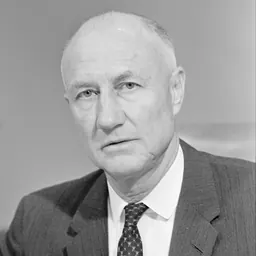
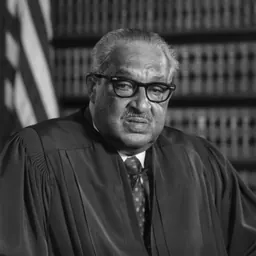



Contemporaries
People whose lives overlapped George Elmore's





Frequently asked questions
Who was George Elmore?
American civil rights activist
When was George Elmore born?
George Elmore was born on 31 March 1905.
When did George Elmore die?
George Elmore died on 25 February 1959.
Sources & further reading
· DBpedia: George Elmore (activist)
Cite this page
APA: Biography.guide. (2026). George Elmore. https://biography.guide/george-elmore/
MLA: "George Elmore." Biography.guide, https://biography.guide/george-elmore/.
Chicago: "George Elmore." Biography.guide. https://biography.guide/george-elmore/.
Data last updated: 2026-09-20 · Spot an error? Report a correction.
Page generated 2026-09-27 05:12 UTC