
George Edward Bonsor Saint Martin
British-spanish Archaeologist and Painter
About George Edward Bonsor Saint Martin
Lived 1855 – 1930 (aged 75). George Edward Bonsor Saint Martin was a British archaeologist, prehistorian and painter.
George Edward Bonsor Saint Martin (March 30, 1855 – August 1930) was a French-born British historian, painter, and archaeologist who is known for the discovery and study of several sites in Spain–including the necropolis and amphitheater at Carmona–parts of the ancient Roman town of Baelo Claudia in Cádiz, and the in Lora del Río. He was also known as an advocate for the preservation of archaeological sites.
Early life and family George Edward Bonsor was born on 30 March 1855 in Lille. His father, James Bonsor, was an entrepreneur-engineer originally from Nottingham, England. His mother, Pauline Marie Leonie Saint Martin Ghislaine, was a native of Lille and died of sepsis at the age of 25, a few months after her son's birth.
After Pauline's death, James remarried an English widow named Sarah Gregory (born Sarah Taylor) in 1856, who bore three children: George's half-sisters Claire and Suzanne and his half-brother Willy. George was cared for by his father's sister and her husband, John and Louise Marie Batley, at Seaborough Court, a manor house in Seaborough, until he was old enough to be sent away to boarding school.
Although English-language sources focus on Bonsor's childhood with his English cousins, other sources pay more attention to time spent with his late mother's family in northern France. The Payot Saint-Martin extended family consisting of his mother's uncles and their children lived in the village of Guernes. According to Pauline, his French cousins treated George like another brother. He lived alternately with the Batleys in southern England with his Guernes cousins while his father pursued his various business interests in different parts of the European mainland. Constant travel became a permanent feature of Bonsor's life, and it developed his intense curiosity, observational abilities, love of geography, and appetite for knowledge.
The status of the British Empire as the sole surviving super power had gone mostly unquestioned since the Battle of Trafalgar for Europeans. As the son of an English father, Bonsor was content to present himself as a British subject throughout his life, though when he wrote documents or articles for publication he almost invariably did so using French or Spanish; he rarely wrote anything in English. In 1922 Bonsor provided his own explanation in a card he wrote to Reginald Smith of the British Museum: "I know how odd it must sound that, being an Englishman, I am not able to provide my article in English, and on this I must explain myself. I was born in France, of an English father, and I grew up in Belgium. I came to Spain as a young man, some 40 years ago. I came here to paint, but I soon abandoned art in favour of archaeology."
Move to Spain After finishing his academic studies, Bonsor travelled to southern Europe to deepen his understanding of Spanish art, in part as a way to consolidate his own painting style. Bonsor's own paintings from this period concentrate on figures of people and costumbrismo scenes. Funding arrived in the form of periodic remittances from the family.
Cultural tourist The diaries in which Bonsor meticulously recorded his visit to Spain reveal him to be a systematic man. (Bonsor's diaries have not been catalogied and published.) However, María Peñalver Simó quotes them extensively in notes she prepared for her 1960 doctoral dissertation. The dissertation was, in effect, a biography of Jorge Bonsor. The biographical dissertation also remains unpublished. The notes Peñalver produced for it are nevertheless retained at the University of Seville where they have been accessed by scholars. It is believed that the various quotes from Bonsor's diaries that have appeared in print since that time are likely have been based, with or without attribution, on Peñalver's notes. For most of the tour he was accompanied by Paulus, a Belgian Roman Catholic and a companion from his time at the Beaux-Arts Académie in Brussels. They traveled to Burgos, where they made their first stop. The underlying objective of the trip was to visit the artistic monuments, art museums and anything else that might be of interest to youthful artists from the north. In his diary Bonsor recorded the names of more than ten of his former fellow students from the Beaux-Arts Académie who took the opportunity to visit other southern European countries. Several of the former student contemporaries he names later became members of the "Les XX", the group of twenty Belgian artists who later formed the nucleus of an artistic revival in and around Brussels during the 1890s. After thoroughly exploring the little town and its surroundings, he left Carmona for Gibraltar, where he had arranged to meet his aunt and uncle, Marie and John Batley, together with their elder son, Armytage Batley. He accompanied his relatives on a little tour of the region, taking in visits to Málaga, Granada and Seville, where he left them, returning again to Carmona on 4 March 1881. A few weeks later he was back in Gibraltar, re-acquainting himself with the British Empire, and where he unexpectedly came across his friend and student contemporary Paulus again. They decided to travel to Tangier, staying in Morocco together between 7 and 17 May 1881. After that unscheduled trip Bonsor returned to Carmona where he remained for the next nine months.
During Holy Week in 1881 Bonsor prepared a detailed painting of the Carmona Procession of St. James on Maundy Thursday. His diary record indicates a loss of the famous reserve that people associated with well-born English gentlemen: "When night came, I watched from my balcony the procession passing with all its lights. On the balcony opposite there were several girls who began to gossip and giggle as soon as they saw me: 'It's that foreigner! It's the painter!'. One of them, her face half covered behind her black mantilla, seemed to be asking me for something! So I concentrated only on her, and no longer watched the passing procession".
Bonsor became widely liked in the town and was known to his fellow townsfolk as "the English painter". When he painted in the streets, people would stop and pass comments such as "How beautifully painted that lamp is", which gave rise to the comment in his diary "I am building a reputation as a painter of oil lamps".
Don’t just read it —
keep it.
Full-length biographies made to live with: read them, listen on the way to work, watch them tonight.
- E-book
- Audio
- Video
Instant download · yours to keep · every purchase keeps this site free
Important facts
People in George Edward Bonsor Saint Martin's life
Named in this biography and alive at the same time



Related people
Same field, nearest in time


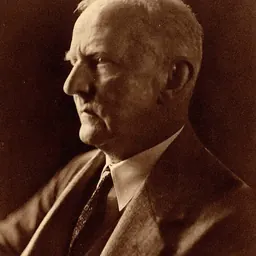
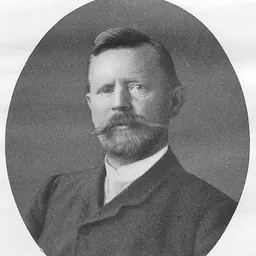

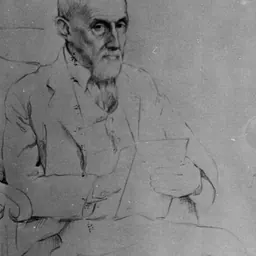
Contemporaries
People whose lives overlapped George Edward Bonsor Saint Martin's
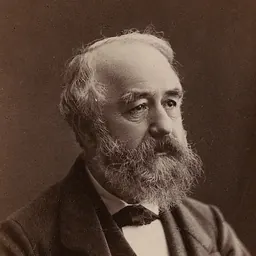





Frequently asked questions
Who was George Edward Bonsor Saint Martin?
british-spanish Archaeologist and Painter (1855-1930)
When was George Edward Bonsor Saint Martin born?
George Edward Bonsor Saint Martin was born on 30 March 1855 in Lille.
When did George Edward Bonsor Saint Martin die?
George Edward Bonsor Saint Martin died on 15 August 1930 in Mairena del Alcor.
What was George Edward Bonsor Saint Martin's occupation?
George Edward Bonsor Saint Martin was an archaeologist, prehistorian and painter.
What nationality was George Edward Bonsor Saint Martin?
George Edward Bonsor Saint Martin was British.
Sources & further reading
· Wikipedia: George Edward Bonsor Saint Martin
· DBpedia: George Edward Bonsor Saint Martin
Cite this page
APA: Biography.guide. (2026). George Edward Bonsor Saint Martin. https://biography.guide/george-edward-bonsor-saint-martin/
MLA: "George Edward Bonsor Saint Martin." Biography.guide, https://biography.guide/george-edward-bonsor-saint-martin/.
Chicago: "George Edward Bonsor Saint Martin." Biography.guide. https://biography.guide/george-edward-bonsor-saint-martin/.
Data last updated: 2026-09-22 · Spot an error? Report a correction.
Page generated 2026-09-27 05:29 UTC