
About George E. Smith
Lived 1938 – 2024 (aged 85–86). George E. Smith was an engineer.
George Edwin Smith (1938 – November 8, 2024) was an American philosopher of science and turbomachinery engineer. As an academic, he was known for his work on Isaac Newton and on theory-laden observation, which he described as "turning data into evidence." He was a professor at Tufts University 1977–2022, acting director of the Dibner Institute at MIT 2001–2006, and the recipient of the festschrift Theory, Evidence, Data: Themes from George E. Smith. As an engineer, he was known for his work in turbomachinery failure analysis as an expert witness.
Early life and education Smith was born George Edwin Smith in 1938 and grew up in Cincinnati, Ohio. He attended Walnut Hills High School, where he became a protege of principal Harold Howe and became active in civil rights activism through the Fellowship House Youth Group and the NAACP. He also learned to program assembly language for General Electric.
Howe convinced Smith to attend Yale University for undergraduate study, where he intended to study theater but instead earned a BA in philosophy and mathematics in 1963. While there, he was particularly inspired by logician Frederic Fitch and he became friends with Noam Chomsky. During his time as an undergraduate, he took two years off, 1958–1960, to work as an engineer for General Electric on computer simulations of jet engines under African-American managing engineer John Blanton.
Career Smith began teaching philosophy at Tufts University in 1977, despite initial opposition from historians of science including Bernard Lightman. Smith characterized the conflict in terms of differences between the social history of science and internal history of science.
Smith was a close friend to his philosophical colleague Daniel Dennett at Tufts, cofounded an educational software company with him and retired with him, and was the subject of a full chapter in Dennett's autobiography I've Been Thinking. He maintained a long-term interest in quantum field theory and collaborated on the topic with physicists Kenneth G. Wilson and Sam Schweber. He became interested in climatology in 1989 following James Hansen's testimony to the US Congress on global warming in 1988, and began to collaborate with Stephen Schneider after reading his book Global Warming (1989) and visiting Stanford in 2009.
Personal life and death Smith married his wife, India, in 1962; they had two daughters. He was a children's neighborhood basketball coach in Boston and made lifelong friendships through his coaching.
He died of cancer on November 8, 2024.
Selected works
Articles and chapters
Books
Don’t just read it —
keep it.
Full-length biographies made to live with: read them, listen on the way to work, watch them tonight.
- E-book
- Audio
- Video
Instant download · yours to keep · every purchase keeps this site free
Important facts
People in George E. Smith's life
Named in this biography and alive at the same time








Related people
Same field, nearest in time
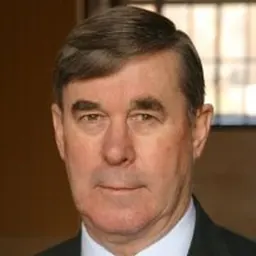


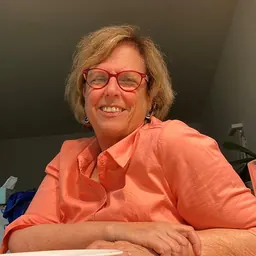
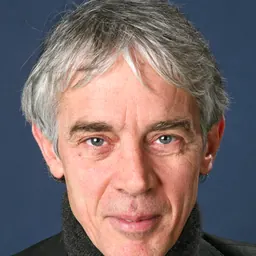
Contemporaries
People whose lives overlapped George E. Smith's
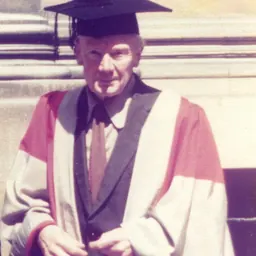


Frequently asked questions
Who was George E. Smith?
American philosopher and engineer (1938–2024)
When was George E. Smith born?
George E. Smith was born in 1938.
When did George E. Smith die?
George E. Smith died on 8 November 2024.
What was George E. Smith's occupation?
George E. Smith was an engineer.
Sources & further reading
· DBpedia: George E. Smith (philosopher)
Cite this page
APA: Biography.guide. (2026). George E. Smith. https://biography.guide/george-e-smith/
MLA: "George E. Smith." Biography.guide, https://biography.guide/george-e-smith/.
Chicago: "George E. Smith." Biography.guide. https://biography.guide/george-e-smith/.
Data last updated: 2026-09-20 · Spot an error? Report a correction.
Page generated 2026-09-27 05:15 UTC