
About George E. Marcus
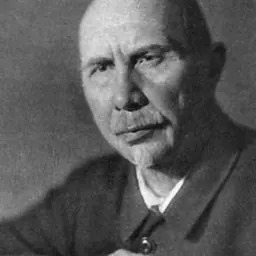
George E. Marcus was a writer, political psychologist and political scientist.
George E. Marcus (born February 13, 1943) is an American political scientist and Professor Emeritus of Political Science at Williams College. He is best known for developing affective intelligence theory, which integrates neuroscience and psychology to explain how emotions shape political judgment and behavior.
First presented in the 2000 book Affective Intelligence and Political Judgment (co-authored with W. Russell Neuman and Michael B. MacKuen), the theory has influenced scholarship on voter decision-making, political tolerance, responses to terrorism, support for authoritarian policies, and populist movements by challenging purely rational-choice models of political behavior.
Academic career Marcus received a B.A. in Government from Columbia University in 1964, an M.A. in Political Science from Northwestern University in 1965, and a Ph.D. in Political Science from Northwestern in 1968. He held a postdoctoral fellowship in the Psychology and Politics Program at Yale University (1970-1971).
He joined the Williams College faculty in 1967 as a lecturer, rising to assistant professor (1968), associate professor (1974), and professor (1980). He held the Sue and Edgar Wachenheim III Professorship (1993-1995) and became Professor Emeritus in 2018. He has served as visiting professor at the University of Minnesota (1984-1985) and at Sciences Po in Paris (2005-2006 and spring 2013).
Research and contributions Marcus’s early research focused on political tolerance, ideology, and public opinion. With John L. Sullivan and James Piereson, he co-authored Political Tolerance and American Democracy (1982), which received the Philip E. Converse Award in 2006 for its lasting contribution to the study of elections, public opinion, and voting behavior.
In the 1980s he began incorporating neuroscience into the study of emotion and politics. With W. Russell Neuman and Michael B. MacKuen, he developed affective intelligence theory in the book Affective Intelligence and Political Judgment (2000). Enthusiasm - appraises the success or failure of habitual behaviors. Fear/Anxiety - appraises whether something unexpected or unfamiliar, signals novelty or threat and motivates attention and learning. Anger - appraises whether violations of social norms are present.
The theory has been influential in political psychology but has also prompted scholarly proposals for extensions to address gaps in its conceptualization of emotional phenomena. This framework has been applied to voter behavior during political campaigns, tolerance judgments, responses to terrorism, support for authoritarian policies, and the rise of populist movements. Philip E. Converse Book Award (2006) - American Political Science Association, for Political Tolerance and American Democracy.
Selected publications Selected Books Marcus, George E. (2002). The Sentimental Citizen: Emotion in Democratic Politics. Penn State University Press (French edition: Le Citoyen Sentimental, 2008). Sullivan, John L., Piereson, James Piereson, & Marcus, George E. (1982). Political Tolerance and American Democracy. University of Chicago Press. Marcus, George E., Sullivan, John L., Theiss-Morse, Elizabeth, & Wood, Sandra L. (1995). With Malice Toward Some: How People Make Civil Liberties Judgments. Cambridge University Press. Marcus, George E., Neuman, W. Russell, & MacKuen, Michael B. (2000). Affective Intelligence and Political Judgment. University of Chicago Press.
Selected articles and chapters Marcus, G. E., & MacKuen, M. B. (1993). Anxiety, Enthusiasm and the Vote: The Emotional Underpinnings of Learning and Involvement during Presidential Campaigns. American Political Science Review, 87(3), 688-701. MacKuen, M. B., Wolak, J., Keele, L., & Marcus, G. E. (2010). Civic Engagements: Resolute Partisanship or Reflective Deliberation. American Journal of Political Science, 54(2), 440-458. Marcus, G. E., Neuman, W. R., & MacKuen, M. B. (2017). Measuring Emotional Response: Comparing Alternative Approaches to Measurement. Political Science Research and Methods, 5(4), 733-754. Vasilopoulos, P., Marcus, G. E., Valentino, N., & Foucault, M. (2019). Fear, anger and voting for the far right. Political Psychology, 40(4), 679-696. Marcus, G. E., Valentino, N., Vasilopoulos, P., & Foucault, M. (2019). Applying the theory of affective intelligence to support for authoritarian policies and parties. Advances in Political Psychology, 40(S1), 109-139. Marcus, G. E. (2023). Evaluating the status of theories of emotion in political science and psychology. Frontiers in Political Science, 4, 1080884.
Don’t just read it —
keep it.
Full-length biographies made to live with: read them, listen on the way to work, watch them tonight.
- E-book
- Audio
- Video
Instant download · yours to keep · every purchase keeps this site free
Important facts
Related people
Same field, nearest in time




Frequently asked questions
Who was George E. Marcus?
American political scientist
What was George E. Marcus's occupation?
George E. Marcus was a writer, political psychologist and political scientist.
Sources & further reading
· DBpedia: George E. Marcus (political scientist)
Cite this page
APA: Biography.guide. (2026). George E. Marcus. https://biography.guide/george-e-marcus/
MLA: "George E. Marcus." Biography.guide, https://biography.guide/george-e-marcus/.
Chicago: "George E. Marcus." Biography.guide. https://biography.guide/george-e-marcus/.
Data last updated: 2026-09-20 · Spot an error? Report a correction.
Page generated 2026-09-27 05:13 UTC