
About George A. Soper
Lived 1870 – 1948 (aged 77–78). George A. Soper was an American engineer.
George Albert Soper II (2 February 1870 – 17 June 1948) was an American sanitation engineer and epidemiologist. He specialized in the investigation of water- and food-borne disease and urban sanitation, and is best known for identifying Mary Mallon (Typhoid Mary) as the first recognized asymptomatic carrier of typhoid fever in the United States.
Over a career that ranged from the Galveston hurricane of 1900 to the 1918–1919 influenza pandemic and early national cancer campaigns, Soper held senior positions in municipal and military public health, served as managing director of the American Society for the Control of Cancer (later the American Cancer Society), and wrote influential articles on epidemic control and waste disposal.
Biography
Early life and education Soper was born in Brooklyn in 1870, the son of George Albert Soper (1837–1869) and Georgianna Lydia Buckman (died 1882). He received a B.S. degree in civil engineering from Rensselaer Polytechnic Institute in 1895 and later earned an A.M. (1898) and Ph.D. (1899) from Columbia University.
After graduation he worked as a civil engineer for the Boston Water Works and for the Cumberland Manufacturing Company, which built filtration equipment, gaining experience in water purification and sanitary engineering.
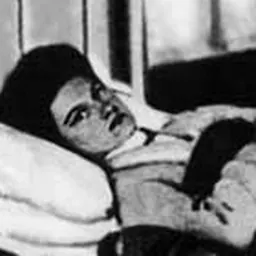
Typhoid Mary investigation Soper’s most famous investigation involved the cook Mary Mallon, later nicknamed "Typhoid Mary." In 1906 he was hired to determine the source of typhoid cases in a household in Oyster Bay, Long Island. After ruling out water, milk, and plumbing as sources of infection, he noticed that a cook, Mary Mallon, had recently been employed there. His 1907 paper, "The Work of a Chronic Typhoid Germ Distributor," presented to the Biological Society of Washington, set out the evidence that Mallon was an asymptomatic carrier and helped establish the importance of healthy carriers in the transmission of infectious disease.
Mallon was ultimately located and physically detained by the New York City Department of Health. Soper later revisited the episode in his article "The Curious Career of Typhoid Mary," published in 1939 in the Bulletin of the New York Academy of Medicine, which has become a standard historical account of the case.
Military service and influenza pandemic During World War I, Soper served as an officer in the Sanitary Corps of the United States Army, attaining the rank of major. In this role he studied the spread of influenza in American military camps.
In November 1918 he published "The Influenza Pneumonia Pandemic in the American Army Camps during September and October, 1918" in Science, providing one of the earliest quantitative overviews of the epidemic among U.S. troops. These articles have continued to be cited in later historical and epidemiological work on the 1918–1919 pandemic.
Cancer control and later public health work In 1923 Soper was appointed managing director of the American Society for the Control of Cancer, the organization that later became the American Cancer Society, a post he held until 1928 before continuing as a consultant. He helped organize national conferences and public education campaigns on cancer, including work associated with the opening of new state cancer hospitals in the 1920s.
In the 1930s Soper worked with the New York Academy of Medicine’s Committee of Twenty on Street and Outdoor Cleanliness. He was sent on an extended tour of European cities to study street cleaning, refuse collection, incineration, and snow removal. His reports, including Further Studies of European Methods of Street Cleaning and Refuse Disposal, with Suggestions for New York (1930), argued that New York’s refuse system lagged behind contemporary European practice and called for covered collection wagons and modern incinerators.
Personal life and death Soper was married twice, first to Mary Virginia McLeod and later to Eloise Liddon, and had two sons. In his later years he lived with family in Hampton Bays, Long Island. He died on 17 June 1948 at Southampton Hospital, New York, aged 78.
Selected works Soper, George A. "The Work of a Chronic Typhoid Germ Distributor." Paper read before the Biological Society of Washington, 6 April 1907. Soper, George A. "The Influenza Pneumonia Pandemic in the American Army Camps during September and October, 1918." Science 48, no. 1245 (1918): 451–456. Soper, George A. "The Lessons of the Pandemic." Science 49, no. 1274 (1919): 501–506. Soper, George A. "National Aspects of the Cancer Problem." Boston Medical and Surgical Journal 197, no. 14 (1927): 554–556.
Don’t just read it —
keep it.
Full-length biographies made to live with: read them, listen on the way to work, watch them tonight.
- E-book
- Audio
- Video
Instant download · yours to keep · every purchase keeps this site free
Important facts
more
GA Soper, G Soper, Soper, Soper G, Soper G., Soper G. A., Soper GA, George Albert Soper IIPeople in George A. Soper's life
Named in this biography and alive at the same time
Related people
Same field, nearest in time


Contemporaries
People whose lives overlapped George A. Soper's




Frequently asked questions
Who was George A. Soper?
U.S. sanitation engineer, discoverer of Typhoid Mary
When was George A. Soper born?
George A. Soper was born in 1870 in New York City.
When did George A. Soper die?
George A. Soper died on 17 June 1948.
What was George A. Soper's occupation?
George A. Soper was an engineer.
What nationality was George A. Soper?
George A. Soper was American.
Sources & further reading
Cite this page
APA: Biography.guide. (2026). George A. Soper. https://biography.guide/george-a-soper/
MLA: "George A. Soper." Biography.guide, https://biography.guide/george-a-soper/.
Chicago: "George A. Soper." Biography.guide. https://biography.guide/george-a-soper/.
Data last updated: 2026-09-26 · Spot an error? Report a correction.
Page generated 2026-09-27 05:15 UTC