
About George A. Hero
Lived 1854 – 1932 (aged 77–78). George A. Hero was a businessperson.
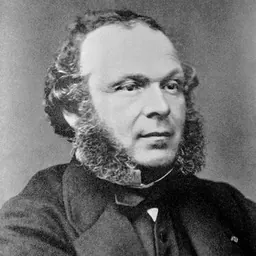
George A. Hero (28 July 1854 – 1932) was a New Orleans entrepreneur who organized the drainage of vast tracts of swampland on the West Bank of the Mississippi River at New Orleans. He was known locally as the "Drainage King". and was founder of the Hero Land Company. Later Hero was involved in a project to build a bridge from New Orleans to the West Bank, but this was never completed.
Early life Hero was born in New Orleans.
Career As a young man, Hero began working at W.F. Halsey Company, agents for a New York bank. When he was twenty he joined the cotton firm Robinson and Hero, and later owned and operated the business under his own name. In 1889 Lehman, Stern and Company hired him to run its cotton futures department. When the company incorporated in 1896, he became its vice president.
Hero retired from the cotton business in 1912. He owned a derelict plantation on the west bank of the Mississippi River.
Hero's neighbors showed no interest in pooling their resources to drain the land, so he purchased 10,000 more acres in order to meet the minimum acreage required to petition the Louisiana legislature to create a drainage authority for the two West Bank parishes (counties). He bore all the early expenses by himself.
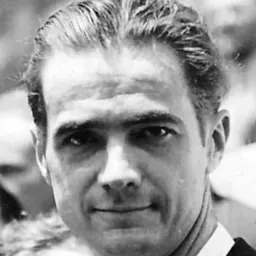
In 1925 Hero donated land in Belle Chasse next to the Mississippi River for the first commercial airport to serve New Orleans. Suitable for use by land and sea planes, it was named for World War I hero, Alvin Callender and dedicated on November 6, 1926. Exhibition flying entertained the crowds, including dignitaries and aviators such as Howard Hughes. George A. Hero was given a rousing ovation.
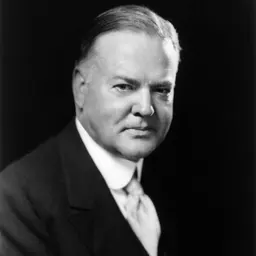
In 1928 George Hero and Allen S. Hackett applied for a permit to build a bridge across the Mississippi from Race Street to Gretna. After long negotiations, in 1930 President Herbert Hoover signed a bill approving plans for the War Department to construct a $12,000,000 vehicular toll bridge. The bridge designed by engineer Hackett, was to have separate, but interlaced, up and down spiral ramps to reduce the amount of land needed for the approaches. The Hero-Hackett Bridge design was estimated to save $3,000,000 over bridges with conventional approaches. The center of the span was to be 174’ above the river to allow large ships to pass under.
The bridge was to be erected before 1933, but Hero was struck by an automobile in August 1932. He never fully recovered and died from a stroke on December 19, 1932. In the meantime plans to build the Huey P. Long Bridge further up the river had begun and the Hero-Hackett Bridge was abandoned.
Personal Hero was married three times: first to Fenella Marie Olivier (20 Nov 1859-27 Dec 1893), second to her sister, Anna Olivier (1873- 26 Dec 26,1913) and third to Claire Joubert de Ville Marest Archinard. He had three children by Fenella: Alfred, Numa and Fenella, and three by Anna: George, Alvin and Claire.
Don’t just read it —
keep it.
Full-length biographies made to live with: read them, listen on the way to work, watch them tonight.
- E-book
- Audio
- Video
Instant download · yours to keep · every purchase keeps this site free
Important facts
People in George A. Hero's life
Named in this biography and alive at the same time
Related people
Same field, nearest in time


Contemporaries
People whose lives overlapped George A. Hero's


Frequently asked questions
Who was George A. Hero?
American entrepreneur
When was George A. Hero born?
George A. Hero was born on 28 July 1854.
When did George A. Hero die?
George A. Hero died in 1932.
What was George A. Hero's occupation?
George A. Hero was a businessperson.
Sources & further reading
Cite this page
APA: Biography.guide. (2026). George A. Hero. https://biography.guide/george-a-hero/
MLA: "George A. Hero." Biography.guide, https://biography.guide/george-a-hero/.
Chicago: "George A. Hero." Biography.guide. https://biography.guide/george-a-hero/.
Data last updated: 2026-09-20 · Spot an error? Report a correction.
Page generated 2026-09-27 04:59 UTC