
About Georg Hermes
Lived 1775 – 1831 (aged 56). Georg Hermes was a German theologian, philosopher and university teacher.
Georg Hermes (22 April 1775, Dreierwalde – 26 May 1831, Bonn) was a German Roman Catholic theologian who advocated a rational approach to theology. During his lifetime, his theology was greatly in vogue in Germany, but declined after the posthumous papal condemnation of "Hermesianism" by Pope Gregory XVI.
Life Born at Dreierwalde, in Westphalia, Hermes was educated at the gymnasium (high school) in Rheine and the University of Münster.
In 1797 Hermes became professor at the Münster gymnasium; in 1799 he was ordained a priest. The first work he wrote, Untersuchung über die innere Wahrheit des Christentums (Münster, 1805), in which he sought to demonstrate the harmony between reason and revelation, was received with so much favour that in 1807 its author, warmly commended by the Protestant theologian August Hermann Niemeyer, at Halle, was appointed to a chair of theology at the University of Münster. and although in the philosophical portion of his Einleitung he strongly criticizes both these thinkers, rejecting their doctrine of the moral law as the sole guarantee for the existence of God, and condemning their restricted view of the possibility and nature of revelation, enough remained of purely speculative material to render his system controversial. Having closely studied Kant's philosophy, he occupied himself in refuting the doctrines of that philosopher so far as they were inconsistent with the Roman Catholic faith, while insisting that the truth of Christian revelation and of the Catholic church should first be tested by reason, and that revelation should then be followed. He argued that faith is a response to irresistible evidence, and therefore, not free.
After his death, the contests between his followers and their opponents grew so bitter that the dispute was referred to the Papal See. The judgment was negative; on 25 September 1835 a papal bull issued by Pope Gregory XVI, Dum Acerbissimas, condemned both parts of the Einleitung and the first volume of the Dogmatik. Two months later, the remaining volumes of the Dogmatik were likewise condemned. The controversy did not cease. In 1845, a systematic attempt was made anonymously by FX Werner to examine and refute the Hermesian doctrines, as contrasted with the orthodox Catholic faith (Der Hermesianismus, 1845). In 1847, the condemnation of 1835 was confirmed by Pius IX.
Don’t just read it —
keep it.
Full-length biographies made to live with: read them, listen on the way to work, watch them tonight.
- E-book
- Audio
- Video
Instant download · yours to keep · every purchase keeps this site free
Important facts
People in Georg Hermes's life
Named in this biography and alive at the same time

Related people
Same field, nearest in time

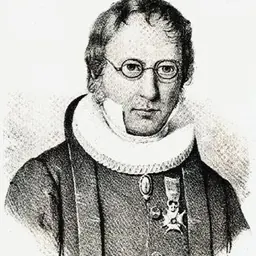

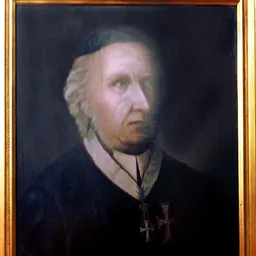

Contemporaries
People whose lives overlapped Georg Hermes's


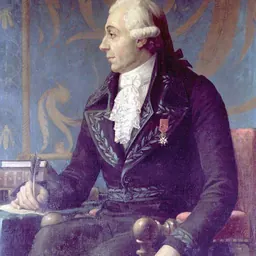
Frequently asked questions
Who was Georg Hermes?
German theologian and philosopher (1775-1831)
When was Georg Hermes born?
Georg Hermes was born on 22 April 1775 in Dreierwalde, Hörstel.
When did Georg Hermes die?
Georg Hermes died on 26 May 1831 in Bonn.
What was Georg Hermes's occupation?
Georg Hermes was a theologian, philosopher and university teacher.
What nationality was Georg Hermes?
Georg Hermes was German.
Sources & further reading
Cite this page
APA: Biography.guide. (2026). Georg Hermes. https://biography.guide/georg-hermes/
MLA: "Georg Hermes." Biography.guide, https://biography.guide/georg-hermes/.
Chicago: "Georg Hermes." Biography.guide. https://biography.guide/georg-hermes/.
Data last updated: 2026-09-20 · Spot an error? Report a correction.
Page generated 2026-09-27 05:18 UTC