
About Georg Hartmann
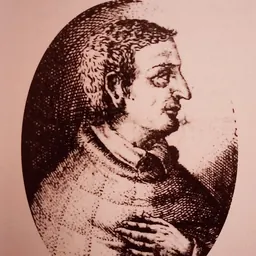
Lived 1489 – 1564 (aged 74–75). Georg Hartmann was a German astronomer, mathematician, instrument maker, geophysicist, christian minister and humanist.
Georg Hartmann (sometimes spelled Hartman; February 9, 1489 – April 9, 1564) was a Renaissance engineer, instrument maker, printmaker, humanist, Lutheran priest, and astronomer.
Early life and studies Hartmann was born in Eggolsheim near Forchheim, present-day Bavaria. At the age of 17, he began studying theology and mathematics at the University of Cologne. After finishing his studies, he traveled through Italy, staying in Rome for a few years, where, as well as becoming acquainted with Andreas Copernicus, brother to Nicolaus Copernicus, he finished the first part of the unpublished Collectanea. In 1518, he settled in Nuremberg. Different types of dials manufactured by Hartmann included Block dials, Declining dials, Shepherd's dials, Moon dials, Chalice dials, and Cylinder dials. Along with these dials, Hartmann was known for his design and manufacture of brass Astrolabes. Hartmann kept a very detailed self-written manual in German (titled the Collectanea) describing how to manufacture his sundials and astrolabes, which was translated into English by John Lamprey in his book "Hartmann's Practika", published in 2002. Hartmann was always a tinkerer and had a deep fascination with mechanics, horology, instrumentation, and natural phenomena. In addition to these traditional scientific instruments Hartmann also made gunner's levels and sights. He has been credited by Levinus Hulsius as the inventor of the Gunner's Gauge.
Hartmann's 1537 batch of astrolabes for the 39° latitude plate were found to be inaccurate, having the almucantars spaced out too far. Of the four astrolabes in that production run, all of them had these errors. This led to the conclusion that it was a simple human error, and shown a light on the amount of work that went into each of these instruments. Following the discovery of these errors, a deeper look went into Hartmann's manufacturing methods. These designs were not only designed for his own high quality metal and ivory instruments, but also for "do-it-yourself" instruments which would have been made of cheaper materials such as wood or paper.
Another unpublished text of Hartmann's, Directiorum Medicorum, was written in 1554. It described Hartmann's medical-astrological dial engravings and their usage. It was later published by Hartmann's follower, Franz Fitter, in 1613 under the title De Usu Astrolabii.
There are references in Hartmann's works to either an unwritten or missing manuscript written by Hartmann.
Museum holdings Some of Hartmann's instruments are held by museums, such as the Adler Planetarium in Chicago, Harvard University, The National Museum of American History at the Smithsonian Institution in Washington D.C., and Yale University in the History of Science Museum.
In England, some instruments can be seen at The British Museum, the National Museum of Science and Industry, and the National Maritime Museum Greenwich in London; as well as the Museum of the History of Science in Oxford.
In Germany, Hartmann's instruments can be seen on display at the Germanisches Nationalmuseum in Nuremberg, Kunstgewerbemuseum in Berlin, Museum fur Angewandte Kunst in Cologne, Staatlicher Mathematischer-Physikalischer Salon in Dresden, and the Kestner-Museum in Hannover.
Some of Hartmann's astrolabes can be seen on display in France at the Bibliothèque Nationale in Paris and the Musee National de la Renaissance in Ecouen.
In the Netherlands astrolabes manufactured by Hartmann can be seen on display at the Museum Boerhaave in Leiden and the Utrecht University Museum in Utrecht.
Other museums in Europe where some of Hartmann's are on display include the Kunsthistorisches Museum in Vienna, Musee de la Vie Wallone in Luttich, Belgium, Nationalmuseet in Copenhagen, Denmark, Museo di Storia della Scienza in Florence, Italy, and the St. Paul Stiftsgymnasium.
Don’t just read it —
keep it.
Full-length biographies made to live with: read them, listen on the way to work, watch them tonight.
- E-book
- Audio
- Video
Instant download · yours to keep · every purchase keeps this site free
Important facts
People in Georg Hartmann's life
Named in this biography and alive at the same time


Related people
Same field, nearest in time

Contemporaries
People whose lives overlapped Georg Hartmann's





Frequently asked questions
Who was Georg Hartmann?
German astronomer and inventor (1489–1564)
When was Georg Hartmann born?
Georg Hartmann was born in 1489 in Eggolsheim.
When did Georg Hartmann die?
Georg Hartmann died in 1564 in Nuremberg.
What was Georg Hartmann's occupation?
Georg Hartmann was an astronomer, mathematician, instrument maker, geophysicist, christian minister and humanist.
What nationality was Georg Hartmann?
Georg Hartmann was German.
Sources & further reading
Cite this page
APA: Biography.guide. (2026). Georg Hartmann. https://biography.guide/georg-hartmann/
MLA: "Georg Hartmann." Biography.guide, https://biography.guide/georg-hartmann/.
Chicago: "Georg Hartmann." Biography.guide. https://biography.guide/georg-hartmann/.
Data last updated: 2026-09-20 · Spot an error? Report a correction.
Page generated 2026-09-27 05:15 UTC