
About Geoffrey Keating
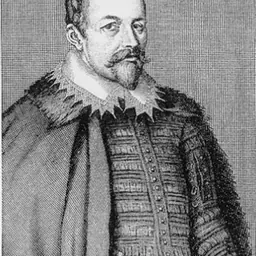
Lived 1569 – 1644 (aged 74–75). Geoffrey Keating was an Irish poet, historian, writer, genealogist and catholic priest.
Geoffrey Keating (; – ) was an Irish historian. He was born in County Tipperary, Ireland, and is buried in Tubrid Graveyard in the parish of Ballylooby-Duhill. He became a Catholic priest and a poet.
Biography It was generally believed until recently that Keating had been born in Burgess, County Tipperary; indeed, a monument to Keating was raised beside the bridge at Burgess, in 1990; but Diarmuid Ó Murchadha writes,
In November 1603, he was one of forty students who sailed for Bordeaux under the charge of the Rev. Diarmaid MacCarthy to begin their studies at the Irish College which had just been founded in that city by Cardinal François de Sourdis, Archbishop of Bordeaux. On his arrival in France he wrote Farewell to Ireland, and upon hearing of the Flight of the Earls wrote Lament on the Sad State of Ireland. After obtaining the degree of Doctor of Divinity at the University of Bordeaux he returned about 1610 to Ireland and was appointed to the cure of souls at Uachtar Achaidh in the parish of Knockgraffan, near Cahir, where he put a stop to the then-common practice of delaying Mass until the neighbouring gentry arrived.
His major works are Foras Feasa ar Éirinn (Foundation of Knowledge on Ireland, more usually translated History of Ireland), was written in Early Modern Irish and completed c. 1634 and Trí bior-ghaoithe an bháis (The three shafts of death) c. 1631.
The Foras Feasa traced the history of Ireland from the creation of the world to the invasion of the Normans in the 12th century, based on the rich native historical and mythological traditions (including that of the Milesians), Irish bardic poetry, monastic annals, and other ecclesiastical records. The Foras Feasa circulated in manuscript, as Ireland's English administration would not give authority to have it printed because of its pro-Catholic arguments. It was still a time of repression; in 1634 a political campaign for a general reform of anti-Catholic religious persecution, known as the Graces, was denied by the Viceroy.
Having Old English ancestry, Keating held the political view that Ireland's nobility and natural leadership derived from the surviving Irish clan chiefs and Old English landed families who had remained Catholic. He also accepted the House of Stuart as lawful kings of Ireland, which had a long-term influence on both Irish Confederate and Jacobites until Papal recognition of the Stuart claim finally ended in 1766. Keating continued to influence Irish genealogical writers such as John O'Hart into the 1800s.
Works Edited and translated works:
(For a list of versions see Foras Feasa ar Éirinn)
Don’t just read it —
keep it.
Full-length biographies made to live with: read them, listen on the way to work, watch them tonight.
- E-book
- Audio
- Video
Instant download · yours to keep · every purchase keeps this site free
Important facts
People in Geoffrey Keating's life
Named in this biography and alive at the same time

Related people
Same field, nearest in time
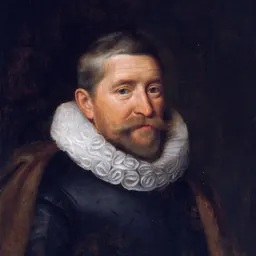


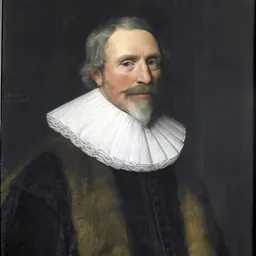
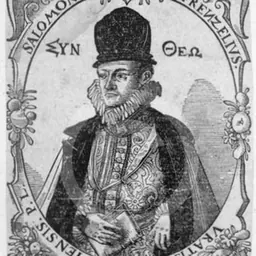
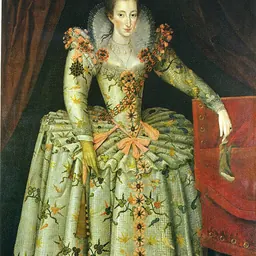
Contemporaries
People whose lives overlapped Geoffrey Keating's




Frequently asked questions
Who was Geoffrey Keating?
Irish Roman Catholic priest, poet and historian
When was Geoffrey Keating born?
Geoffrey Keating was born in 1569 in County Tipperary.
When did Geoffrey Keating die?
Geoffrey Keating died in 1644.
What was Geoffrey Keating's occupation?
Geoffrey Keating was a poet, historian, writer, genealogist and catholic priest.
What nationality was Geoffrey Keating?
Geoffrey Keating was Irish.
Sources & further reading
Cite this page
APA: Biography.guide. (2026). Geoffrey Keating. https://biography.guide/geoffrey-keating/
MLA: "Geoffrey Keating." Biography.guide, https://biography.guide/geoffrey-keating/.
Chicago: "Geoffrey Keating." Biography.guide. https://biography.guide/geoffrey-keating/.
Data last updated: 2026-09-20 · Spot an error? Report a correction.
Page generated 2026-09-27 05:31 UTC