
About Gennady Fadeev
Born 1937. Gennady Fadeev is a Russian politician.
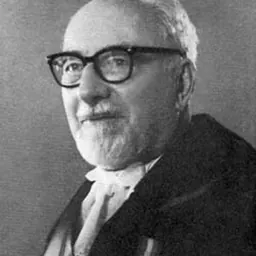
Gennady Matveyevich Fadeyev (; born 10 April 1937) is a Russian railway executive who has been advisor to the General Director of Russian Railways since 2015. Fadeyev was the first president of Russian Railways (from 2003 to 2005), and was Minister of Railways from 1992 to 1996 and from 2002 to 2003. He is a Full Cavalier of the Order "For Merit to the Fatherland" and an Honored Transport Worker of Russia.
Fadeyev helped preserve the Ministry of Railways during the early-1990s privatization of state property after the dissolution of the Soviet Union. He oversaw the opening of train traffic on the Baikal–Amur Mainline (BAM); electrification of the Trans-Siberian Railway and the main route to China, and construction of a second rail bridge across the Amur river near Khabarovsk and a rail bypass of Krasnoyarsk with a bridge across the Yenisey river. Fadeyev organized Russian production of its own electric trains at the Demikhov Machine-Building Plant; created a joint venture for the production of heavy track equipment with the Austrian company Plasser & Theurer; implemented smart-card technology throughout Russia; launched the first inter-regional express trains to Ryazan, Tula, Oryol, Yaroslavl and Vladimir and Russia's first Aeroexpress routes, to Moscow Domodedovo Airport from Moscow Paveletsky railway station and from Kievsky railway station to Vnukovo International Airport; restoration of the Yasnaya Polyana station, near the Leo Tolstoy Museum; the Ladozhsky railway station in Saint Petersburg, and the transition from narrow to broad gauge on Sakhalin. He graduated with honours from the institute in 1961, and was sent to the East Siberian Railway.
Early career
As a student, Fadeyev was a duty officer at the Shimanovskaya station, a train dispatcher at the Skovorodino station, and worked at the Irkutsk-Sortirovochny station. After graduation, he worked at the Taishet junction as a dispatcher and senior assistant before becoming chief engineer from 1963 to 1965. About 1,100,000 freight cars operated on Soviet railways that year, transporting 4,100,000,000 tons of cargo;
Minister of Railways
On 20 January 1992, Fadeyev became Minister of Railways. Shortly after his appointment, an agreement was reached to retain the universal 1520 mm track gauge. The Council for Railway Transport of the Commonwealth and Baltic states was created to maintain railway unity throughout the former Soviet Union. An agreement allocating rolling freight stock among the CIS and Baltic countries, developed with Fadeyev's participation, was signed in Minsk on 22 January 1993. The Council for Railway Transport developed a unified tariff policy for interstate traffic. The Tariff Agreement for Railway Carriers of the CIS Countries was signed in February 1993, facilitating long-term contracts for international traffic. In August 1996, after the re-election of Boris Yeltsin, Fadeyev resigned as minister and was elected Secretary General of the International Coordinating Council for Trans-Siberian Transportation.
In the late 1990s, rail profitability fell and the bureaucratization of the ministry under Nikolay Aksyonenko was criticized. The first reform, formulated by the ministry in 1998, under Aksyonenko, was criticized for creating a joint-stock company under the ministry instead of denationalizing the industry. A program for reforming the Russian rail industry was developed under Fadeyev's leadership with the involvement of private consultants. The Accounts Chamber and the Prosecutor General's Office carried out large-scale inspections which revealed serious violations, resulting in a criminal case against Aksyonenko. The Russian rail industry was in a management crisis, with large federal and regional debts; over 300 criminal cases were initiated. Fadeyev learned that under Aksyonenko, large private mining companies were secretly using government funds to build railway approaches to promising coal and iron-ore deposits.
In 2002, Russian railways had a significant amount of freight construction in progress. Wages of railway workers were lower than those of other industries, causing an exodus of qualified engineering personnel. The first cost-effective, deficit-free financial plan, which included state support for unprofitable passenger traffic, was formulated under Fadeyev in 2003. Preparations were made to separate state regulation from economic activity, leading to the creation of state-owned Russian Railways (headed by Fadeyev) at the end of 2003. Fadeyev predicted a strategic need for the Northern Latitudinal Railway and a third main route along the length of the Trans-Siberian Railway, and construction began 15 years later.
Head of Moscow Railway
Fadeyev was appointed head of Moscow Railway, part of the Ministry of Railways, on 3 March 1999. After a steep price increase by Riga Carriage Works, production of Russian electric trains began at the Demikhov Machine-Building Plant and Fadeyev instituted economic reforms.
President of Russian Railways
On 22 September 2003, Fadeyev became the first president of Russian Railways. Under his tenure, the BAM's Severomuysky Tunnel was completed; the Sakhalin conversion from narrow to broad gauge began; strategic lines, including the Trans-Siberian Railway and the route to China, were electrified. In Saint Petersburg, the Ladozhsky railway station opened. It was assumed that the trains would be produced in Russia as a joint venture with the Sinara Group. After the June 2005 appointment of Vladimir Yakunin as president of Russian Railways, the project was changed by the Russian Railways board of directors. By 2006, eight Siemens Velaro trains had been purchased in Germany. The contract had decreased to €750 million (including €300 million for trains and €300 million for maintenance for 30 years), and train production in Russia was no longer planned. From June 2005 to 2007, he was an assistant to Prime Minister Mikhail Fradkov and a member of the board of directors of Russian Railways. After the 2007 resignation of the Mikhail Fradkov government, Fadeyev was removed from the Russian Railways board.
Later activities Fadeyev, Maksim Akimov and Oleg Belozyorov opened a new marshalling yard at the BAM's Tynda station on 7 July 2019. Fadeyev's 2007 memoir, My Destiny is the Railway, describes his many years in the industry.
Fadeyev repeatedly advised President Vladimir Putin that the state should retain control of the railway industry and considered it as one of the three pillars of Russian statehood, with energy and a strong army. He interpreted increased 2016 discussions about the possible partial privatization of Russian Railways as a sign of impending disaster. In September of that year, Fadeyev criticized the system which emerged from the railway reform in which regional management was weak and railway leadership lost its power. "The directorates of the central level of Russian Railways are not capable of making prompt decisions in connection with the real situation in a particular region. Moscow cannot see everything that happens thousands of kilometers away and take into account the specifics of each road. A situation has arisen where the 'tops' do not see all the real problems, and the 'bottoms' cannot solve them due to the lack of the necessary resources", he said in an April 2016 article in the main Russian Railways newspaper.
Personal life
Fadeyev has been married to Lyubov Yevgenyevna Fadeyeva since 1960, when they were engaged in the village of Kukhterin Lug, Amur Oblast. Friends since childhood, Lyubov was a year ahead of Gennady at the Ministry of Railways No. 59 departmental school and graduated from Blagoveshchensk State Pedagogical University with a degree in English and German education. He is a theatergoer.
Don’t just read it —
keep it.
Full-length biographies made to live with: read them, listen on the way to work, watch them tonight.
- E-book
- Audio
- Video
Instant download · yours to keep · every purchase keeps this site free
Important facts
People in Gennady Fadeev's life
Named in this biography and alive at the same time



Related people
Same field, nearest in time




Contemporaries
People whose lives overlapped Gennady Fadeev's



Frequently asked questions
Who is Gennady Fadeev?
Russian politician, born 1937
When was Gennady Fadeev born?
Gennady Fadeev was born on 10 April 1937 in Shimanovsk.
What is Gennady Fadeev's occupation?
Gennady Fadeev is a politician.
What nationality is Gennady Fadeev?
Gennady Fadeev is Russian.
Sources & further reading
Cite this page
APA: Biography.guide. (2026). Gennady Fadeev. https://biography.guide/gennady-fadeev/
MLA: "Gennady Fadeev." Biography.guide, https://biography.guide/gennady-fadeev/.
Chicago: "Gennady Fadeev." Biography.guide. https://biography.guide/gennady-fadeev/.
Data last updated: 2026-09-20 · Spot an error? Report a correction.
Page generated 2026-09-27 05:21 UTC