
About Gavino Gulia
Lived 1835 – 1889 (aged 53–54). Gavino Gulia was a Maltese botanist.
Gavino Gulia (18 June 1835 – 24 December 1889) was a Maltese physician, botanist, naturalist, university professor, scientific writer, and lecturer. He was one of the leading Maltese naturalists of the nineteenth century and made important contributions to the study of Malta's flora and fauna, as well as to medicine and scientific publishing.
Early life and education
Gavino Gulia was born in Cospicua (Bormla), Malta, on 18 June 1835, to Pietro Paolo Gulia, a physician, and Maddalena. His father was a well-known local doctor with an extensive medical practice. Gulia was described by contemporary biographers as exceptionally intelligent and possessing an unusually good memory. As a child, he was already able to recite lengthy passages from the works of Italian poets such as Pietro Metastasio and Torquato Tasso.
He initially studied at the Archbishop's Seminary before continuing his education at the University of Malta. There he studied philosophy under Salvatore Cumbo, mathematics under Professor Pullicino, physics under Giuseppe Wettinger, and botany and zoology under the prominent Maltese botanist Stefano Zerafa. He also studied medicine and surgery under Professors Schinas and Galland.
Botany and natural history
Gulia's first scientific publication appeared in 1855 under the title Repertorio Botanico Maltese. The work listed Maltese plants alphabetically according to their Maltese names and included information relating to their natural history.
The contemporary biography also describes Gulia as having produced an important flora of Malta and a repertory of botanical sciences while still a young man. These early works attracted the attention of Sir William Reid, then Governor of Malta, who became a patron and friend of the young scientist.
Gulia's interests extended beyond botany. He studied zoology and entomology and contributed to the study of Malta's invertebrate fauna. In 1861, he described a new form of the endemic door-snail Muticaria macrostoma, naming it Muticaria macrostoma var. mamotica in honour of the naturalist and conchologist Giuseppe Mamo. The form is associated with Munxar, Gozo.
In 1857, at the invitation of Governor Sir William Reid, Gulia delivered a series of lectures on entomology at San Anton Palace. These lectures were subsequently published as Corso elementare di entomologia Maltese data nel Palazzo di San Antonio.
Professor at the University of Malta
In 1880, Gulia succeeded Giovanni Carlo Grech Delicata as professor at the University of Malta. He held a chair associated with natural history and forensic medicine, and contemporary accounts also associate his academic work with botany, zoology, and hygiene.
The appointment placed Gulia among the principal scientific figures of nineteenth-century Malta. He combined university teaching with medical practice, scientific research, writing, and public lectures.
Il Barth
Gulia founded Il Barth, a scientific periodical devoted to medicine and the natural sciences. The journal was first published in July 1871 and continued until 1877.
The journal was named after Joseph Barth, a Maltese physician who had achieved international prominence as an ophthalmologist and physician to Emperor Joseph II. Gulia used the periodical to discuss medical and medico-legal questions, translate scientific material from foreign journals, and publish studies relating to Maltese medicine and natural history.
The journal also helped disseminate the work of Maltese scientists and physicians. According to the contemporary biographical account, Gulia's scientific reputation consequently spread in Britain, France, and Italy.
Scientific and literary work
Gulia was a highly educated scholar whose interests extended beyond medicine and natural history. His contemporaries described him as proficient in several languages, including Latin, English, French, German, and Spanish, and as deeply knowledgeable about Italian literature.
He wrote scientific papers, monographs, biographies, obituaries, speeches, and literary works. Among his writings were a biography of the Maltese physician Tommaso Chetcuti, speeches delivered on academic occasions, and biographical and historical writings concerning Maltese physicians. He also wrote about art, including the paintings of Giuseppe Calì in the parish church of Cospicua.
At the time of his death, he was reportedly preparing a major botanical work which, according to his contemporary biographer, would have further enhanced his scientific reputation.
Death
Gavino Gulia died on 24 December 1889. The Times of Malta describes his death as resulting from blood poisoning.
His death was regarded as a significant loss to Maltese medicine and natural science. The contemporary biographical account portrayed him as one of the most distinguished Maltese scientists of his time, whose work had brought recognition to Malta in scientific circles abroad.
Legacy
Gulia is remembered as one of the principal pioneers of nineteenth-century Maltese natural history. His work helped advance the scientific study of Malta's plants, insects, molluscs, and other aspects of the islands' natural environment.
He also played an important role in the development of scientific publishing in Malta through Il Barth, and in scientific education through his lectures and his academic work at the University of Malta. His son, Giovanni Gulia, later continued the family's contribution to Maltese natural history.
Don’t just read it —
keep it.
Full-length biographies made to live with: read them, listen on the way to work, watch them tonight.
- E-book
- Audio
- Video
Instant download · yours to keep · every purchase keeps this site free
Important facts
People in Gavino Gulia's life
Named in this biography and alive at the same time
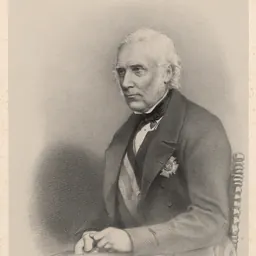

Related people
Same field, nearest in time


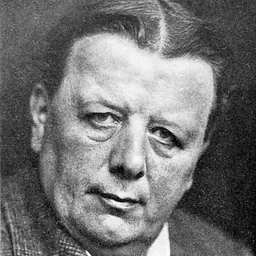

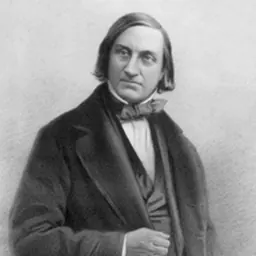
Contemporaries
People whose lives overlapped Gavino Gulia's



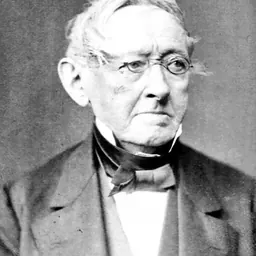
Frequently asked questions
Who was Gavino Gulia?
Maltese botanist (1835-1889)
When was Gavino Gulia born?
Gavino Gulia was born in 1835.
When did Gavino Gulia die?
Gavino Gulia died in 1889.
What was Gavino Gulia's occupation?
Gavino Gulia was a botanist.
What nationality was Gavino Gulia?
Gavino Gulia was Maltese.
Sources & further reading
Cite this page
APA: Biography.guide. (2026). Gavino Gulia. https://biography.guide/gavino-gulia/
MLA: "Gavino Gulia." Biography.guide, https://biography.guide/gavino-gulia/.
Chicago: "Gavino Gulia." Biography.guide. https://biography.guide/gavino-gulia/.
Data last updated: 2026-09-20 · Spot an error? Report a correction.
Page generated 2026-09-27 05:10 UTC