
About Gaston Velle
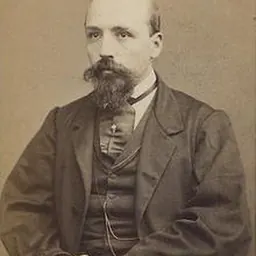
Lived 1868 – 1953 (aged 84). Gaston Velle was a French film director, screenwriter and director.
Poster by Faria for the film La poule aux oeufs d'or directed by Gaston Velle, 1905. Collection EYE Film Institute Netherlands. Gaston Velle (1868–1953 ) was a French silent film director and pioneer of special effects, who was prominent in early French and Italian cinema during the first two decades of the 20th century. Like his father, the Hungarian entertainer Joseph "Professor" Velle, Gaston began his career as a travelling magician, before putting his illusionist skills to work in cinema and ultimately creating more than fifty films between 1903 and 1911. He worked under Auguste and Louis Lumière, before serving as the head of production for the Italian film studio Cines. But he is best remembered for his work at Pathé, where he was hired to produce trick films that might rival those of his contemporary, Georges Méliès, including classic shorts like Burglars at Work (1904). Some films pioneered lasting techniques, such as his Les Invisibles (1906) – the first known invisible man film.
Velle also created some of the first féerie films, such as tit-for-tat (1906). Additionally, Velle collaborated with other directors such as Segundo de Chomon and Ferdinand Zecca to create such silent film classics as the Moon Lover (1905), the Raja's Casket (1906), and the Hen that Laid the Golden Egg (1905), the latter of which was featured in the 1997 Martin Scorsese film, Kundun.
Velle mysteriously retired from film production in 1913, and little is known about the last several decades of his life. Still, Velle remained part of a prominent cinematic family. Most notably, his son Maurice Velle, a Parisian cinematographer, had a family with screenwriter Mary Murillo.
Filmography
1904 – Dévaliseurs nocturnes 1904 – La danse du Kickapoo 1904 – Le paravent mystérieux 1904 – La danse des apaches 1904 – Danses plastiques 1904 – Les dénicheurs d'oiseaux 1904 – La métamorphose du papillon 1904 – Japonaiseries 1904 – La Valise de Barnum 1904 – Métamorphose du roi de pique 1904 – Un drame dans les airs 1904 – Le Chapeau magique 1905 – La poule aux œufs d'or 1905 – Sidney, le clown aux échasses 1905 – La fée aux fleurs 1905 – Rêve à la lune ou L'amant de la lune 1905 – Les cartes lumineuses ou Les cartes transparentes 1905 – Ruche merveilleuse 1905 – Coiffes et coiffures 1905 – John Higgins, le roi des sauteurs 1905 – L'antre infernal 1905 – Un drame en mer 1905 – L'аlbum merveilleux 1906 – Le Bazar du Père Noël (Il Bazar di Natale) 1906 – Onore rusticano 1906 – Il pompiere di servizio 1906 – Heures de la mondaine (Le ore di una mondana) 1906 – Enlèvement à bicyclette (Il ratto di una sposa in bicicletta) 1906 – Il dessert di Lulù 1906 – L'accordéon mysterieux (L'organetto misterioso) 1906 – Bicyclette présentée en liberté 1906 – Mariage tragique (Nozze tragiche) 1906 – Le garde fantôme 1906 – Les Invisibles 1906 – La Peine du talion 1906 – Les effets de la foudre 1906 – Cuore e patria 1906 – La fée aux pigeons 1906 – Quarante degrés à l'ombre (Quaranta gradi all'ombra) 1906 – Otello 1906 – Voyage autour d'une étoile 1906 – L'есrin du rajah 1906 – Les Fleurs animées 1907 – Petit Jules Verne 1907 – Le secret de l'horloger 1907 – Le petit prestidigitateur 1907 – Le secret de l'horloger (Patto infernale) 1907 – Au pays des songes (Nel paese dei sogni) 1907 – Artista e pasticciere 1907 – Gitane (La gitana) 1907 – Pile électrique (La pila elettrica) 1907 – Petit Frégoli (Il piccolo Fregoli) 1907 – Fille du chiffonnier (La figlia del cenciaiolo) 1907 – Primavera senza sole 1907 – Triste jeunesse (Triste giovinezza) 1907 – Un moderno Sansone 1907 – Le crime du magistrat (Il delitto del magistrato) 1908 – Après le bal (Dopo un veglione) 1908 – Lapins du docteur (I conigli del dottore) 1908 – Confession par téléphone (La confessione per telefono) 1908 – Première nuit de noces (La prima notte) 1908 – Polichinelle (Le avventure di Pulcinella) 1908 – Le spectre(Lo spettro) 1908 – Dîner providentiel (Pranzo provvidenziale) 1908 – Le triple rendez-vous(Triplice convegno) 1910 – Isis 1910 – Cagliostro, aventurier, chimiste et magicien 1910 – Au temps des Pharaons 1910 – La rose d'or 1910 – Le charme des fleurs 1910 – Le fruit défendu 1910 – L'oracle des demoiselles 1910 – Rêve d'art 1911 – Fafarifla ou le fifre magique 1911 – L'armure de feu 1911 – Le cauchemar de Pierrot 1913 – La nuit rouge
Don’t just read it —
keep it.
Full-length biographies made to live with: read them, listen on the way to work, watch them tonight.
- E-book
- Audio
- Video
Instant download · yours to keep · every purchase keeps this site free
Important facts
People in Gaston Velle's life
Named in this biography and alive at the same time





Related people
Same field, nearest in time

Contemporaries
People whose lives overlapped Gaston Velle's



Frequently asked questions
Who was Gaston Velle?
French film director
When was Gaston Velle born?
Gaston Velle was born on 24 December 1868 in Rome.
When did Gaston Velle die?
Gaston Velle died on 8 January 1953 in Paris.
What was Gaston Velle's occupation?
Gaston Velle was a film director, screenwriter and director.
What nationality was Gaston Velle?
Gaston Velle was French.
Sources & further reading
Cite this page
APA: Biography.guide. (2026). Gaston Velle. https://biography.guide/gaston-velle/
MLA: "Gaston Velle." Biography.guide, https://biography.guide/gaston-velle/.
Chicago: "Gaston Velle." Biography.guide. https://biography.guide/gaston-velle/.
Data last updated: 2026-09-20 · Spot an error? Report a correction.
Page generated 2026-09-27 05:24 UTC