
About Gaston de Saporta
Lived 1823 – 1895 (aged 71). Gaston de Saporta was a French botanist, paleontologist, meteorologist, geologist and paleobotanist.
Gaston de Saporta (28 July 1823 – 26 January 1895) was a French aristocrat, palaeobotanist and non-fiction writer.
Biography
Early life (Louis Charles Joseph) Gaston de Saporta born in the Château de Montvert in Saint-Zacharie, Var, on July 28, 1823. He was a member of the Provençal nobility. He corresponded with Darwin. In 1877, Darwin wrote a supportive letter to Saporta which stated that "your idea that dicotyledonous plants were not developed in force until sucking insects had been evolved seems to me a splendid one."
He wrote many books about botany from the 1860s to the 1890s. He became a member of the French Academy of Sciences. Moreover, he often visited the National Museum of Natural History in Paris to attend conferences, and paved the way for the inauguration of the Museum of Natural History in Aix-en-Provence. The Marquis de.Saporta, was elected to honorary membership of the Manchester Literary and Philosophical Society, in 1892.
Interested in the aristocracy, he also wrote a book about the family of Marie de Rabutin-Chantal, marquise de Sévigné (1626–1696).
Fossil Plants of Portugal He was the author of the study of the fossil plants collected by Paul Choffat in the Portuguese Mesozoic, which made it possible to determine the age of the respective soils. His work the discovery of dicotyledonous species in the Lower Cretaceous of Cercal (Ourém) stands out, suggesting that the origin of this group was in Portugal. He often described numerous Mesozoic deposits for the first time, including Anadia, Paço (Sangalhos), Raposeira, Vacariça, Cabanas de Torres, Moita dos Ferreiros (Lourinhã), Buarcos (Figueira da Foz) and Alcântara (Lisbon). In a single article from 1894 entitled "Flore fossile du Portugal - Nouvelles contributions à la flore mésozoïque", Saporta described an impressive number of new plant taxa for the Mesozoic of Portugal. In what was one of the scientific articles with the most species named, he described four new genera - Delgadopsis, Choffatia, Phlebomeris and Ravenalospermum - based on Portuguese holotypes, and 265 new species, making him the most prolific paleontologist in terms of the number of new taxa from Portugal.
Personal life He was married to Valentine de Forbin la Barben. or Saportanthus, a fossil lauralean flower from the Early Cretaceous of Portugal.
The Rue Gaston de Saporta in Aix-en-Provence is named in his honour.
Don’t just read it —
keep it.
Full-length biographies made to live with: read them, listen on the way to work, watch them tonight.
- E-book
- Audio
- Video
Instant download · yours to keep · every purchase keeps this site free
Important facts
Family & relationships
People in Gaston de Saporta's life
Named in this biography and alive at the same time
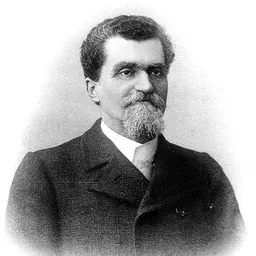
Related people
Same field, nearest in time


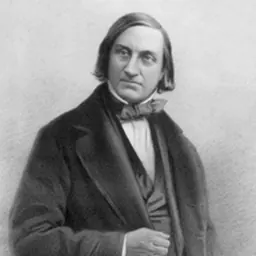

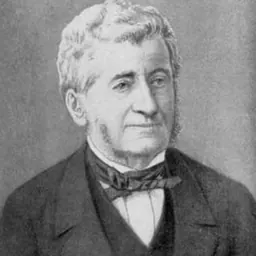
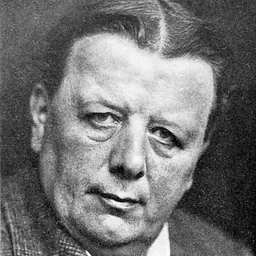
Contemporaries
People whose lives overlapped Gaston de Saporta's




Frequently asked questions
Who was Gaston de Saporta?
French palaeobotanist (1823-1895)
When was Gaston de Saporta born?
Gaston de Saporta was born on 28 July 1823 in Saint-Zacharie.
When did Gaston de Saporta die?
Gaston de Saporta died on 26 January 1895 in Aix-en-Provence.
What was Gaston de Saporta's occupation?
Gaston de Saporta was a botanist, paleontologist, meteorologist, geologist and paleobotanist.
What nationality was Gaston de Saporta?
Gaston de Saporta was French.
Sources & further reading
· Wikipedia: Gaston de Saporta
Cite this page
APA: Biography.guide. (2026). Gaston de Saporta. https://biography.guide/gaston-de-saporta/
MLA: "Gaston de Saporta." Biography.guide, https://biography.guide/gaston-de-saporta/.
Chicago: "Gaston de Saporta." Biography.guide. https://biography.guide/gaston-de-saporta/.
Data last updated: 2026-09-25 · Spot an error? Report a correction.
Page generated 2026-09-27 05:11 UTC