
About Gaspar da Cruz
Lived 1520 – 1570 (aged 49–50). Gaspar da Cruz was a writer, missionary and monk.
Gaspar da Cruz ( 1520 – 5 February 1570; sometimes also known under a hispanicised version of his name, Gaspar de la Cruz ) was a Portuguese Dominican friar born in Évora, who traveled to Asia and wrote one of the first detailed European accounts about China.
Biography Gaspar da Cruz was admitted to the Order of Preachers (Dominican) convent of Azeitão. In 1548, along with 10 other friars. he embarked for Portuguese India under the orders of Friar Diogo Bermudes, with the purpose of founding a Dominican mission in the East. For six years, Cruz remained in Hindustan, probably in Goa, Chaul and Kochi, as his order had established a settlement there. During that time, he also visited Portuguese Ceylon.
In 1554, Cruz was in Malacca, where he founded a house under his order and lived there until September 1555. He was then shipped to Cambodia. Given the failure of the Cambodian mission, in late 1556 Cruz went to Lampacao, a small island in the Guangzhou bay, six leagues north of Shangchuan Island (Sanchão). At the time, Lamapacao was a port for trade with the Chinese. At Lampacao, he obtained permission to go to Guangzhou, and he spent a month preaching there.
A Treatise of China
Cruz's book, Tratado das cousas da China (Treatise on things Chinese) was published by André de Burgos, of Évora, in 1569. The full title, in the original orthography, was Tractado em que se cõtam muito por estẽso as cousas da China. It is often described as the first European book whose main topic was China; at any rate, it is one of the first undisputed books on China published in Europe since that of Marco Polo.
The book also contains accounts of Cambodia and Hormuz.
Influence In Donald F. Lach's assessment, Cruz's book itself did not become widely distributed in Europe either because it was published in Portuguese (rather than some more widely-spoken language) or because it appeared in the year of the plague. Cruz's Treatise (along with João de Barros' earlier coverage of China in his Decadas) was the main source of information for Bernardino de Escalante's Discourso ... de las grandezas del Reino de la China (1577), and one of the main sources for the much more famous and widely translated History of the great and mighty kingdom of China compiled by Juan González de Mendoza in 1585. By this time his report had been superseded not only by Mendoza's celebrated treatise, but also by the much more informed work of Matteo Ricci and Nicolas Trigault, De Christiana expeditione apud Sinas (Latin 1616; English abridgment, in the same Purchas' collection of 1625).
Chinese language and writing Reading Gaspar da Cruz's Treatise, one has an impression that, as of 1555, communication between the Portuguese and the Chinese was accomplished primarily thanks to the existence of some Chinese people able to speak Portuguese, rather than the other way around. His book several times mentions Chinese interpreters working with Portuguese but never a Portuguese person speaking or reading Chinese. (That was not any different from the situation that obtained in the accounts of da Cruz's Spanish colleague Martín de Rada's expedition to Fujian in 1575). The Portuguese, of course, knew some Chinese words and common expressions: da Cruz's book contains, for example, titles of various officials and the word cha ("tea").
Da Cruz was, however, curious about the Chinese writing system, and gave a brief report of it, which John DeFrancis has described as "the first Western account of the fascinatingly different Chinese writing."
Slavery One of the major irritants in early Sino-Portuguese relations was the Portuguese proclivity to enslave Chinese children and take them to various Portuguese colonies or to Portugal itself. While that traffic was on a much smaller scale than the Atlantic slave trade, supplying millions of African slaves for Portuguese Brazil, it had already been a contributing factor to the failure of the Tomé Pires's 1521 embassy, when, in a words of a later researcher, many residents of Canton discovered that "many of their children, whom they had given in pledge to their creditors, had been kidnapped by" Simão de Andrade "and carried away to become slaves". Cruz was aware of the trade and, as his book (Chapter XV) implies, had heard of the Portuguese slavers' attempts to justify their actions by claiming that they had been merely buying children who had already been slaves in China. Da Cruz described the situation with slavery in China as he saw it. According to him, the laws of China allowed impoverished widows to sell her children; however, the conditions under which boys or girls sold into servitude could be kept were regulated by law and custom, and upon reaching a certain age, they had to be set free. Reselling of such slaves (or, rather, bond-servants) was regulated too, there being "great penalties" for selling any of them to the Portuguese. He concludes therefore (as C.R. Boxer summarizes his argument), that "the Portuguese had no legal or moral rights to purchase either mui-tsai or kidnapped children for use as slaves":
God's punishment for sins In the first paragraph of the last chapter (XXIX) of his book, Cruz severely criticized "a filthy abomination, which is that they are so given to the accursed sin of unnatural vice, which is in no way reproved among them". The rest of the chapter, entitled "Of some punishments from God which the Chinas received in the year of fifty-six", discusses the 1556 Shaanxi earthquake and certain flooding events of the same year, which da Cruz views as God's punishment for "this sin".
Don’t just read it —
keep it.
Full-length biographies made to live with: read them, listen on the way to work, watch them tonight.
- E-book
- Audio
- Video
Instant download · yours to keep · every purchase keeps this site free
Important facts
People in Gaspar da Cruz's life
Named in this biography and alive at the same time


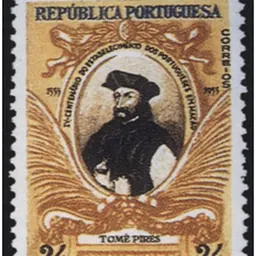
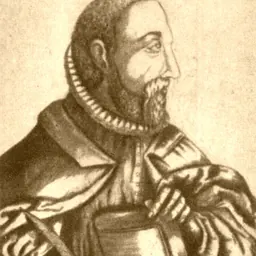


Related people
Same field, nearest in time
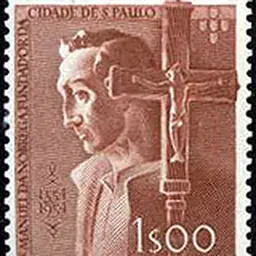
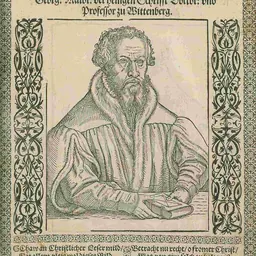

Contemporaries
People whose lives overlapped Gaspar da Cruz's


Frequently asked questions
Who was Gaspar da Cruz?
Portuguese Dominican friar and travel writer (c.1520–1570)
When was Gaspar da Cruz born?
Gaspar da Cruz was born in 1520 in Évora.
When did Gaspar da Cruz die?
Gaspar da Cruz died on 5 February 1570 in Setúbal.
What was Gaspar da Cruz's occupation?
Gaspar da Cruz was a writer, missionary and monk.
What nationality was Gaspar da Cruz?
Gaspar da Cruz's recorded nationality: Kingdom of Portugal.
Sources & further reading
Cite this page
APA: Biography.guide. (2026). Gaspar da Cruz. https://biography.guide/gaspar-da-cruz/
MLA: "Gaspar da Cruz." Biography.guide, https://biography.guide/gaspar-da-cruz/.
Chicago: "Gaspar da Cruz." Biography.guide. https://biography.guide/gaspar-da-cruz/.
Data last updated: 2026-09-22 · Spot an error? Report a correction.
Page generated 2026-09-27 05:14 UTC