
About Garland Boyette
Lived 1940 – 2022 (aged 81–82). Garland Boyette was an American american football player.
College career He initially studied at Northwestern University, but left after the first semester and ultimately transferred to study biology at Grambling College—now Grambling State University—on the recommendation of his nephew, future All-AFL tackle Ernie Ladd. Boyette was in the starting lineup for the Grambling State Tigers football team during his sophomore year, as a two-way player. He played as a guard and defensive tackle, later receiving All-American honors at those positions. Boyette's line coach Leroy Hawthorne considered Boyette's work on the offensive line, "peerless". on a Grambling team that included Robinson, Taylor and future Professional Football Hall of Famers tackle Buch Buchanan and defensive back Willie Brown, among others. He was also named first-team All-SWAC in 1961. The Pittsburgh Courier named Boyette to its 1961 All-American team among players from HBCU schools.
Boyette was also a track and field athlete who was selected as an All-American three times. He was a three-time SWAC shot put champion. He competed in the 1960 United States Olympic trials and narrowly missed qualifying for the decathlon. He identified the pole vault and long-distance running as the most challenging events for him, stating he "never felt safe on that aluminum pole".
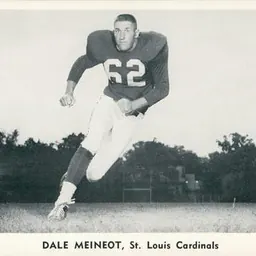
Professional career Upon graduating in 1962, Boyette was left undrafted in that year's NFL draft. He eventually signed with the St. Louis Cardinals in February 1962, with the expectation that he would become a linebacker. He learned the position over the summer of 1962. Dale Meinert was the Cardinals starting middle linebacker in 1962, but was injured in the fifth game of the season, and was out for the year. Cardinals defensive end Ed Henke was moved to middle linebacker to replace Meinert, but Henke was also injured that season. Head coach Wally Lemm then used Ted Bates at middle linebacker, when Bates returned from an injured broken leg. Lemm eventually assigned the rookie Boyette to start at linebacker late in his rookie season.
It has been indicated that Boyette started six games at middle linebacker in his rookie season by Pro Football Reference in one source. and that Bates started five games at middle linebacker.
In 1963, Boyette appeared in nine games, none as a starter. He suffered a torn knee ligament in an early October 1963 game against the Minnesota Vikings. After two seasons with the St. Louis franchise, Boyette left for the Canadian Football League, having become disillusioned by the higher salary of newer NFL players compared to his.
Boyette went back to the American football in 1966, signing with the American Football League's Houston Oilers. This reunited Boyette with Wally Lemm, his former Cardinals' coach, and his nephew and former Grambling teammate Ernie Ladd. Boyette appeared in 14 games, starting at least one game at right defensive end (playing alongside Ladd at right defensive tackle). Before the 1967 season started, Lemm made the decision to make Boyette the Oilers' middle linebacker. Boyette started all 14 games at middle linebacker, playing between George Webster (left linebacker) and Olen Underwood (right linebacker). Boyette had two quarterback sacks that season. The Oilers finished first in the AFL's East Division with a 9–4–1 record and reached the AFL championship game, losing to the Oakland Raiders, 40–7. He was selected to play in the AFL All-Star Game for the first time. In 1969, Boyette started all 14 games as the Oilers' middle linebacker for the third consecutive season, with a fumble recovery that season. He was again selected to play in the AFL All-Star Game. The Oilers lost to the Raiders in the first round of the playoffs, 56–7 that season. In 1970, he started 13 games as the Oilers' middle linebacker, with one interception.
During the 1971 season, he again started all 14 games at middle linebacker. He had four fumble recoveries, one of which he returned for a touchdown; and 1.5 sacks. Boyette finished sixth in the league in fumbles recovered (4), ninth in non-offensive touchdowns (1), and tied for most fumble return touchdowns (1). Boyette replaced Pritchard at starting middle linebacker in 1972.
Boyette retired in early 1973, and immediately was hired by the Oilers to work as the team's quality control director/quality control coach, focusing on extensive film review. Boyette was hired by general manager Sid Gillman. As a future Hall of Fame coach, Gillman had pioneered the use of film study, to which he showed extraordinary dedication and reliance over decades. General manager Gillman and head coach Bill Peterson saw Boyette's experience, dedication, and capabilities making him well suited for the job.
While he came into the 1973 Oilers' training camp as a coach, because of the team's needs on defense he was induced to return to playing linebacker in August 1973. Boyette came out of retirement during the Oilers' 1973 training camp, but did not play another season for the Oilers.
After two seasons, he returned to play for the Houston Texans of the World Football League. Midway through the 1974 season, the Texans relocated to Shreveport and were renamed the Steamer. Boyette finished his career with the Shreveport Steamer in 1975, at the age of 35.
Personal life and death Boyette was married to Winetta, with whom he had three children. who played for the Texas Longhorns and also went undrafted before signing with the Oakland Raiders in 2017. After retiring from professional football, Boyette was employed as a manager for Southwestern Bell for 28 years. He worked in that capacity until retiring in the early 2000s, after which he served as a motivational speaker, as well as a volunteer with the Boys & Girls Club in Houston and the Special Olympics. He resided in Missouri City, Texas, during his later years in a house that he constructed.
Don’t just read it —
keep it.
Full-length biographies made to live with: read them, listen on the way to work, watch them tonight.
- E-book
- Audio
- Video
Instant download · yours to keep · every purchase keeps this site free
Important facts
People in Garland Boyette's life
Named in this biography and alive at the same time



Related people
Same field, nearest in time




Contemporaries
People whose lives overlapped Garland Boyette's



Frequently asked questions
Who was Garland Boyette?
American football player (1940–2022)
When was Garland Boyette born?
Garland Boyette was born on 22 March 1940 in Orange.
When did Garland Boyette die?
Garland Boyette died in 2022.
What was Garland Boyette's occupation?
Garland Boyette was an american football player.
What nationality was Garland Boyette?
Garland Boyette was American.
Sources & further reading
Cite this page
APA: Biography.guide. (2026). Garland Boyette. https://biography.guide/garland-boyette/
MLA: "Garland Boyette." Biography.guide, https://biography.guide/garland-boyette/.
Chicago: "Garland Boyette." Biography.guide. https://biography.guide/garland-boyette/.
Data last updated: 2026-09-20 · Spot an error? Report a correction.
Page generated 2026-09-27 05:05 UTC