
About Gallus Anonymus
Lived 1066 – 1145 (aged 78–79). Gallus Anonymus was a historian, monk and chronicler.
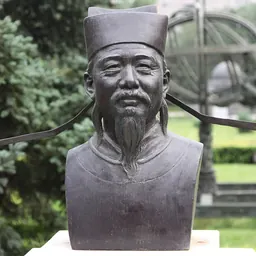
An artist's impression of Gallus Anonymus' portrait by ], 1898. Gallus Anonymus (, ), is the name traditionally given to the anonymous author of (Deeds of the Princes of the Poles), composed in Latin between 1112 and 1118. Gallus is generally regarded as the first historian to have described the history of Poland. His Chronicles are an obligatory text for university courses in Polish history. Very little is known of the author himself and it is widely believed that he was a foreigner.
Kromer
The only source for Gallus''' real name is a note made by Prince-Bishop of Warmia Marcin Kromer (1512–89) in the margin of folio 119 of the "Heilsberg manuscript." It reads: Gallus hanc historiam scripsit, monachus, opinor, aliquis, ut ex proemiis coniicere licet qui Boleslai tertii tempore vixit (Gallus wrote this history, some monk, in my opinion, who lived in the time of Boleslaus III Wrymouth, as can be conjectured from the preface.') It is not known whether Kromer intended the word "Gallus" as a proper name or as a reference to the author's nationality (Gallus in this period normally means "a Frenchman"), nor what he based his identification on. and Marian Plezia Plezia has suggested that he was a monk from Saint Giles' Monastery in Provence, France.
Some scholars have pointed out that Gallus' writing style resembles that of Hildebert of Lavardin and have thought that Gallus had been educated at Le Mans or, according to Zathey, at Chartres or Bec in Normandy.
Before World War II, French historian Pierre David advanced a theory that Gallus might have been a Hungarian monk from Saint Giles' Monastery in Somogyvár who accompanied Boleslaus in his return from Hungary to Poland. This theory enjoys little support.
Another theory has been gaining ground in Poland. Professors Danuta Borawska and Tomasz Jasiński of Poznań University have presented a case for a Venetian origin. It has been argued that Gallus may have been a monk from St. Giles' Monastery at the Lido, Venice, Italy, and Professor Plezia has subsequently concurred.
The Venetian theory was first broached in 1904 by Polish historian Tadeusz Wojciechowski. Fałkowski has noted that the two theories—French and Italian—may be less mutually exclusive than some think, as Gallus might have been born in Italy, been a monk at the Lido, and have later traveled to France and Hungary. the chronicler came to Poland over the Via Egnatia across the Slavic-speaking countries of "Epirus, Thrace, Dalmatia, Croatia, Istria." When Jasiński compared the Chronicle with the Transfer of St. Nicholas, he found over 100 similarities. Jasiński has concluded that Gallus, like many Venetian clergymen of the time, had a native knowledge of both Italian and Slavic languages.
However, Paul W. Knoll and Frank Schaer regard the Venetian suggestion as "too weak to be considered seriously." In Poland, medievalist Professor Jacek Banaszkiewicz supports a French over an Italian origin for Gallus Anonymus.
Influence The anonymous author of the Gesta influenced the subsequent course of Poland's history, in that his version of early Polish history held the ruler's authority to be inferior to that of God, a principle expressed by the voice of the people (as in the Latin proverb, "Vox populi, vox Dei").
This concept reinforced Poles' electoral traditions and their tendency to disobey and question authority. Via the Chronicles of Wincenty Kadłubek and the Sermons of Stanisław of Skarbimierz, it contributed to the development of the unique "Golden Liberty" that would characterize the Polish–Lithuanian Commonwealth, whose kings were elected and were obliged to obey the Sejm'' (parliament).
Don’t just read it —
keep it.
Full-length biographies made to live with: read them, listen on the way to work, watch them tonight.
- E-book
- Audio
- Video
Instant download · yours to keep · every purchase keeps this site free
Important facts
People in Gallus Anonymus's life
Named in this biography and alive at the same time

Related people
Same field, nearest in time



Contemporaries
People whose lives overlapped Gallus Anonymus's

Frequently asked questions
Who was Gallus Anonymus?
12th-century chronicler of Polish history
When was Gallus Anonymus born?
Gallus Anonymus was born in 1066.
When did Gallus Anonymus die?
Gallus Anonymus died in 1145.
What was Gallus Anonymus's occupation?
Gallus Anonymus was a historian, monk and chronicler.
Sources & further reading
Cite this page
APA: Biography.guide. (2026). Gallus Anonymus. https://biography.guide/gallus-anonymus/
MLA: "Gallus Anonymus." Biography.guide, https://biography.guide/gallus-anonymus/.
Chicago: "Gallus Anonymus." Biography.guide. https://biography.guide/gallus-anonymus/.
Data last updated: 2026-09-20 · Spot an error? Report a correction.
Page generated 2026-09-27 05:24 UTC