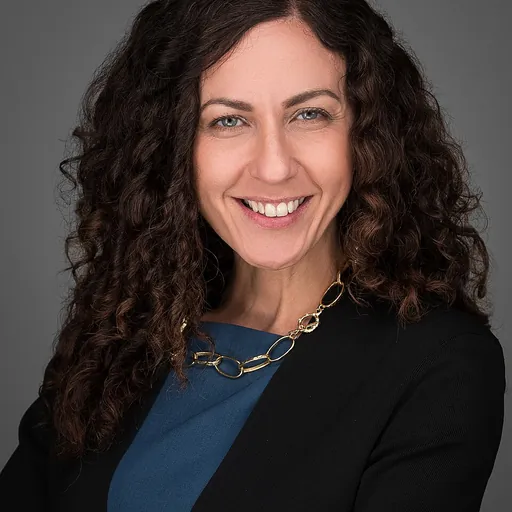
About Galit Lahav
Born 1973. Galit Lahav is a biologist and researcher.
Galit Lahav (; born 1973) is an Israeli-American systems biologist and Professor of Systems Biology at Harvard Medical School. In 2018 she became Chair of the Department of Systems Biology at Harvard Medical School. She is known for discovering the pulsatile behavior of the tumor suppressor protein p53 and uncovering its significance for cell fate, and for her contributions to the culture of mentoring in science. She lives in Boston, Massachusetts.
Education
Lahav earned her PhD in 2001 from the Technion, where she studied transcriptional regulation in the laboratory of Yona Kassir. She then performed postdoctoral work in the laboratory of Uri Alon at the Weizmann Institute of Science.
Research and career
Lahav then discovered that DNA damage caused by UV-irradiation results in a different p53 behavior, leading to a single pulse that increases in size and duration with increasing damage. This led her to hypothesize that the dynamic behavior of p53 contained information on the nature of the damage to DNA and determined the nature of the response by the damaged cell. She developed a method for forcing a cell damaged by gamma irradiation to adopt the p53 dynamics seen in UV irradiation, based on precisely timed additions of the Mdm2 inhibitor Nutlin-3. Cells damaged using gamma irradiation without drug treatment showed cell cycle arrest and then recovered, while the same cells treated with drug to simulate UV-type p53 dynamics entered senescence and failed to divide. There is growing consensus that dynamics are important for signaling in multiple biological pathways.
Lahav has measured the cell-to-cell variation in p53 response in colon cancer cells responding to damage by the chemotherapeutic drug cisplatin and has argued that this variation may underlie the phenomenon of fractional kill, in which a fraction of cancer cells survive chemotherapeutic treatment and subsequently grow, causing a recurrence of the cancer.
Lahav joined the Department of Systems Biology at Harvard Medical School in 2004. In 2017 she was appointed Deputy Chair, and in 2018 Dean George Q. Daley appointed her as Chair of the Department. 2002: Sara Lee Schupf Women and Science Fellowship 2005: Smith Family New Investigator Award 2009: John and Virginia Kaneb Award 2010: Charles E.W. Grinnell Award for Medical Research 2011: Finalist, Vilcek Award for Creative Promise in Biomedical Research 2013: Mentoring award, Harvard Medical School 2013: Teaching award, Harvard University 2019: Smith Family Foundation Prize for Outstanding Scientific Contributions
Don’t just read it —
keep it.
Full-length biographies made to live with: read them, listen on the way to work, watch them tonight.
- E-book
- Audio
- Video
Instant download · yours to keep · every purchase keeps this site free
Important facts
People in Galit Lahav's life
Named in this biography and alive at the same time

Related people
Same field, nearest in time

Contemporaries
People whose lives overlapped Galit Lahav's


Frequently asked questions
Who is Galit Lahav?
Israeli-American systems biologist
When was Galit Lahav born?
Galit Lahav was born in 1973.
What is Galit Lahav's occupation?
Galit Lahav is a biologist and researcher.
Sources & further reading
Cite this page
APA: Biography.guide. (2026). Galit Lahav. https://biography.guide/galit-lahav/
MLA: "Galit Lahav." Biography.guide, https://biography.guide/galit-lahav/.
Chicago: "Galit Lahav." Biography.guide. https://biography.guide/galit-lahav/.
Data last updated: 2026-09-23 · Spot an error? Report a correction.
Portrait: Wikimedia Commons · author & licence
Page generated 2026-09-27 05:05 UTC