
About Gabriela Cabezón Cámara
Born 1968. Gabriela Cabezón Cámara is an Argentine writer, journalist, novelist and literary scholar.
Gabriela Cabezón Cámara (San Isidro, Buenos Aires, 4 November 1968) is an Argentine writer and journalist. She is considered one of the most prominent figures in contemporary Argentine and Latin American literature, apart from being a well-known intellectual, and a feminist and environmentalist.
She has published three novels, but is best known for her debut with La Virgen Cabeza (2009), which gained her literary recognition and laid the foundations of her style. It was translated into English by Frances Riddle as Slum Virgin and published by Charco Press. This translated version was shortlisted for the Silverio Cañada Memorial Prize at the Gijón Noir Week in Spain and chosen as book of the year by Rolling Stone magazine in Argentina in 2009. and Las niñas del naranjel (2023), about the historical figure of Monja Alférez and the Conquest of the Americas, which obtained the Ciutat de Barcelona award in Spanish-language literature and was also longlisted for the 2026 International Booker Prize under the title We Are Green and Trembling.
Her articles have been published in various media outlets, such as , Anfibia, Le Monde diplomatique, and . She also worked as the editor of the Culture section of Argentine newspaper Clarín.
Furthermore, she received a scholarship as a writer-in-residence at UC Berkeley in 2014.
Early life and education Gabriela Cabezón Cámara was born on 4 November 1968 in San Isidro, Buenos Aires Province, Argentina. She studied Humanities at the University of Buenos Aires.
Literary career One of her first stories, La hermana Cleopatra (the first draft of what would become her first novel, La Virgen Cabeza), appeared in 2006 in the anthology Una terraza propia, from publishing company Norma.
In 2011, she published the novella Le viste la cara a Dios, about human trafficking, which became the first Spanish-language e-book to be chosen as the book of the year by .
In 2009, publishing house Eterna Cadencia published Cabezón Cámara's first novel, La Virgen Cabeza. The book was a rousing success with critics and the reading public alike. It received a distinction from the Argentine Senate and the Buenos Aires City Legislature for its impact on society. In 2014, she published her second novella, Romance de la negra rubia, the last one in the "dark trilogy" (along with La Virgen Cabeza and Le viste la cara a Dios), as referred to by critics.
She published her second novel, Las aventuras de la China Iron, in 2017. Critics referred to it as having una prosa encantada y casi milagrosa, referring to it as otra fundación of Argentine literature. Moreover, the novel was chosen as one of the books of the year by the Spanish-language edition of The New York Times and by newspaper El País. Both Iona Macintyre and Fiona Mackintosh worked on its translation into English, which was published with the title The Adventures of China Iron by Charco Press. That translation was shortlisted for the International Booker Prize in 2020. Its film adaptation was announced that very same year. In 2022, the book was one of the five finalists for the Prix Montluc Resistance et Liberté award.
In 2023, she published her third novel, Las niñas del naranjel, about the historical figure of Monja Alférez, who was born a woman in Spain in 1592 and later, living as a man, took part in the Conquest of the Americas. In January 2024, she obtained the Ciutat de Barcelona award in Spanish-language Literature for this book.
Style Cabezón Cámara's fictional worlds are inhabited by slum-dwellers, human trafficking victims, and okupas. Her literary plots are highly dynamic, and her narrators build their discourse outside the identity principle of unity. Thus, the characters change, both by contingency and by choice, and in an instant, they transform the definitive sign of their lives. Her novels are set in recognizable and violent places, and the main source and trigger of the story are news events and the crime genre.
Her protagonists include a trans woman who is a religious fanatic, a reporter on the police beat, and a victim of human trafficking for sexual exploitation. Due to the mix of characters, social classes, and sexual identities, her literature is considered part of the queer genre. Her narrative style blends content from reality (from slums to social networks) with expressions of classic literature, the gaucho genre, slang, and a touch of black humor.
One of Cabezón Cámara's concerns when it comes to the suffering of others is what happens to women as objects of prostitution, which she describes as ser violada las 24 horas. The main character of her novel La Virgen Cabeza goes to live in a slum where she finds love. On the other hand, it is worth noting that the reference to the Virgen is a vindication of the place of women, since the Church only legitimizes this image as a wife, mother, and defender of sus maridos: Dios, el papa, y el Espíritu Santo.
Personal life On 7 March (Lesbian Visibility Day in Argentina) 2025, she announced her engagement to comic artist Maitena.
List of works Novels La Virgen Cabeza (Eterna Cadencia, 2009) (published in English as Slum Virgin by Charco Press, 2017) Las aventuras de la China Iron (Penguin Random House, 2017) (published in English as The Adventures of China Iron by Charco Press, 2019) Las niñas del naranjel (Penguin Random House, 2023) (published in English as We Are Green and Trembling by New Directions Press, 2025)
Short fiction Le viste la cara a Dios (novella, Eterna Cadencia, 2011) Beya: Le viste la cara a Dios (graphic novel, illustrated by Iñaki Echeverría, Eterna Cadencia, 2013)
Don’t just read it —
keep it.
Full-length biographies made to live with: read them, listen on the way to work, watch them tonight.
- E-book
- Audio
- Video
Instant download · yours to keep · every purchase keeps this site free
Important facts
People in Gabriela Cabezón Cámara's life
Named in this biography and alive at the same time

Related people
Same field, nearest in time
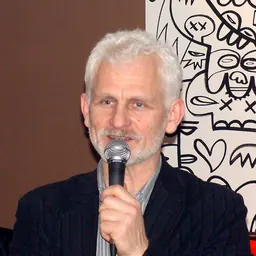
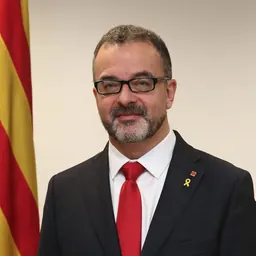


Contemporaries
People whose lives overlapped Gabriela Cabezón Cámara's
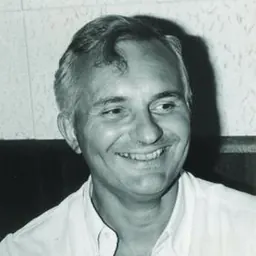
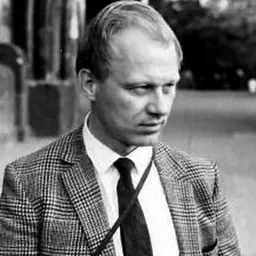



Frequently asked questions
Who is Gabriela Cabezón Cámara?
Argentine novelist and journalist
When was Gabriela Cabezón Cámara born?
Gabriela Cabezón Cámara was born on 4 November 1968 in San Isidro.
What is Gabriela Cabezón Cámara's occupation?
Gabriela Cabezón Cámara is a writer, journalist, novelist and literary scholar.
What nationality is Gabriela Cabezón Cámara?
Gabriela Cabezón Cámara is Argentine.
Sources & further reading
· Wikipedia: Gabriela Cabezón Cámara
· DBpedia: Gabriela Cabezón Cámara
Cite this page
APA: Biography.guide. (2026). Gabriela Cabezón Cámara. https://biography.guide/gabriela-cabezon-camara/
MLA: "Gabriela Cabezón Cámara." Biography.guide, https://biography.guide/gabriela-cabezon-camara/.
Chicago: "Gabriela Cabezón Cámara." Biography.guide. https://biography.guide/gabriela-cabezon-camara/.
Data last updated: 2026-09-20 · Spot an error? Report a correction.
Page generated 2026-09-27 05:26 UTC