
Gabriel
American enslaved person
About Gabriel
Lived 1775 – 1800 (aged 24–25). Gabriel was an American blacksmith and slave rebellion leader.
Gabriel's Rebellion was a planned slave rebellion in the Richmond, Virginia, area in the summer of 1800. Information regarding the revolt was leaked before its execution, and Gabriel, an enslaved blacksmith who planned the event, and twenty-five of his followers were hanged.
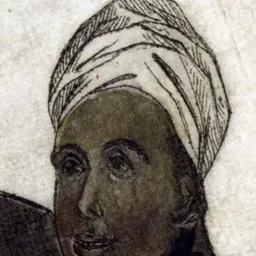
Gabriel's planned uprising was notable not because of its results—the rebellion was quelled before it could begin—but because of its potential for mass chaos and widespread violence. was a man of African descent born into slavery in 1776 at Brookfield, a large tobacco plantation in Henrico County, Virginia. was able to keep a portion of the wages that he earned. The bulk of it went to Thomas Prosser. Gabriel was described in newspaper articles as having stood "six feet two or three inches high." His long and "bony face, well made," was marred by losing his two front teeth and "two or three scars on his head." White people as well as black people regarded the literate young man as "a fellow of great courage and intellect above his rank in life." Throughout the state in 1800, 39.2% of the total population were enslaved; they were concentrated on plantations in the Tidewater region and west of Richmond.
Gabriel, living in Virginia in the late eighteenth century, was influenced by the prevailing themes of liberty expounded by the supporters of the American Revolution. During his lifetime, the number of free people of color had grown markedly in the Upper South. Many enslaved people were manumitted thanks in part to the efforts of Methodist and Quaker abolitionists. Their number was augmented by free gens de couleur refugees from the Haitian Revolution, many of whom had been enslavers themselves.
During the spring and summer of 1800, Gabriel began planning a revolt to end slavery in Virginia. Plans were made with enslaved people over ten counties and the cities of Richmond, Norfolk, and Petersburg, Virginia.
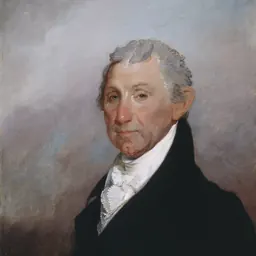
He, his brothers, and other blacksmiths turned scythe blades into as many as twelve dozen swords. Musket balls and 50 spears were created. They intended to steal muskets from a tavern. expected to march into Richmond and take control of the Virginia State Armory and the Virginia State Capitol. The plan was to hold Virginia's Governor James Monroe hostage so that they could negotiate for their freedom. In addition, two enslaved people told their enslaver, Mosby Sheppard, about the plans. Sheppard warned Governor Monroe, who called out the state militia. They patrolled the area and began picking up conspirators. More than 70 enslaved men were arrested by law enforcement for conspiracy and insurrection.
+ Enslaved people that were hanged # Name Date of hanging 1 Will 12 September 1800 2 John 3 Isaac 4 Michael 5 Ned 6 Solomon 15 September 1800 7 Billy 8 Charles 9 Frank 10 Martin 11 Sawney 18 September 1800 12 Peter 13 Jupiter 14 Sam 15 Isham 16 Gabriel 10 October 1800 17 Sam Byrd Jr. 18 Isaac 19 Laddis 20 George 21 Gilbert 22 Tom 23 Michael 24 William 25 Sam Graham 26 Peter 24 October 1800
One individual committed suicide before his arraignment. Eight enslaved men were moved or sold outside Virginia. Thirteen were found guilty but were pardoned by the governor. Twenty-five were acquitted. His execution was advertised in 1800 as occurring at the usual place; however, until 1806, the "usual place" was not yet the location of the Burial Ground for Negroes in Shockoe Bottom.
The "usual place" of execution in 1800 was a place referred to as Gallows Hill near Canal St. at 1st St. The location of Gabriel's burial, as well as others who were executed on Gallows Hill for their involvement in the insurrection, was reported in the newspaper to have been the "Old Baptist Church Burying Ground", the burying ground connected to the old Baptist Church (originally organized as the Richmond Baptist Church) on Cary St., and was said to have been a sort of potters' field used primarily for the interment of Negroes. This burying ground at the old Baptist Church (First Baptist Church) was located on the northern side of Cary St. between 2nd St. and 3rd St., just a couple of blocks from the place of execution on Gallows Hill a little over a mile away from the Shockoe Bottom African Burying Ground. New laws were enacted to restrict free blacks and slaves.
Historiography The historian Douglas Egerton offered a new perspective on Gabriel in his book Gabriel's Rebellion: The Virginia Slave Conspiracies of 1800 & 1802 (1993). He based this on extensive primary research from surviving contemporary documents.
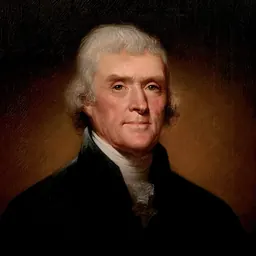
The internal dynamics of Jefferson's and Monroe's party in the 1800 United States presidential election were complex. A significant part of the Democratic-Republican base were prominent planters and colleagues of Thomas Jefferson and James Madison. Egerton believes that any sign that white radicals, particularly Frenchmen, had supported Gabriel's plan could have cost Jefferson the election. Enslavers feared such violent excesses as those related to the French Revolution after 1789 and the Haitian Revolution. Egerton believed that Gabriel planned to take Governor Monroe hostage to negotiate an end to slavery. Then, he planned to "drink and dine with the merchants of the city".
Egerton noted that Gabriel instructed his followers not to kill white Methodists, Quakers, and Frenchmen. During this period, Methodists and Quakers were active missionaries for manumission. The Spring Park Historic Site in Henrico County commemorates Gabriel.
In popular culture Arna Bontemps wrote Black Thunder (1936), a historical novel based on Gabriel's Rebellion. Gigi Amateau wrote Come August, Come Freedom: The Bellows, The Gallows, and The Black General Gabriel (2012), a historical fiction novel based on Gabriel's Rebellion. In Roots (1976), Alex Haley's historical fiction, the rebellion is heard of by the book's characters. In Sally Hemings, Barbara Chase-Riboud's 1979 novel about Hemings's relationship with Thomas Jefferson, Monroe writes Jefferson asking his advice on what to do about the insurrectionists still in jail after "(m)ore than thirty-five" had been executed. Hemings intercedes on their behalf, telling Jefferson, "I think there has been enough hanging," and suggests they be exiled instead. Although it is not made explicit in the novel, it is implied that Jefferson followed her suggestion and advised Monroe accordingly. At the end of the chapter, Hemings says, "I heard that the last of Gabriel's rebels had been reprieved and banished from Virginia by James Monroe. I had not pleaded in vain." Gabriel, the Musical was produced at the Firehouse Theatre in Richmond, Virginia, from September 8, 2022, through October 2, 2022. With libretto by Jerold Solomon, Foster Solomon and Ron Klipp, and music and lyrics by Klipp, the musical tells a semi-fictionalized account of the development of Gabriel's conspiracy and its aftermath on the conspirators, the local government, and the nation. The production was funded in part by a 2020 grant from the National Endowment for the Arts (grant 1861109–28–20).
Songs Tim Barry, a singer/songwriter from Richmond, wrote and performed "Prosser's Gabriel" for the album 28th & Stonewall. It chronicles the events of Gabriel's life, focusing on the attempted revolution. Gabriel is mentioned in Public Enemy's song "Prophets of Rage." Gabriel is the hero of a cleverly subversive ('[the] song subverts...by exaggerating the reward and by foregrounding the extent of state repression aimed at a single man.) This emphasizes White fear of slaves' potential power to ruin the state, rather than accenting the majesty of White power. This, then, was a song slaves could sing in front of Whites. It appeared to focus on exactly what authorities hoped slaves would remember about the conspiracy, but it did not accept a White version of the story. The song reversed the meaning...turning it into a tale of White anxiety rather than White power.' (Although elsewhere in his fiction Marryat sometimes invents lyrics to songs, this is unlikely to be the case with the shanty about Gabriel.) It refers to a rebellion over thirty years earlier and contains details that Marryat, as an Englishman, was unlikely to have known. Furthermore, he had sailed to North America in 1837, noting in his diary his interest in the shanties he repeatedly heard: "The seamen, as usual lightened their labour with the song and chorus...The one they sung was particularly musical, though not refined; and the chorus of 'Oh! Sally Brown', was given with great emphasis by the whole crew between every line of the song."
Don’t just read it —
keep it.
Full-length biographies made to live with: read them, listen on the way to work, watch them tonight.
- E-book
- Audio
- Video
Instant download · yours to keep · every purchase keeps this site free
Important facts
People in Gabriel's life
Named in this biography and alive at the same time

Related people
Same field, nearest in time




Contemporaries
People whose lives overlapped Gabriel's



Frequently asked questions
Who was Gabriel?
American enslaved person
When was Gabriel born?
Gabriel was born in 1775 in Henrico County.
When did Gabriel die?
Gabriel died on 7 October 1800.
What was Gabriel's occupation?
Gabriel was a blacksmith and slave rebellion leader.
What nationality was Gabriel?
Gabriel was American.
Sources & further reading
· DBpedia: Gabriel's Rebellion
Cite this page
APA: Biography.guide. (2026). Gabriel. https://biography.guide/gabriel/
MLA: "Gabriel." Biography.guide, https://biography.guide/gabriel/.
Chicago: "Gabriel." Biography.guide. https://biography.guide/gabriel/.
Data last updated: 2026-09-20 · Spot an error? Report a correction.
Page generated 2026-09-27 05:08 UTC