
Gabriel Pleydell
An English landowner and politician who served as member for the Wootton Bassett and Marlborough constituencies in the Parliament of England
About Gabriel Pleydell
Lived 1519 – 1591 (aged 71–72). Gabriel Pleydell was an English politician.
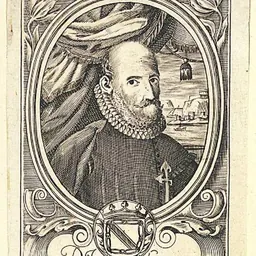
Gabriel Pleydell ( 1519 – 1591) of Midg Hall in the parish of Lydiard St John (later Lydiard Tregoze) in Wiltshire, was an English landowner and politician who served as Member of Parliament for the Wootton Bassett and Marlborough constituencies in the Parliament of England. Pleydell was born before 1519 into a large, affluent family. He entered politics in March 1553 as a member for Wootton Bassett, close to his family estate at Midgehall in Wiltshire. Pleydell's election to the Marlborough constituency two years later may have been made possible by his father's influential connections. He returned to the Wootton Bassett seat at the request of Sir John Thynne in 1563; he had supported Thynne in a dispute over the Knighthood of the Shire in 1559.
Pleydell's political and personal life is marked by legal controversy. Almost always a defendant in court, known allegations include the forced expulsion of residents from a country manor, forcible entry into and seizure of goods from a private property, unlawfully protecting convicts from justice, forging documents for his own benefit, and illegal hunting. He was alleged to be one of the ringleaders of a plot to exile Queen Mary I, and is perhaps best known for his contentious claim of parliamentary privilege after he was found guilty of this offence in 1555, an action which caused serious disagreement between the House of Commons and the House of Lords. Legal accusations for most of his political career and imprisonment in Fleet Prison and the Tower of London helped "confirm for Gabriel Pleydell a niche in parliamentary history", according to a modern historian. He died between 19 December 1590 and 3 February 1591.
Early life and family Pleydell was born by 1519. His younger brother was John Pleydell, Member for Cricklade in 1593. The Pleydell family were thought to descend from Thomas de Coleshill, a knight who was awarded lordship of the eponymous parish on 2 March 1275 by King Edward I. to the crown under King Henry VIII, indicates that he was soon managing Midgehall's financial affairs. His father entrusted him in 1549 with tenancy of the manor house at West Ilsley, Berkshire and in September 1553 a sublease of the Midgehall estate. and by 1567 Tobias had been resident in Chipping Faringdon for 11 years, prompting him to relinquish his inheritance. whereas Bindoff suggests 'Stocks' (pronounced 'Stokes'). Oliver Pleydell married secondly to Jane St. John, a daughter of Sir John St. John, four-times a Member of Parliament for Bedfordshire, by whom he had a further ten children; Pleydell served with William Garrard for just 30 days in March until a dissolution of Parliament. They were replaced in October by Henry Poole and John Throckmorton.
His 1555 election for Marlborough was similar, but more dependent on influential connections. Pleydell's father had once leased the lands of Thomas Seymour in the nearby parish of Eastrop (and possibly Preshute), establishing a relationship of trust between the families. The Duchess appointed Pleydell as chief ranger of Savernake Forest (then under her ownership) before 1554 and as her receiver general that year. These contained burgage tenements, the holders of which were given suffrage. Wealthy landowners who were seeking election for themselves or an associate would purchase said tenements and convey them for the duration of an election to a reliable nominee, who could then vote for the candidate. Thus by purchasing the majority of the burgages one could acquire the right to nominate the members of parliament. Pleydell, serving with Sir Andrew Baynton, replaced Peter Taylor alias Perce and John Broke of the 1554 session; they were succeeded by William Daniell and William Fleetwood in 1558 after a parliamentary hiatus following the death of Queen Mary I.
Pleydell returned as a Member for Wootton Bassett in 1563. His appointment was made possible by the patronage of former Member for Marlborough Sir John Thynne, an eminent figure in Wiltshire politics who was the county's custos rotulorum for at least 20 years. Pleydell had supported Thynne in a contest over the Knighthood of the Shire in 1559, which doubtless assisted his bid for parliamentary selection. Replacing Christopher Dysmars and Humphrey Moseley from the 1559 session, they were succeeded in 1571 by Henry Knyvet and John Winchcombe.
Legal affairs
Plaintiff and early defendant Pleydell's parliamentary tenure was plagued by legal controversy. Usually a defendant in the courts, he was the plaintiff in at least three cases. Toward the end of the reign of King Edward VI, he brought a charge in the Star Chamber against several men who forced his expulsion from the manor house at Withington, Gloucestershire that he was leasing. The same Court also heard a dispute initiated by Pleydell against Sir John St. John, his son's father-in-law, at an unknown date; Gabriel claimed that Midgehall had certain pasture rights in the Flaxlands area, then under St. John's ownership.
The first serious allegation against Pleydell in the Star Chamber concerned the forced expulsion of an occupant of the manor house at East Grafton, Wiltshire, in late 1553. He was accused of assisting John Berwick in the original infringement and composing an amenable jury in Marlborough to avoid conviction. Both were found innocent of breaching the peace and claimed to have acted at the reasonable request of their employer, Anne Seymour; undue interference with judicial proceedings was ruled out. the Star Chamber accused Gabriel of inciting riots opposing Mary's reign. The Commons accepted his claim that his privilege had been infringed and sent a delegation led by Sir Robert Rochester on 6 December to the House of Lords in support of his immunity. witnessed by Rochester, Sir William Petre and four unnamed members, declared the opinion of all Chief Justices, Serjeants-at-Law and Master of the Rolls Sir Nicholas Hare that Pleydell's privilege had not been infringed and the charges would persist.
Protection of felons In 1557 Pleydell was charged in the chamber by former associate John Berwick, who accused him of protecting two felons from punishment. The men (one convicted of murder and the other of abetting a theft) were Pleydell's servants in his capacity as chief ranger and keeper of Savernake Forest. after posting a £1,000 bond. On 22 March, the Commons assembled a committee made up of Recorder of London Richard Onslow, Sir Nicholas Arnold, Walter Haddon, Thomas Norton and Master of the Rolls Sir William Cordell to investigate Newdigate's suspicions. Cordell's involvement as an official of the judiciary may indicate that Pleydell had again claimed parliamentary privilege against Newdigate's allegations, since the case was heard in the Court of Chancery while he was a sitting Member for Wootton Bassett. The committee expressed "great and vehement suspicion" directed Baynton's money and estates to themselves, contrary to his intended entailment of the assets to his brother Edward. Sharington has consequently been described by Wall as "corrupt" and Pleydell as "notorious"; Though he had a reputation for embezzlement and conspiracy, William died in 1553; the will in question was produced three days before Baynton's death in 1564. Pleydell released any titles inherited from the acquired estates, which included the manors of the Clench and Stanley hamlets, to Edward Baynton (Andrew's brother) on 19 July 1566 and the Privy Council therefore rejected allegations of forgery against him. Edward had long been suspicious of Pleydell and Sharington, and brought an unsuccessful forgery charge against them to a prerogative court as early as July 1560. He also ordered an attack on Pleydell's servants after his acquisition of the Bremhill and Bromham properties.
Pleydell, his patron Sir John Thynne and others were indicted in 1564 and he returned to Fleet Prison charged with illegal hunting in Selwood Forest. Pleydell was given leave under escort to attend impending "great suits" Pleydell suggested that selling the livestock was a viable option in his will. Each of his servants and his eventual burial place, St Mary's Church in Lydiard Tregoze, were to receive 10 shillings, and the combined poor of the parish 20 shillings. The profits from some of Pleydell's lands were entrusted to political associates Sir Charles Danvers, Sir John Danvers, Sir John St. John and Sir Edward Baynton, now knighted; it was hoped that Pleydell's grandson Charles (then a minor) would inherit a considerable fortune. The remainder was gifted to Agnes, his only daughter and sole executrix; she paid the document's overseers, Richard Danvers and Gabriel's nephew Robert Wells, 20 shillings for their services.
Don’t just read it —
keep it.
Full-length biographies made to live with: read them, listen on the way to work, watch them tonight.
- E-book
- Audio
- Video
Instant download · yours to keep · every purchase keeps this site free
Important facts
People in Gabriel Pleydell's life
Named in this biography and alive at the same time


Related people
Same field, nearest in time
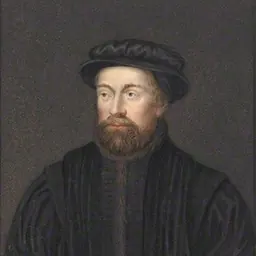

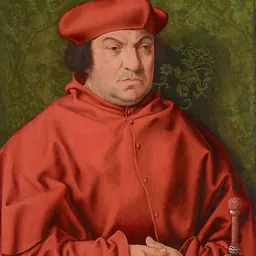
Contemporaries
People whose lives overlapped Gabriel Pleydell's

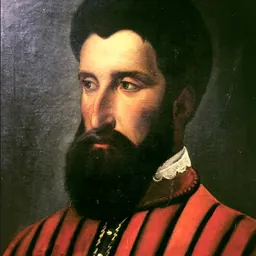
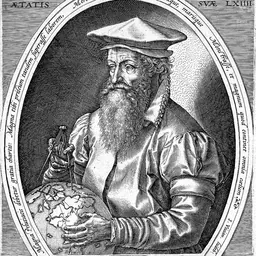
Frequently asked questions
Who was Gabriel Pleydell?
an English landowner and politician who served as member for the Wootton Bassett and Marlborough constituencies in the Parliament of England
When was Gabriel Pleydell born?
Gabriel Pleydell was born in 1519.
When did Gabriel Pleydell die?
Gabriel Pleydell died in 1591.
What was Gabriel Pleydell's occupation?
Gabriel Pleydell was a politician.
What nationality was Gabriel Pleydell?
Gabriel Pleydell was English.
Sources & further reading
Cite this page
APA: Biography.guide. (2026). Gabriel Pleydell. https://biography.guide/gabriel-pleydell/
MLA: "Gabriel Pleydell." Biography.guide, https://biography.guide/gabriel-pleydell/.
Chicago: "Gabriel Pleydell." Biography.guide. https://biography.guide/gabriel-pleydell/.
Data last updated: 2026-09-20 · Spot an error? Report a correction.
Page generated 2026-09-27 04:57 UTC