
About G. M. Syed
Lived 1904 – 1995 (aged 91). G. M. Syed was a Pakistani philosopher, politician and poet.
Early life Childhood: 1904–15 G. M. Syed was born to the Sadat family of Sindh in the town of Sann on 17 January 1904. He was an infant when his father, Syed Mohammed Shah Kazmi, was killed in a family feud on 1 November 1905. After the death of his father, Syed was the only male infant in the family, so in 1906 the British Government took temporary custody of the family property through the Court of Wards, giving the family a monthly pension. He had five years of primary education, in the Sindhi, from the age of six, ending in 1915. The female elders of his family and Mother Haneefa Bibi decided to home-school him thereafter in order to safeguard him from feuding as he was the only male heir in the family. He was taught Persian and English at home.
Teenage: 1920–24 Syed became politically active through participation in the Khilafat Movement. He first attended Khilafat Conference held on 7th, 8th, and 9 February 1920 in Larkana. He was inspired by the speeches of Abul Kalam Azad, Abdul Bari Firangi Mahali, Maulana Shaukat Ali and Shaikh Abdul Majeed Sindhi. He himself called upon the next Khilafat Conference on 17 March 1920 in his hometown Sann. Two days after this conference, his native town Sann observed a shutter-down strike in protest against the injustices of the Allied Powers against the Ottoman Caliphate on 20 March 1920. He remained active throughout the entire Khilafat Movement afterward. Syed visited the office of the Collector in Karachi on 23 June 1921 to free his lands from the custody of Court of Wards but he was refused. He filed a complaint against the Collector and Mukhtiarkar on 4 December 1922, for hurdling the delivery of his lands from custody.
Political activism G.M Syed was the founder of Sindh Awami Mahaz, which went on to join the National Awami Party (National Peoples Party). Like Ibrahim Joyo, Syed blended Sindhi nationalism with Communism and Sufism through the ideas of Gandhi and Marx.
Syed Sindhi's position brought him ample opportunity to have free income through tributes, cash offerings and landed property. This lifestyle was rejected by him, subsequently he plunged into politics with enthusiasm. Politically, he evolved and traveled from Pan-Islamist to Indian nationalist and then Pakistani nationalist, having joined Muslim League; and ended with being a Sindhi nationalist.
AV School In the early 1920s, Syed opened Anglo-Vernacular (AV) school in his village Sann, where education for certain language classes was free of cost. AV School offered combo of Sindhi education with English language. The school also offered options of Arabic, French and Persian languages. Prominent Sindhi educationist Ibrahim Joyo was also schooled at AV.
Timeline At the early age of fourteen years, Syed started his career as an activist. In 1937, was for the first time elected a member of Sindh Legislative Assembly. His works are on numerous subjects, ranging from literature to politics, religion and culture. Due to his breath of knowledge, he has been described by the Dutch scholar of Islam Oskar Verkaaik as "in many ways a remarkably productive, original, and largely autodidact intellectual, creating his own personal interpretation of Islam out of a range of intellectual influences such as 19th-century Islamic reform, Darwinian evolution theory, theosophy, 18th century Sindhi poetry, Marxism, classical Sufism, German idealism, and probably more."
Some of his well-known books are:
Janam Guzarium Jin Sein (In Sindhi language) Dayar Dil Dastan-e- Muhabt (In Sindhi language) Sindh Ja Soorma (In Sindhi language) Sindh Speaks (English) Struggle for New Sindh (English) Religion and Reality (English) Shah Latif's Message is a 1992 book written by GM Syed about the life of Sindhi Sufi poet Shah Abdul Latif Bhittai and his teachings. The book was originally published in Sindhi. It received an English translation by Egnert Azariah. Syed depicts Latif "as a nationalist and patriotic poet because of his immense love and commitment to Sindh and its people." A Nation in Chains (English)
Don’t just read it —
keep it.
Full-length biographies made to live with: read them, listen on the way to work, watch them tonight.
- E-book
- Audio
- Video
Instant download · yours to keep · every purchase keeps this site free
Important facts
People in G. M. Syed's life
Named in this biography and alive at the same time
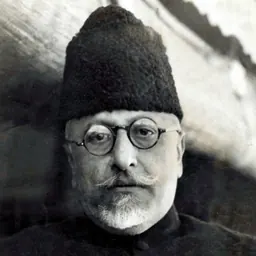
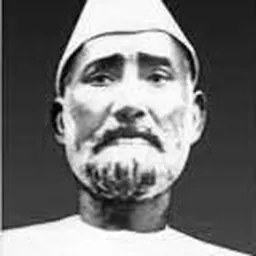


Related people
Same field, nearest in time


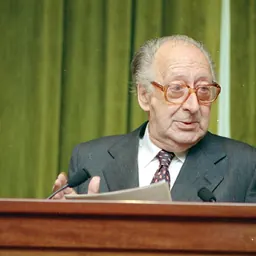

Contemporaries
People whose lives overlapped G. M. Syed's

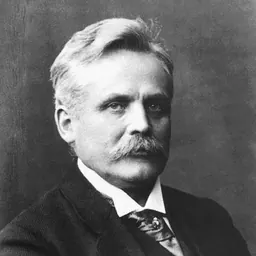
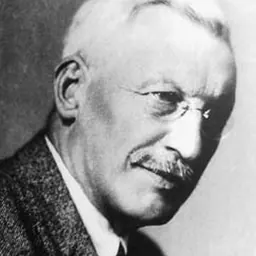

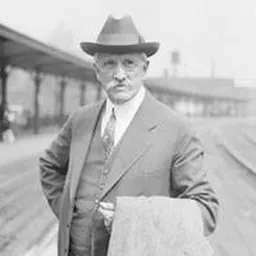

Frequently asked questions
Who was G. M. Syed?
political leader (1904-1995)
When was G. M. Syed born?
G. M. Syed was born on 17 January 1904 in Sann.
When did G. M. Syed die?
G. M. Syed died on 25 April 1995 in Karachi.
What was G. M. Syed's occupation?
G. M. Syed was a philosopher, politician and poet.
What nationality was G. M. Syed?
G. M. Syed was Pakistani.
Sources & further reading
Cite this page
APA: Biography.guide. (2026). G. M. Syed. https://biography.guide/g-m-syed/
MLA: "G. M. Syed." Biography.guide, https://biography.guide/g-m-syed/.
Chicago: "G. M. Syed." Biography.guide. https://biography.guide/g-m-syed/.
Data last updated: 2026-09-24 · Spot an error? Report a correction.
Page generated 2026-09-27 05:05 UTC